

Table of Contents[Hide][Show]
- Do Chickens Actually Need Heat in Winter?
- 1. Winterize the Coop (But Don’t Seal It Up Tight)
- 2. Get the Ventilation Right (This Is the One People Mess Up)
- 3. Try the Deep Litter Method
- 4. Position Roosting Bars So They Can Cuddle and Cover Their Toes
- 5. Keep Their Water From Freezing
- 6. Feed a Little Extra — and Time It Right
- 7. Offer Warming Winter Treats
- 8. Choose Cold-Hardy Breeds From the Start
- 9. Protect Combs and Wattles From Frostbite
- 10. Don’t Forget the Winter Dust Bath
- 11. Beat Winter Boredom
- 12. Skip the Heat Lamp (Please Read This Before You Plug One In)
- Signs Your Chickens Are Too Cold
- Will My Chickens Still Lay Eggs in Winter?
- Frequently Asked Questions
- Your Cold-Weather Flock Will Be Just Fine
If you’ve ever stood at the coop door on a gray January morning, watching your breath hang in the air and wondering whether your girls made it through another single-digit night, you already know the feeling that pulled me into writing this.
Out here in Western New York, “cold” isn’t a season — it’s a lifestyle. We get the lake-effect snow, the wind that finds every gap, and stretches where the thermometer forgets it’s supposed to go above zero.
And yet, every winter, my flock — lavender Orpingtons and all — comes through just fine. Not because I baby them, but because I’ve learned what actually keeps chickens warm in winter versus what just makes us feel better. There’s a big difference, and getting it wrong can genuinely put your birds at risk.
I’m talking missing toes, feet and combs.
Here’s everything I do to keep my chickens warm, healthy, and laying (as much as they’ll ever lay in the dark months) all winter long.
Do Chickens Actually Need Heat in Winter?
Let’s start here, because this is the question that trips up almost every new chicken keeper — and the answer surprises people.
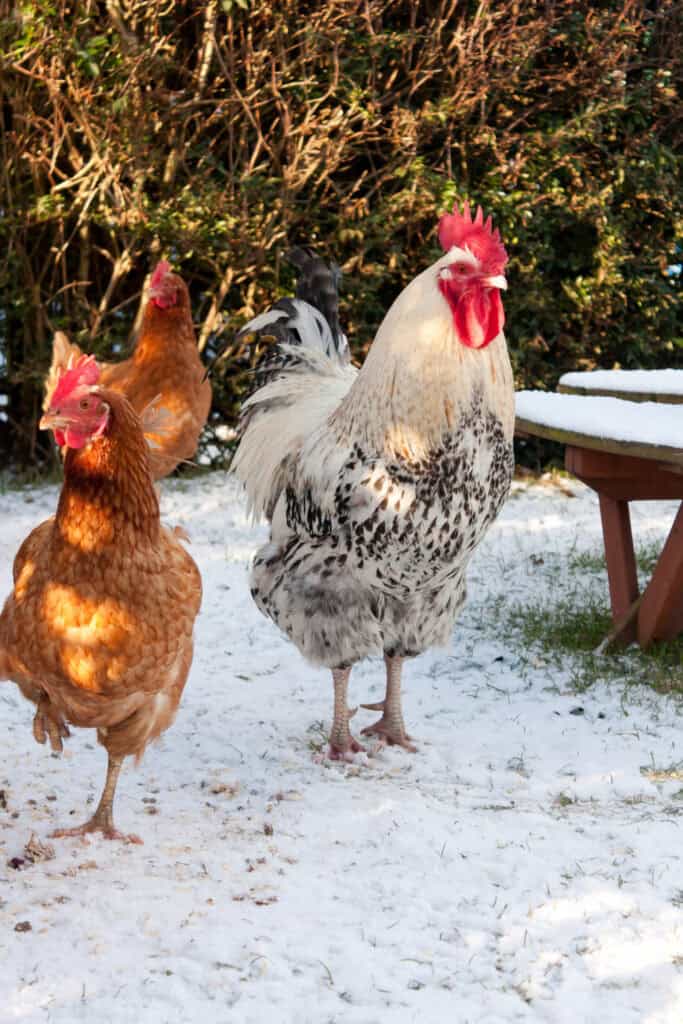
For most standard backyard breeds, the answer is no, chickens do not need supplemental heat in winter. Chickens are far hardier than they look. They come with their own down coat, they huddle together for warmth, and they can fluff their feathers to trap a layer of warm air against their bodies. Roosting off the ground, away from wind, and sitting on their feet help keep their toes warm.
A healthy adult chicken is comfortable down to temperatures that would send most of us running for the woodstove.
What chickens can’t handle well is dampness, drafts, and sudden temperature swings — which is exactly what happens when a well-meaning owner cranks a heat lamp in a sealed-up coop. So the goal of winter chicken care isn’t to make the coop warm. It’s to keep it dry, draft-free, and stable, and to give your birds the tools to keep themselves warm.
Keep that reframe in your back pocket. Nearly everything below flows from it.
1. Winterize the Coop (But Don’t Seal It Up Tight)
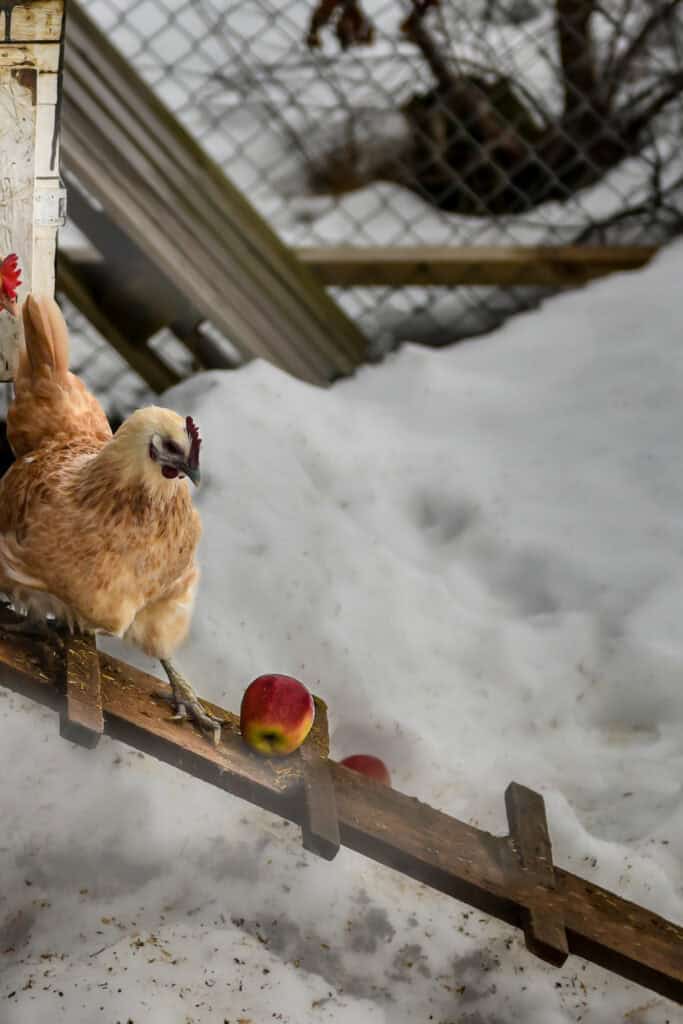
Your first job is to block the wind without turning the coop into an airtight box. Wind is the real enemy — a stiff draft strips away that warm layer of air your chickens work so hard to trap.
Walk the coop on a windy day and put your hand near every seam, gap, and knothole at roosting height. Anywhere you feel a draft blowing directly across where the birds sleep, that’s a spot to close up. I use scrap plywood, weatherstripping, and in a pinch, a few strategically placed feed bags.
What you’re not doing is sealing every last opening. You need airflow up high (more on that in a second). Think “windbreak,” not “vault.” If you want a full walkthrough of how I button up my coop each fall, I put the whole process in my guide to winterizing your chicken coop.
2. Get the Ventilation Right (This Is the One People Mess Up)
Here’s the part that feels completely backwards until it clicks: your winter coop needs ventilation, especially in the cold.
Chickens release a shocking amount of moisture — through their breath and their droppings — and in a sealed coop that moisture has nowhere to go. It condenses on combs, wattles, and the underside of the roof, then drips back down. Damp air freezes; dry cold does not. A moist coop is how you get frostbite, not a drafty one.
The trick is height. You want vents above your chickens’ heads so warm, moist air can rise and escape, while the birds roost below the airflow, out of the direct breeze. A few vents near the roofline, screened against predators, make all the difference. Get this balance right and you’ve solved half the winter battle before it starts.
3. Try the Deep Litter Method
The deep litter method is my favorite winter trick because it does two jobs at once: it insulates the coop floor and generates a gentle, natural warmth as the bedding composts in place.
Instead of stripping the coop bare each week, you let bedding build up over the season, adding a fresh layer on top and turning it occasionally. The material underneath slowly breaks down like a compost pile, giving off a little heat and a lot of insulation, while the fresh top layer keeps things clean and dry.
Pine shavings, chopped straw, and dried leaves all work beautifully as a base. If you want to dig into what bedding holds up best through a cold, wet winter, I compared my go-to options in my posts on chicken coop bedding and using dried leaves as bedding. Keeping the litter dry is everything here, and a good coop deodorizer helps you stay ahead of any ammonia smell that signals things are getting too damp.
4. Position Roosting Bars So They Can Cuddle and Cover Their Toes
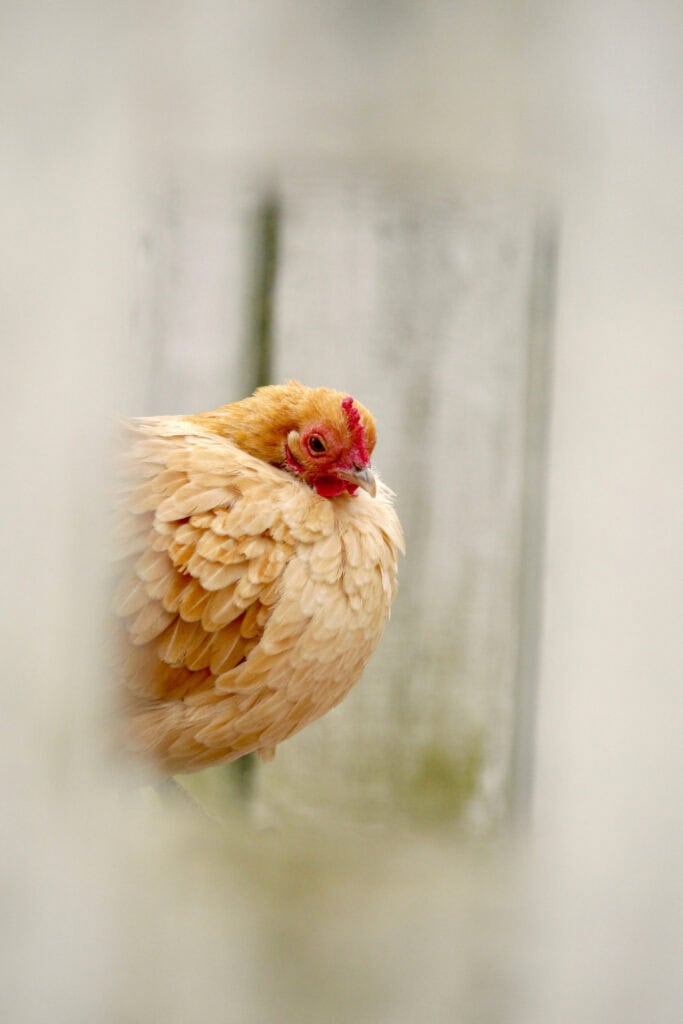
When chickens sleep, they fluff up and settle down over their own feet, tucking those bare toes under warm feathers. That only works if the roost is the right shape and height.
A flat roost — a two-by-four laid wide side up — lets a hen sit flat and fully cover her feet. A skinny round dowel forces her to grip, leaving toes exposed to the cold. Small detail, big impact on frostbitten toes.
Position roosts up off the floor and away from those high vents, so your birds sleep in the calm, warmer zone while the moist air escapes above them. And make sure there’s enough roost space for everyone to pile in together — that group huddle is one of their most powerful warming tools.
5. Keep Their Water From Freezing
This is the daily winter chore that never quits, and it matters more than most people realize. Chickens can’t eat enough to stay warm if they can’t drink, and dehydration sneaks up fast when the only water available is a block of ice.
A heated waterer base is the simplest fix if you have power to the coop. No electricity out there? You’ve got options: a rubber tub you can flex the ice out of twice a day, ping-pong balls floating on the surface to keep it moving in the wind, or simply swapping in fresh warm water morning and evening. It’s not glamorous, but staying on top of it is one of the most important things you’ll do all season.
Im at the age where I can’t stand breaking up the chickens water, so I bought this electric one. Sometimes filling it is a pain when its super cold but its still worth it for my now smaller flock because I’ll only fill it once a day.
6. Feed a Little Extra — and Time It Right
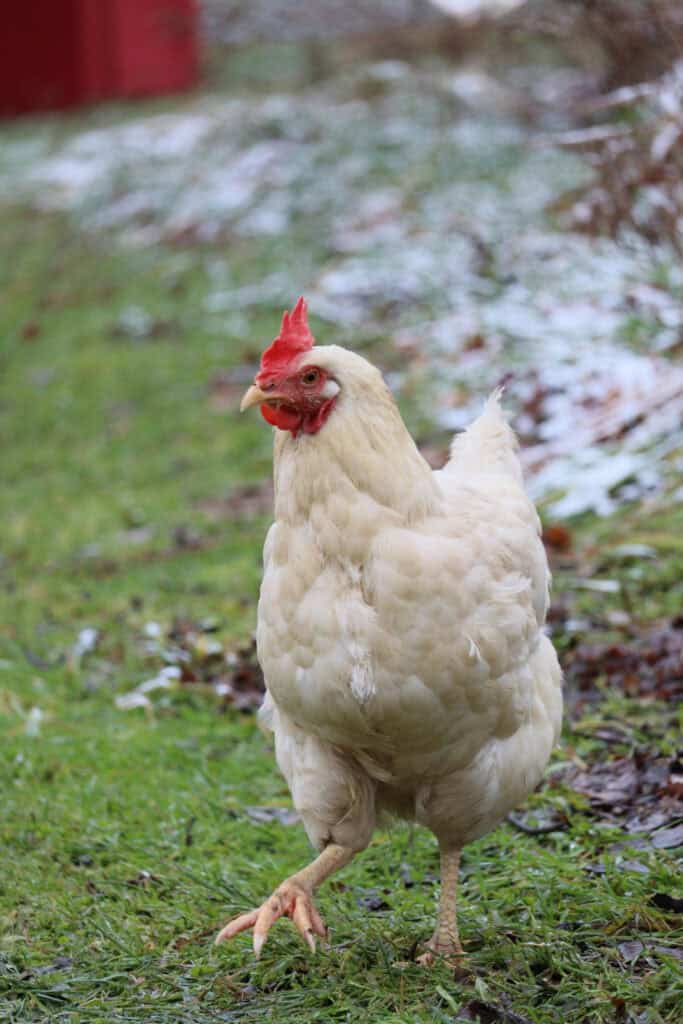
Digestion is a furnace. Chickens generate body heat by breaking down food, so a well-fed bird is a warmer bird. In the coldest months I keep the feeder full and let them eat freely — they’ll self-regulate and burn those extra calories staying warm.
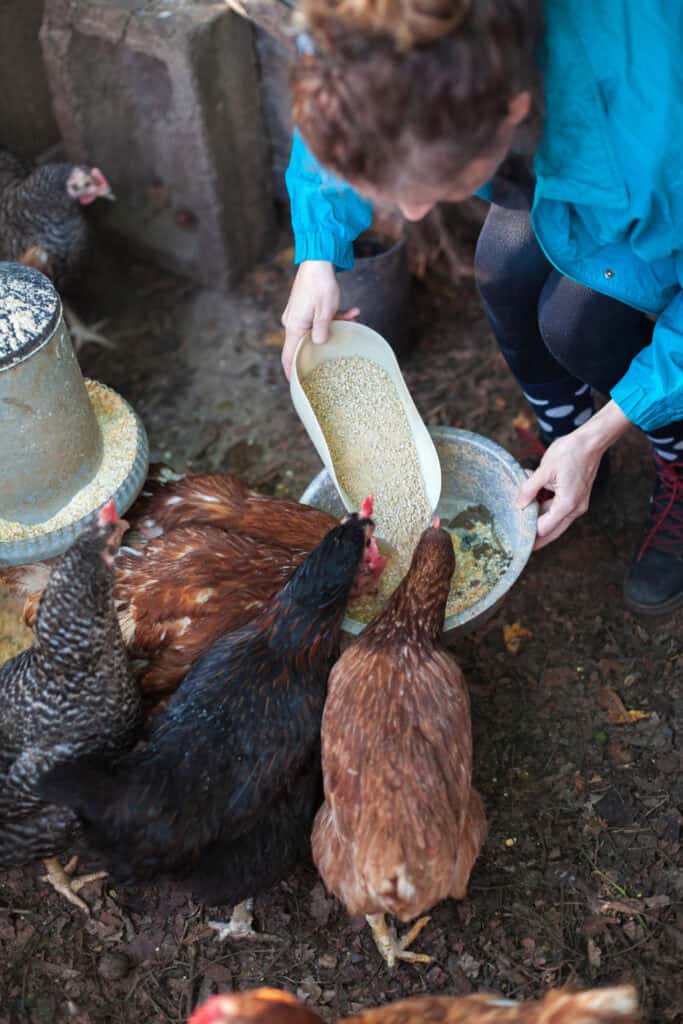
The timing trick worth knowing: a little extra feed right before roosting gives them fuel to burn through the night, when they need it most. Which brings us to the single best bedtime snack in the flock world.
7. Offer Warming Winter Treats
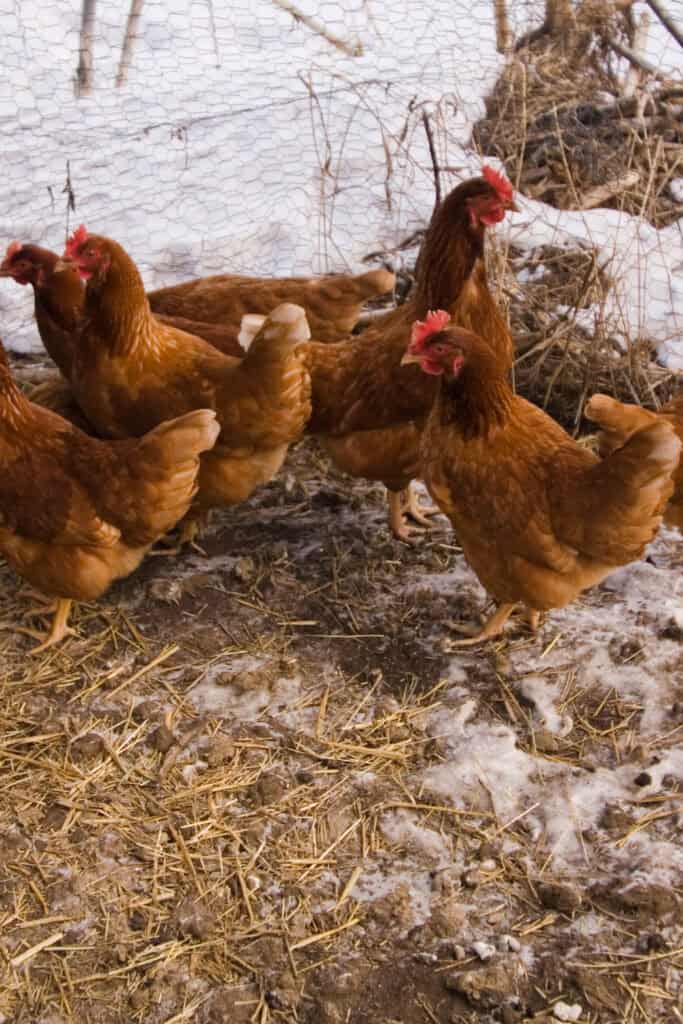
A handful of scratch grains or cracked corn tossed in the run in late afternoon is the classic cold-weather treat, and there’s real logic behind it. Corn takes longer to digest, so it keeps that internal furnace running overnight. Think of it as a bedtime snack that doubles as a heater.
Warm treats are a hit too — a bowl of oatmeal, some warm cooked squash, or veggie scraps from the kitchen. Grabbing a box of mealworms is an easy way to add some protein treats, too.
My kids love being in charge of “chicken breakfast” on frigid mornings, and honestly it’s become one of my favorite little winter rituals. Just keep treats to a supplement, not the main meal, so their balanced feed still does the heavy lifting.
8. Choose Cold-Hardy Breeds From the Start
If you’re still building your flock, breed choice is the easiest cold-weather advantage. Some breeds are simply built for northern winters — heavier bodies, smaller combs (less to frostbite), and dense feathering.
Cold-hardy favorites include Orpingtons, Wyandottes, Australorps, Brahmas, Plymouth Rocks, and Rhode Island Reds, among others. My lavender Orpingtons are a perfect example — big, fluffy, unbothered birds that treat a Western New York winter like a mild inconvenience. If you’re ordering chicks with cold country in mind, lean toward the heavy, small-combed breeds and you’ll thank yourself come January.
9. Protect Combs and Wattles From Frostbite
Frostbite shows up first on the extremities — the tips of combs, wattles, and toes. Large single combs are the most vulnerable, which is another reason small-combed breeds shine up north.
Your best defense is the dry, draft-free, well-ventilated coop we’ve already built. Beyond that, a thin layer of a protective balm on combs and wattles before a hard freeze can help on your most exposed birds. Keep an eye out for pale, gray, or blackened spots and dark tips — early signs to catch before they worsen.
10. Don’t Forget the Winter Dust Bath
It’s easy to forget, but chickens still need to dust bathe in winter — it’s how they keep their feathers clean and in top insulating condition, and clean, fluffy feathers hold heat far better than grimy, matted ones.
When the ground is frozen or snow-covered, they can’t dig their own spot, so give them one. A shallow tub or an old tire filled with dry dirt, sand, and a little wood ash, tucked in a sheltered corner of the coop or run, does the job. I walk through how I set one up in my post on chicken dust baths — it’s a small effort that pays off in warmer, healthier birds.

11. Beat Winter Boredom
Shorter days and being cooped up more can leave chickens bored and cranky, and a bored flock is more likely to pick on each other. Keeping them busy isn’t just kindness — it’s flock management.
Hang a cabbage or leafy greens at pecking height for a “tetherball” they’ll work at for hours, scatter scratch in the bedding so they forage, or add a few simple boredom-busters to the run. I rounded up my favorite ideas in this post on toys and enrichment for chickens. A busy flock is a happier, calmer, warmer flock.
12. Skip the Heat Lamp (Please Read This Before You Plug One In)
I saved this for last because it’s the most important safety point in the whole post. Heat lamps are the leading cause of coop fires, and every winter brings heartbreaking stories of flocks — and sometimes whole barns and homes — lost to a lamp that fell, got dusty, or shorted out in a bird-filled, bedding-filled space.
There’s a health reason to skip them too. When you artificially heat a coop, your chickens never acclimate to the cold, so they can’t regulate their own body temperature. If the power goes out — which, let’s be honest, it loves to do mid-blizzard — birds that have been living in a heated coop can go into shock from the sudden drop. Cold-acclimated chickens shrug it off.
If you have a genuinely vulnerable bird — a sick hen, a very young or very old bird, or a rare breed that isn’t cold-hardy — there are safer, flat-panel radiant options designed for coops. But for a healthy adult flock, the best thing you can do is trust their biology and put your energy into the dry, draft-free setup instead.
Signs Your Chickens Are Too Cold
Even with everything dialed in, it’s worth knowing what to watch for. Chickens are stoic, so you’re looking for subtle cues:
- Constant huddling and refusing to come out even for treats
- Lifting or tucking feet repeatedly, or standing on one leg for long stretches
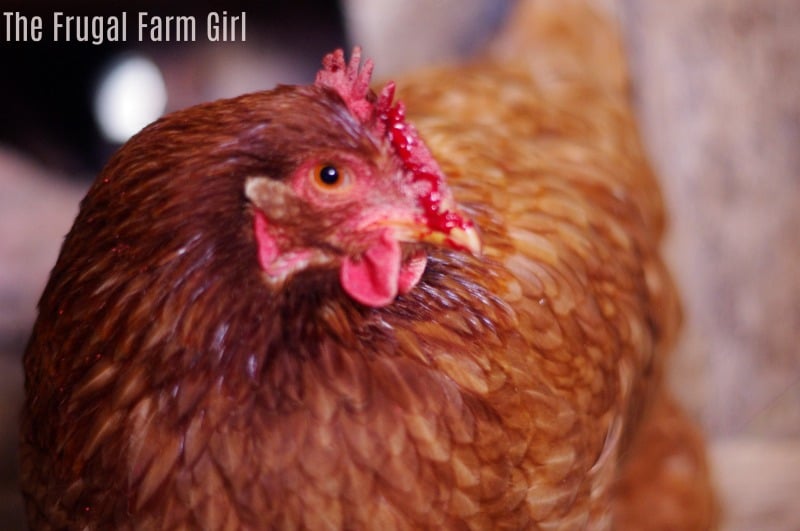
- Pale, gray, or blackened combs, wattles, or toe tips (possible frostbite)
- Lethargy, fluffed-up posture all day, or a bird sitting apart from the flock
- A sharp drop in eating or drinking
A little fluffing and huddling on the coldest nights is completely normal. It’s the persistent, all-day version — plus any color changes on the extremities — that tells you to step in.
Will My Chickens Still Lay Eggs in Winter?
Probably fewer, and that’s normal. Egg production is driven mostly by daylight, not temperature, so as the days shorten your hens will naturally slow down or stop for a stretch. Cold on its own isn’t the culprit.
Some keepers add supplemental light to keep production up; others (me included, most years) let the girls take their natural rest. There’s no wrong answer — just know that a winter laying dip is your flock doing exactly what it’s designed to do. If you’ve got new pullets heading into their first cold season, my post on what to expect when your hens start laying walks through the timeline.
Frequently Asked Questions
How cold is too cold for chickens? Healthy, cold-hardy adult chickens handle surprisingly frigid temperatures, well below freezing, as long as they’re dry and out of the wind. Dampness and drafts cause far more trouble than the number on the thermometer. Focus on the environment, not the temperature reading.
Should I put a heat lamp in my coop? For a healthy adult flock, no — heat lamps are a serious fire risk and keep birds from acclimating to the cold. A dry, draft-free, well-ventilated coop does the job far more safely.
Do I need to insulate my chicken coop? Insulation can help stabilize temperatures, but it’s optional and secondary. Blocking drafts and maintaining good upper ventilation matter far more than insulation for most backyard setups.
What’s the best bedding for a winter coop? Deep, dry bedding using pine shavings, chopped straw, or dried leaves works well, especially with the deep litter method, which adds a bit of natural warmth as it composts. The priority is keeping it dry.
Do chickens’ feet get cold on the roost? They tuck their feet under their body feathers while sleeping, which keeps toes protected — as long as your roosts are flat enough (like a wide board) to let them sit down fully over their feet.
Your Cold-Weather Flock Will Be Just Fine
If there’s one thing I want you to walk away with, it’s this: keeping chickens warm in winter is less about adding heat and more about removing the things that make cold dangerous — moisture, drafts, frozen water, and boredom. Get the coop dry and draft-free, keep the water flowing and the feeders full, choose hardy birds, and let your flock’s own biology do the rest.
Do that, and you’ll be standing at the coop door on those bitter mornings feeling a whole lot more confident — coffee in hand, breath in the air, and a flock of happy, fluffed-up hens who never doubted you for a second.
Want to bring more of the homestead into your kitchen this season? My Home Canning Planner helps you organize everything you’re putting up before the deep freeze — grab your copy and keep your pantry as ready as your coop.
 Homemade Food Gifts: 6 Easy Edible Christmas Gifts (With Recipes!)
Leave a Reply