
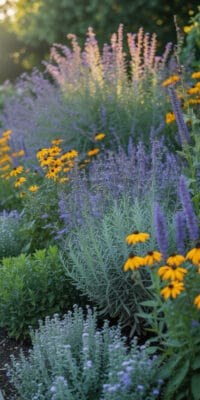

Plant these once, enjoy them for years — and stop losing your garden to deer every single summer.
If you’ve ever walked out to your garden and found your beautiful flowers mowed down to nothing overnight, you know the kind of heartbreak that comes with living near deer. You planned, you planted, you watered — and a herd of ungrateful freeloaders ate your hard work for dinner.
The good news? You can absolutely have a gorgeous, full sun perennial garden that deer will mostly leave alone. The keyword is mostly, because if a deer is hungry enough, it will eat almost anything.
But the plants on this list are strongly deer-resistant, meaning deer actively dislike them because of their scent, texture, or taste. Plant enough of these, and the deer will find easier pickings elsewhere.
These are also all true perennials, which means they come back year after year. Plant them once, and they reward you for seasons to come.
Why Deer Avoid Certain Plants
Understanding why deer skip certain plants helps you make smarter choices. Deer rely heavily on smell, and they strongly dislike plants that are:
- Highly aromatic — lavender, catmint, and salvias smell wonderful to us but overwhelming to deer
- Fuzzy or rough-textured — deer avoid leaves that feel unpleasant in their mouths
- Toxic or bitter — plants like foxglove and yarrow contain compounds deer instinctively avoid
- Thorny or sticky — physical deterrents work just as well as chemical ones
This is why so many herbs and Mediterranean-origin plants top the deer-resistant list. Keep this in mind as you plan your beds — planting strongly aromatic plants around the edges of a bed can help protect less resistant plants in the center.
Top Full Sun Deer Resistant Perennials
All of these thrive in at least 6 hours of direct sun and come back reliably year after year. Most are also drought-tolerant once established — a double win for low-maintenance gardening.

Lavender
Lavandula angustifolia
The queen of deer-resistant gardening. The intense fragrance that we love is exactly what keeps deer away. Blooms late spring through summer. Extremely drought-tolerant once established.
Zones 5–8Drought hardyPurple blooms

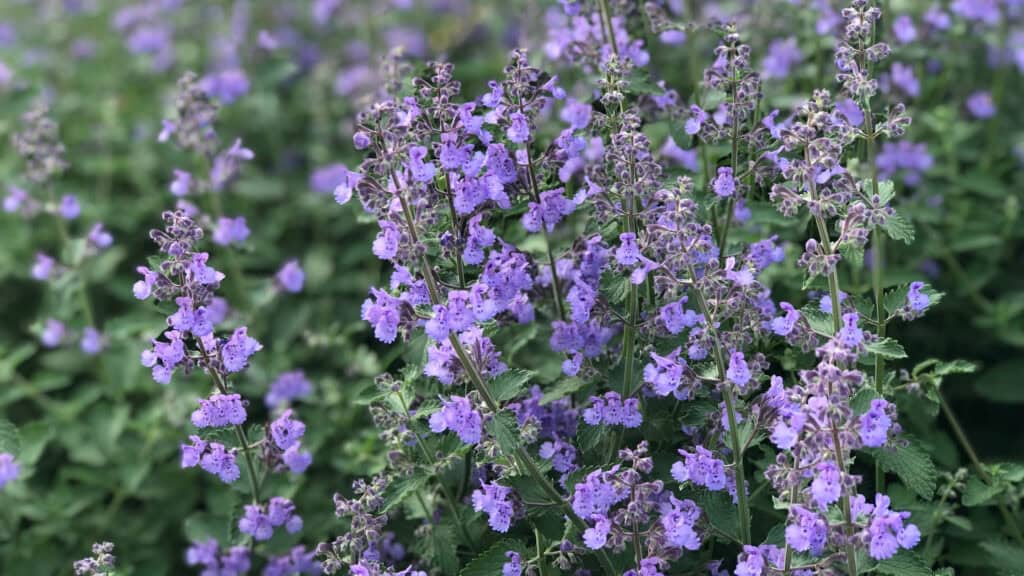
Catmint
Nepeta × faassenii
One of the most reliable deer-resistant perennials you can grow. Soft gray-green leaves and waves of blue-purple flowers from spring into fall. Cut it back after the first flush for a second bloom. If you have barn cats, this is a must-have.
Zones 4–8 Drought hardyBlue-purple
Russian Sage
Perovskia atriplicifolia
Tall, airy, and silvery — Russian sage brings a cloud of lavender-blue color from midsummer into fall. Deer hate the smell of the silver foliage. Nearly indestructible in well-drained soil.
Zones 5–9Very drought hardy Lavender-blue
Frugal tip: I’ve found the seeds for a lot of these perennials through our Library’s Free Seed program.

Yarrow
Achillea millefolium
Flat-topped flower clusters in yellow, white, red, and pink. Yarrow’s feathery, aromatic foliage is strongly deer resistant. It spreads freely — perfect for filling space fast and cutting for dried arrangements.
Zones 3–9 Very drought hardy Multi-color

Salvia
Salvia nemorosa
Perennial salvia (not the annual bedding kind) is a workhorse. Deer dislike its strong scent. ‘May Night’ and ‘Caradonna’ are especially reliable, with deep purple spikes that pollinators adore.
Zones 4–8 Drought tolerant Deep purple

Coneflower
Echinacea purpurea
Native, tough, and somewhat deer resistant due to its coarse, scratchy texture. Not as strongly resistant as aromatic plants, but rarely heavily browsed. Excellent for pollinators and birds love the seedheads.
Zones 3–9 Drought tolerant Pink-purple

Black-Eyed Susan
Rudbeckia fulgida
A cheerful native wildflower with rough, hairy stems and leaves that deer dislike. Blooms prolifically from midsummer until frost. Naturalizes beautifully and self-seeds to fill in bare spots.
Zones 3–9 Drought-tolerant Golden yellow
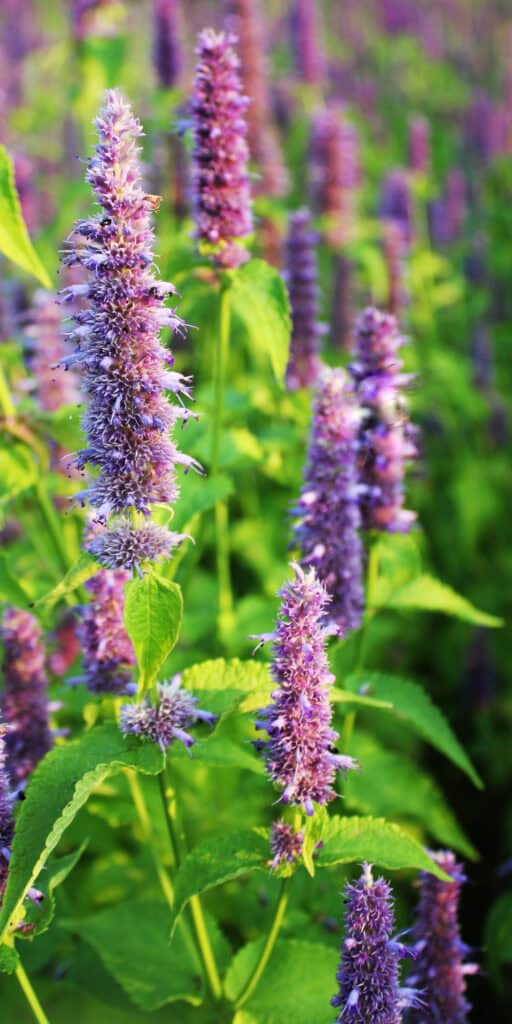
Agastache
Agastache foeniculum
Also called hyssop, this mint-family member smells strongly of anise — irresistible to bees and butterflies, but deer won’t touch it. Spikes of orange, pink, or purple blooms from midsummer onward.
Zones 5–10, Very drought hardy, Multi-color
Practical Tips for a Deer-Resistant Garden
Choosing the right plants is step one, but how you design and maintain your garden matters too. These strategies will give you the best results:
- Plant in masses, not singles — a large drift of lavender or catmint sends a much stronger scent signal than a lone plant tucked into a mixed border
- Create an aromatic border — line the edges of your beds with strongly scented plants like lavender, catmint, or salvia to form a scent barrier around less resistant plants inside
- Avoid fertilizing heavily — lush, nitrogen-rich growth is more appealing to deer, so go easy on the fertilizer with these plants (most prefer lean soil anyway)
- Plant early in the season — well-established plants with stronger stems and scent are less tempting than soft new transplants
- Protect new plantings — even deer-resistant plants can get nibbled when they’re young and haven’t developed their full defense yet; use temporary fencing for the first season if deer pressure is high
- Don’t rely on repellent sprays alone — they wear off and need constant reapplication; resistant plants are a permanent, zero-cost solution
Frugal tip: Most of the plants on this list spread or self-seed freely. Start with just a few plants, then divide them in year two or three to multiply your planting for free. Yarrow, catmint, and black-eyed Susan are especially generous self-spreaders.
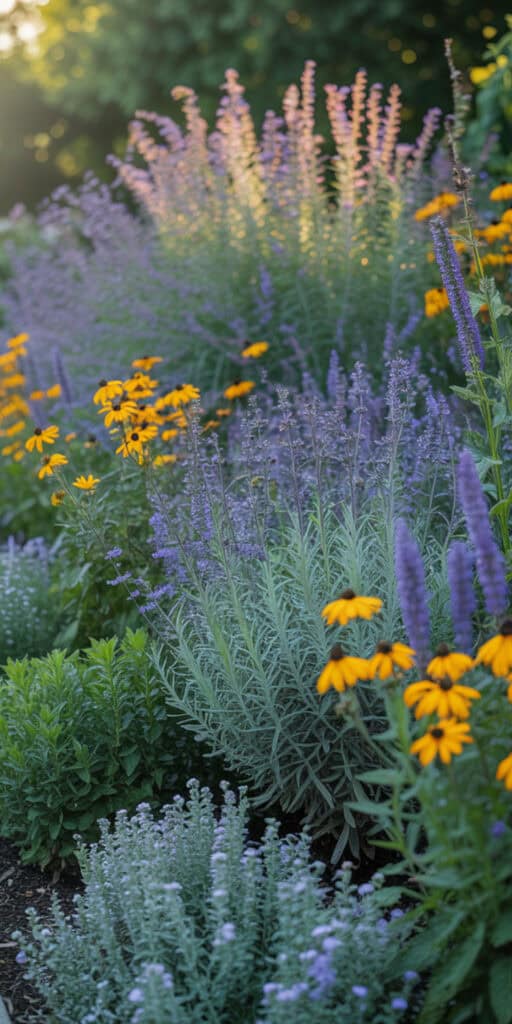
Putting It All Together
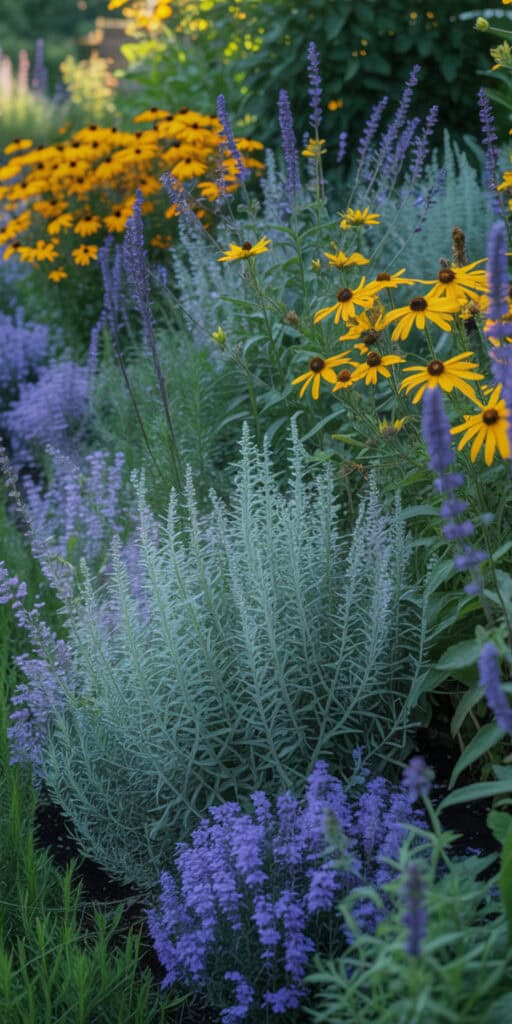
A full sun deer-resistant border doesn’t have to look sparse or utilitarian. Try pairing the silver foliage of Russian sage or lavender with the golden blooms of yarrow and black-eyed Susan for a classic, meadow-inspired look that peaks in late summer. Add catmint as an edging plant and salvia for vertical interest, and you’ve got a layered, multi-season bed that practically takes care of itself.
The best part? Once these perennials are established — usually in their second year — they need very little from you. Less water, no replanting, no fertilizer, and best of all, no heartbreak when you walk out in the morning.
Plant smart once, and let the deer move on to someone else’s garden.

Save this post to your Pinterest garden board!
Bookmark it now so you have the full plant list ready when it’s time to head to the nursery. And if you found this helpful, share it with a fellow gardener who’s losing the battle with deer.
 Small Backyard Patio Ideas That Won’t Cost You a Fortune
Loved the info – I love any plant that blooms! Watched my roses being
Eaten by a deer this morning! Deer
Are beautiful but so are roses! Lol