

Table of Contents[Hide][Show]
If you’ve been scrolling Pinterest lately, you’ve probably noticed that succulent gardens are absolutely everywhere — and for good reason! Whether you’re dreaming of a lush backyard succulent garden bed, a charming container arrangement on your porch, or a cozy collection of indoor plants on your windowsill, succulents are one of the most budget-friendly and forgiving plants you can grow.
I’ve been growing succulents for years here on the farm, and I’m excited to share everything I’ve learned — from container ideas to propagating succulents for free (yes, FREE!) to designing a full cactus garden in your backyard. Let’s dig in!
Why Succulents Are the Frugal Gardener’s Best Friend
Before we dive into design ideas, let’s talk about why succulents are such a smart choice:
- They’re inexpensive to start. You can often pick up small starter succulents for $1–$3 at big box stores, or even get clippings from a friend.
- They’re easy to propagate. One plant can become dozens — completely free! (More on that below.)
- They thrive on neglect. Busy farm life? No problem. Succulents are drought-tolerant and don’t need constant attention.
- They work indoors AND outdoors. They’re one of the most versatile plants you’ll add to your home.
Succulent Container Ideas: Think Outside the Pot
One of my favorite things about succulents is that they grow beautifully in almost any container. You don’t need to spend a fortune at the garden center — raid your farmhouse, thrift store, or even your recycling bin!
Creative Succulent Pot Ideas to Try:
- Old colanders or strainers — the drainage holes are built right in!
- Wooden crates lined with burlap — rustic and gorgeous for a porch display
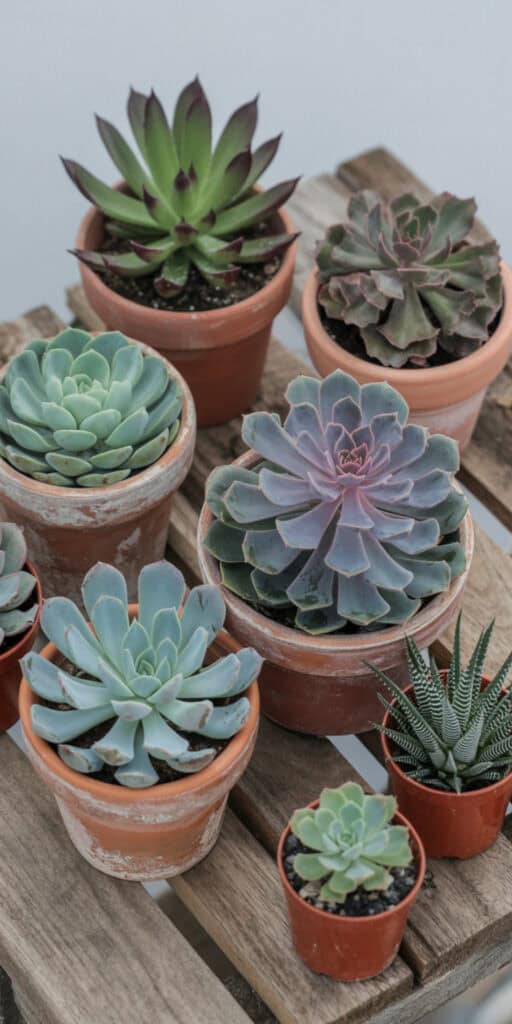
- Terracotta pots — the classic choice, and inexpensive in bulk
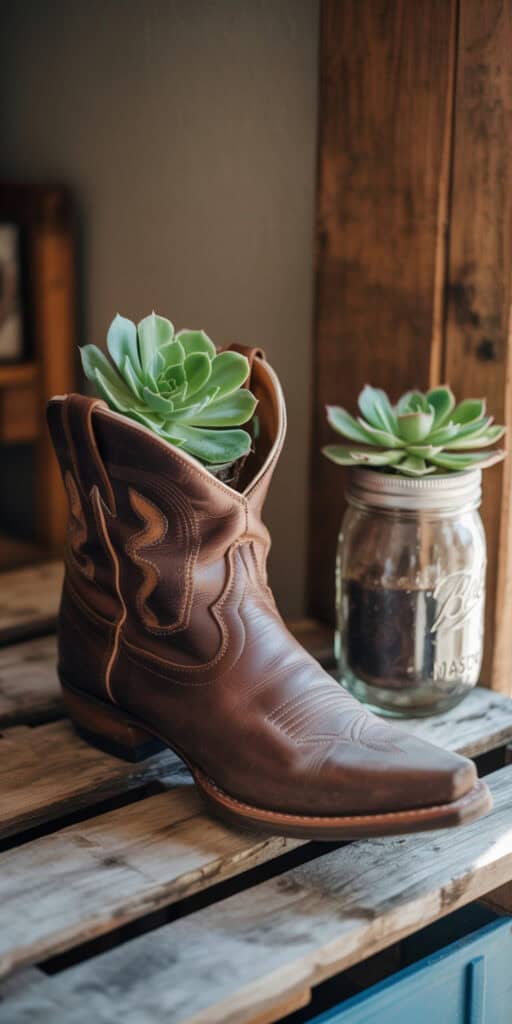
- Old cowboy boots or rain boots — perfect for a farmhouse aesthetic
- Mason jars (with rocks at the bottom for drainage) — great for indoor arrangements
- Repurposed tin cans — paint them for a pop of color
- Vintage wheelbarrows or wagons — stunning as a yard focal point
- Cracked or chipped pottery — don’t toss it, plant in it!
💡 Pro Tip: The #1 rule for succulents in containers is drainage. If your container doesn’t have holes, add a thick layer of gravel or perlite at the bottom to prevent root rot.
Looking for more creative ways to repurpose items around the farm? Check out my post on Upcycling Projects for tons of ideas!
Succulent Arrangements Outdoor: Designing for Curb Appeal
Ready to take your succulents outdoors? Outdoor succulent arrangements are surprisingly easy to design and can completely transform your front porch, patio, or backyard landscaping.
Tips for Stunning Outdoor Succulent Arrangements:
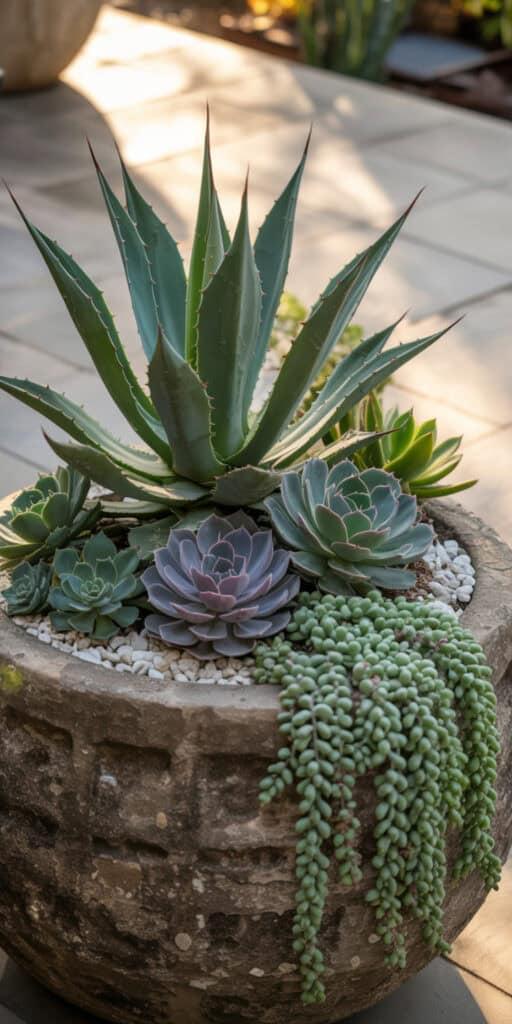
1. Play with heights and textures. Combine tall, spiky varieties like Agave or Aloe with low, rosette-forming succulents like Echeveria or Hens and Chicks. The contrast is visually stunning.
2. Use odd numbers. Designers swear by groupings of 3, 5, or 7 plants. It looks more natural and pleasing to the eye than even numbers.
3. Stick to a color palette. Succulents come in greens, blues, purples, pinks, and even oranges. Grouping by color family creates a cohesive, designed look — even on a budget.
4. Add trailing varieties. String of Pearls or Burro’s Tail spilling over a pot or wall adds gorgeous movement to your arrangement.
5. Consider your climate. In colder zones (hello, fellow northern gardeners!), look for hardy succulents like Sempervivum (Hens and Chicks) that can survive frost. Most tropical succulents do best in containers, so you can bring them inside during winter.
Succulent Garden Bed Ideas: Bringing It to the Landscape
A dedicated succulent garden bed is a gorgeous, water-wise addition to your backyard landscaping. It’s also a fantastic option for areas of the yard that struggle to grow other plants — rocky patches, slopes, or spots with poor soil.
How to Design a Succulent Garden Bed:
Step 1: Choose your location. Succulents need full sun to partial sun — aim for at least 6 hours of direct light per day.
Step 2: Prep the soil. Succulents hate “wet feet.” Amend your native soil with coarse sand or perlite to improve drainage, or build a slightly raised bed to help water run off. Aim for a ratio of about 50% native soil and 50% amendment.
Step 3: Plan your layout on paper first. This saves so much money! Sketch out your space and note the mature size of each plant before you buy. Succulents are slow growers, so you may need to plant closer together at first and thin out later.
Step 4: Add a weed barrier. Lay landscape fabric under your decorative rock or mulch to cut down on weeding. Your future self will thank you.
Step 5: Mulch with gravel or rock. Organic mulch holds moisture — not what succulents want. Use decorative gravel, river rock, or crushed granite instead. It looks incredible and keeps the roots healthy.
Succulent Garden Bed Plant Combinations I Love:
- Agave + Blue Chalk Sticks + Echeveria
- Hens and Chicks + Sedum + Ornamental Grasses
- Prickly Pear Cactus + Desert Marigold + Aloe
Want more low-maintenance garden inspiration? Don’t miss my post on [Easy Perennial Garden Ideas for the Busy Homesteader]!
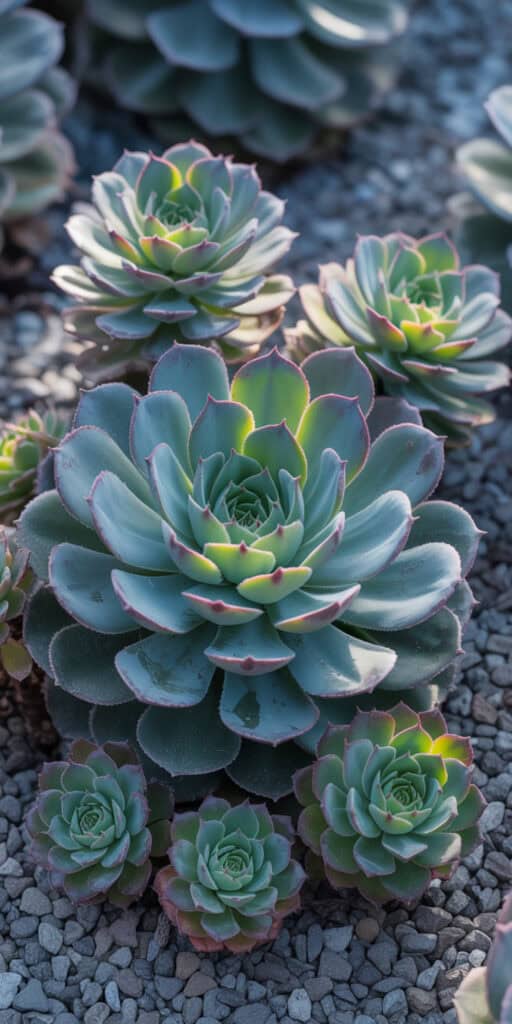
Cactus Garden Design: Bold, Dramatic, and Nearly Maintenance-Free
If you want a garden that practically takes care of itself, a cactus garden design is for you. Cacti are the ultimate set-it-and-forget-it plant — perfect for busy farm life!
Cactus Garden Design Tips:
Go bold with structure. Cacti are architectural plants. Use them as focal points — a large Saguaro (in warm climates), a tall Cereus, or a dramatic Agave can anchor an entire garden bed.
Mix shapes for drama. Combine columnar cacti with round barrel cacti and low-growing prickly pear for a layered, interesting silhouette.
Add desert companions. Pair your cacti with other drought-tolerant plants like lavender, Russian sage, ornamental grasses, or desert wildflowers for color and movement.
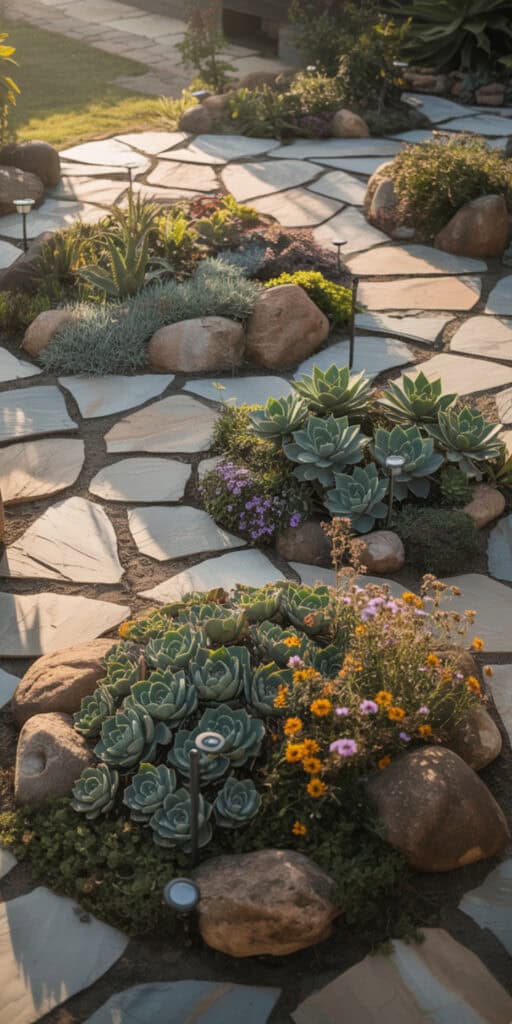
Use boulders and stones. Large rocks and boulders look incredibly natural alongside cacti and help reflect heat — which they love.
Keep pathways clear. If you’re planting spiny cacti, plan your paths so you never brush against them as you walk by. Gravel pathways work beautifully here.
⚠️ Safety Note: If you have kids or pets, place spiny cacti away from play areas. Opt for spineless prickly pear or smooth-sided cacti in high-traffic zones.
Propagating Succulents: How to Get More Plants for Free
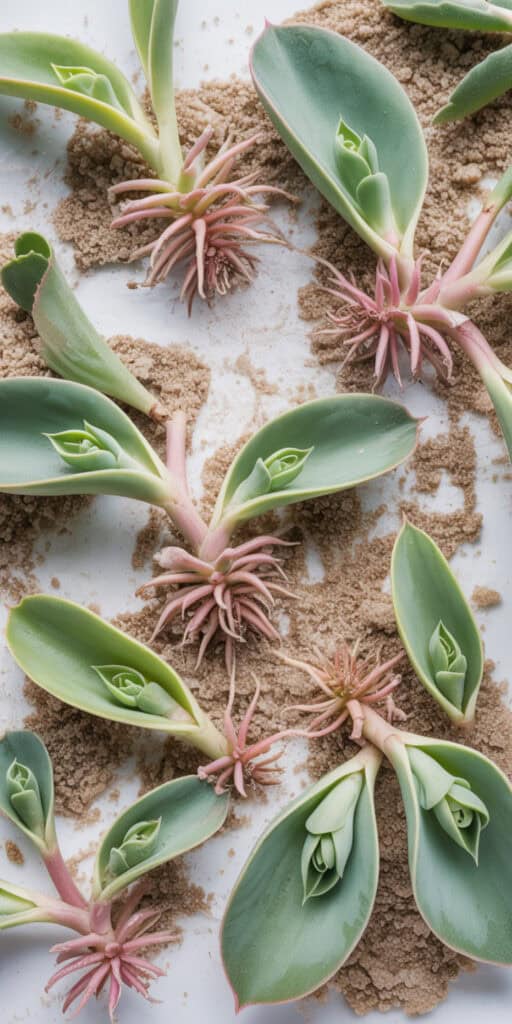
This might be my absolute favorite thing about succulents — you can multiply them for free through a process called propagation. It’s one of the most satisfying and budget-friendly things you can do in the garden!
3 Ways to Propagate Succulents:
1. Leaf Propagation Gently twist a healthy leaf off the mother plant with a clean tug. Lay the leaf on top of dry succulent soil in indirect light. Within a few weeks, tiny pink roots and baby rosettes will sprout! Water lightly — just a mist — every few days once you see roots.
2. Stem Cuttings Use clean scissors or a knife to cut a stem a few inches long. Let the cut end “callous over” for 1–3 days by letting it sit out in the open air. Then plant it in succulent soil. This method gives you a full-size plant much faster than leaf propagation.
3. Division (Offshoots/Pups) Many succulents — especially Agave, Aloe, and Hens and Chicks — produce little “pups” or offshoots around the base. Simply dig these up carefully, let the roots dry for a day, and replant. Free plants!
This is also a wonderful way to share plants with neighbors and swap with local gardeners — which ties in perfectly with our community tip in my post on [Frugal Gardening: How to Stock Your Garden for Almost Nothing]!
Indoor Succulent Ideas: Bringing the Garden Inside
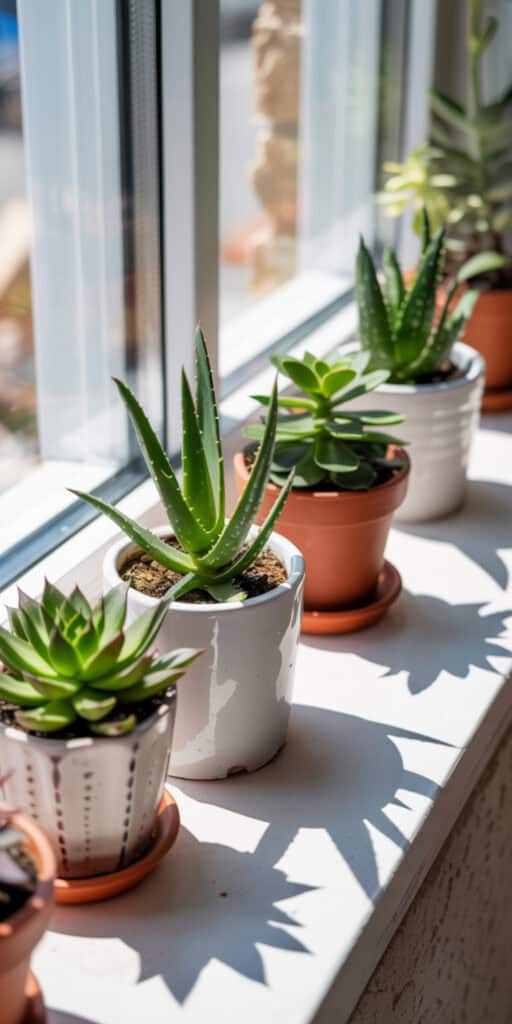
Don’t stop at the backyard! Succulents make incredible indoor plants — especially in sunny windows. They clean the air, add life to any room, and require almost no maintenance.
Best Succulents for Indoors:
- Haworthia (great in low light — perfect for apartments!)
- Aloe Vera (beautiful AND useful for burns and skin care)
- Jade Plant (a classic that lives for decades)
- Echeveria (gorgeous rosettes in a sunny window)
- ZZ Plant (technically a succulent — thrives on neglect)
Indoor Succulent Display Ideas:
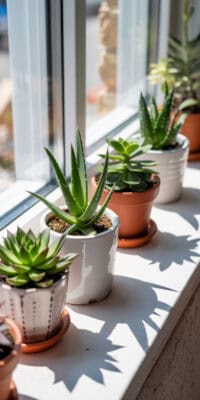
- Line a windowsill with a mix of terracotta pots in graduated sizes
- Create a “living shelf” with floating shelves near a south-facing window
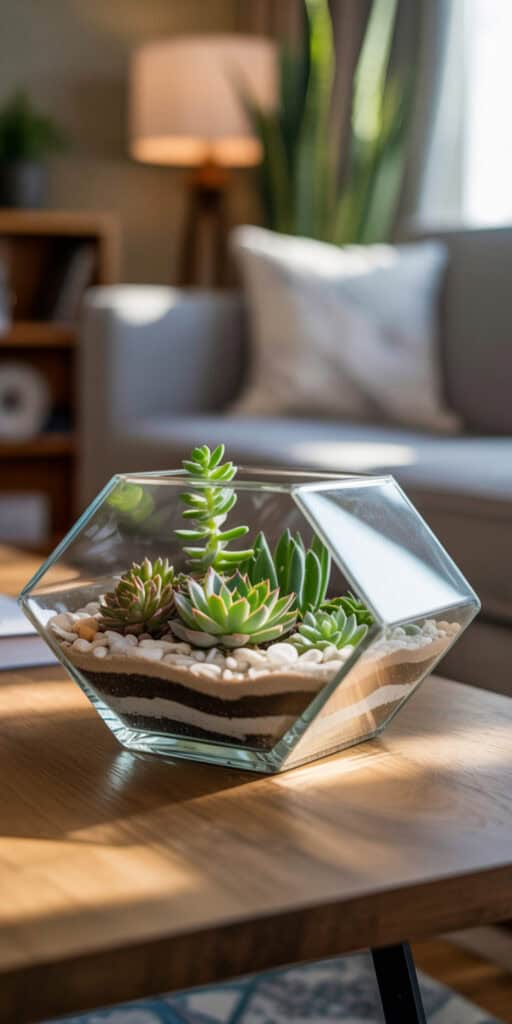
- Group a collection of glass terrariums on a coffee table (use open-top terrariums for airflow)
- Place a single dramatic Aloe or Agave in a large pot as a living room statement plant
💡 Light Tip: Most succulents need at least 4–6 hours of bright, indirect light indoors. South or east-facing windows are ideal. If your plants start “stretching” toward the light, that’s a sign they need more sun.
Backyard Landscaping with Succulents: Putting It All Together
Ready to design your whole backyard with succulents in mind? Here’s how to think about it at a bigger scale:
Zone your yard. Place the most drought-tolerant plants (cacti, Agave) in the sunniest, driest areas. Save shadier, moister spots for Aloe, Haworthia, or Sedum.
Create focal points. Use a large container arrangement, a statement cactus, or a decorative rock garden as an anchor point that draws the eye.
Connect beds with pathways. Gravel or flagstone paths connect your succulent islands beautifully while keeping maintenance low.
Layer in color seasonally. Mix in annual drought-tolerant flowers like portulaca, ice plant, or blanket flower for seasonal bursts of color without extra watering.
Light it up. Solar-powered path lights or uplighting on a dramatic cactus or Agave make your succulent garden shine at night — literally!
Frugal Tips for Building Your Succulent Garden on a Budget
- Buy small. Tiny 2″ succulents are much cheaper than large specimens and grow quickly.
- Swap with friends. Join a local plant swap or neighborhood Facebook group to trade cuttings.
- Shop end-of-season sales. Nurseries often deeply discount plants in late summer.
- Propagate, propagate, propagate. See above — free plants are the best plants!
- Use what you have. Repurpose containers and materials before buying new.
- Start small. One beautiful container garden can expand into a full backyard design over time without breaking the bank.
Final Thoughts
Succulent gardens are one of the most rewarding, budget-friendly, and beautiful garden styles you can create — whether you have a tiny balcony or a sprawling farm property. The design possibilities are truly endless, and the more you propagate and experiment, the more plants (and free ones at that!) you’ll have to work with.
I’d love to see what you’re creating! Tag me on Pinterest or Instagram with your succulent garden designs — there’s nothing I love more than seeing this community grow. 🌵
And before you go — take a quick second to answer the survey below! It helps me create more of the content YOU want to see here on The Frugal Farm Girl.
Quick poll
Which succulent project are you tackling first?
 How to Wean a Baby Goat
Leave a Reply