

Table of Contents[Hide][Show]
- Why You Don’t Need a Full Deck
- 1. Half Deck Around an Above Ground Pool
- 2. Pallet Deck for an Above Ground Pool
- 3. Freestanding Step Platform
- 4. Paver Pad Instead of a Deck
- 5. Gravel and Rock Surround
- 6. Deck Off the House
- 7. The Partially Sunken Look
- Cost Comparison: Which Option Fits Your Budget?
- Safety, Permits, and Fencing Before You Build
- Budget Finishing Touches
- Frequently Asked Questions
A full wraparound deck can easily cost more than the pool itself. That’s the part nobody tells you when you’re browsing pool pictures on Pinterest.
The good news is you don’t need a giant deck to make an above-ground pool look finished and feel easy to use. A small half deck, a sturdy step platform, or even a simple paver pad can do the job for a fraction of the price.
When we moved into our first house, it had a pool and only a small half deck around it, which was perfect for us as first-time home buyers to maintain.
This post walks through the cheapest above ground pool deck ideas, from DIY pallet decks to gravel surrounds, plus a cost comparison so you can pick what fits your yard and your budget. If you’re planning the whole space, pair it with my Above Ground Pool Landscaping on a Budget post for plants, borders, and privacy ideas.
Why You Don’t Need a Full Deck
Most above ground pools only need two things from a deck: a safe way in and out, and a spot to set a towel and a drink. Everything past that is a nice extra, not a must.
A full wraparound deck means more lumber, more posts, more hardware, and usually a permit and an inspection. It also takes up a big chunk of your yard and needs sealing or staining every couple of years.
Before you price out a huge deck, ask yourself:
- How do people actually get in? One good entry point is enough for most families.
- Where do you sit? If you’d rather lounge in a chair on the grass, you don’t need deck space for it.
- How long will the pool stay? Above ground pools often last around 10 to 15 years. A smaller, simpler deck makes sense if you might replace or move the pool later.
- What’s your skill level? A step platform is a weekend project. A raised wraparound deck is a much bigger build.
Start small. You can always add on next summer once you see how your family actually uses the pool.
1. Half Deck Around an Above Ground Pool
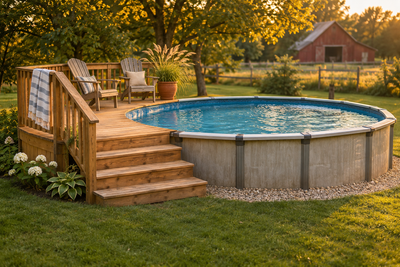
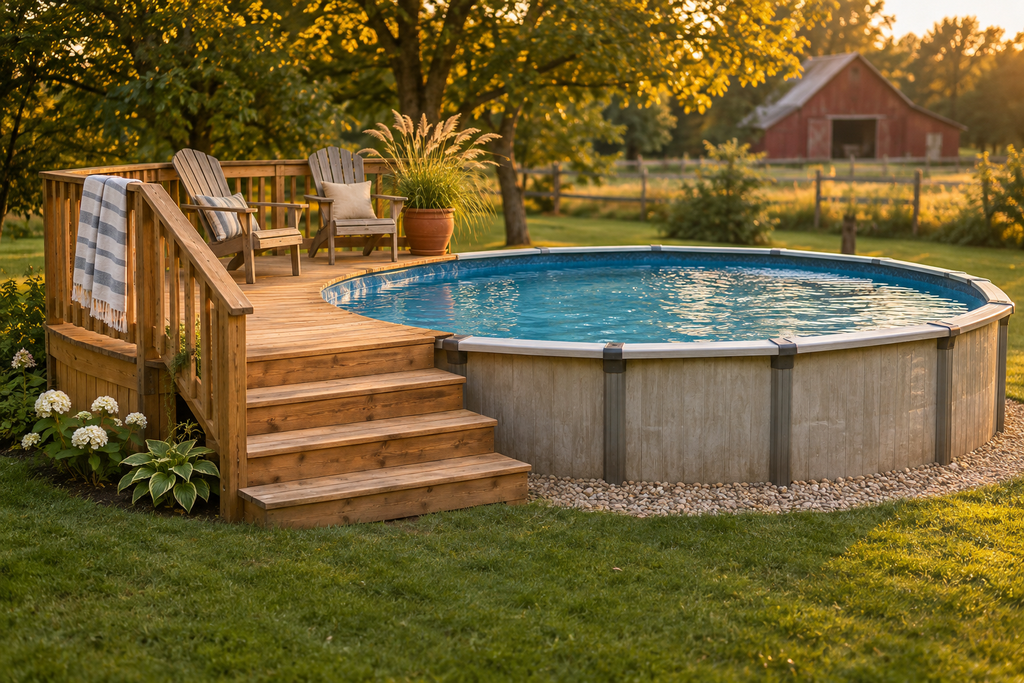
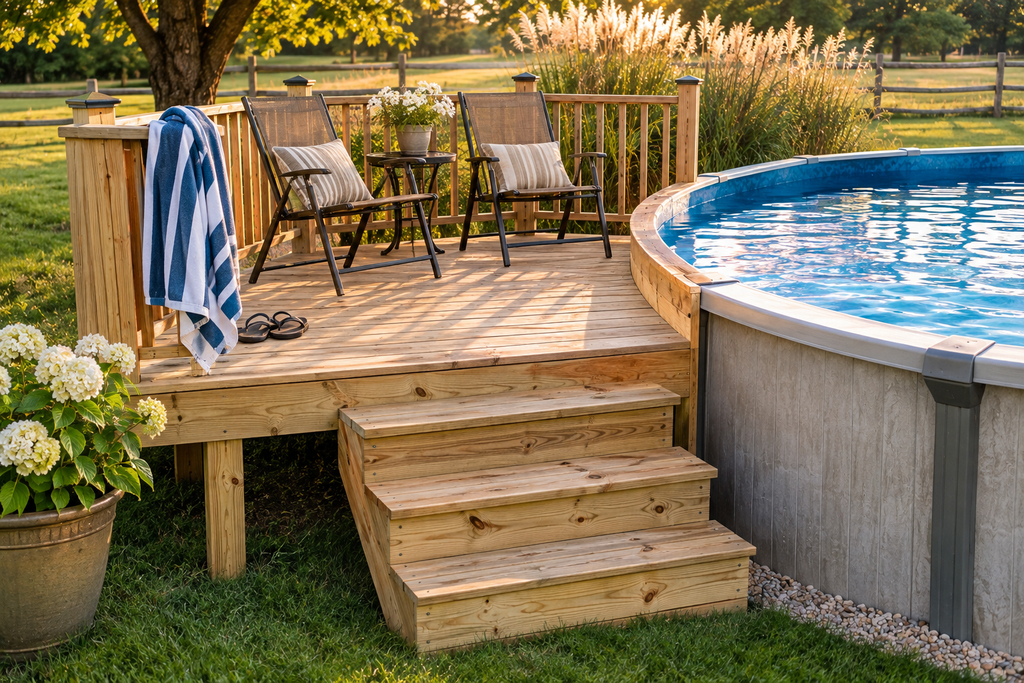
A half deck wraps around part of the pool, usually a quarter to a half of the circle. You get a real deck feel for a lot less lumber than going all the way around.
This is the most popular option for a reason. It gives you a place to stand, sit, and climb in, while the rest of the pool stays open for landscaping.
How to make a half deck work on a budget:
- Face it toward the house. Put it on the side you walk out to, so it’s the first thing you reach.
- Keep it freestanding. A deck that doesn’t attach to the pool or the house is simpler to build and easier to take apart later.
- Use a simple shape. A straight-edged deck that meets the pool is far easier than cutting a perfect curve. Fill the small gaps with a trim board.
- Add one set of stairs. One entry point from the ground keeps costs down.
Good for: families who want a deck look without a full wraparound price.
Watch out for: most pool makers say a deck shouldn’t put weight on the pool wall. Build it so it stands on its own posts.
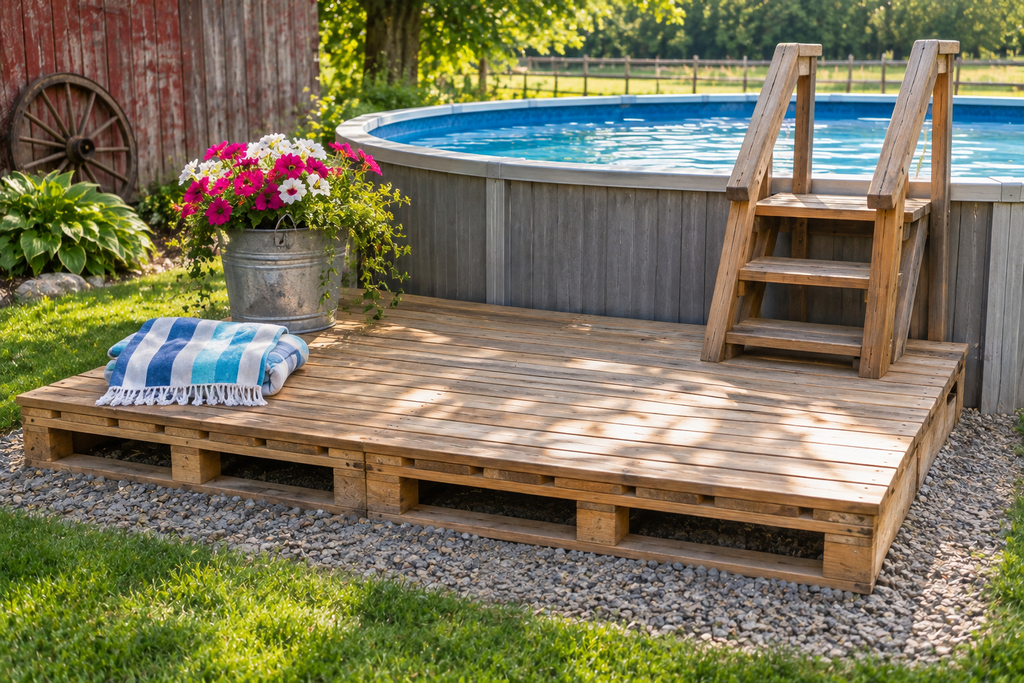
2. Pallet Deck for an Above Ground Pool
A pallet deck is the cheapest way to get a deck area around your pool. Free or low-cost pallets become the frame, and you top them with deck boards or plywood.
It’s a truly frugal DIY project, and it’s one of the most-saved pool ideas on Pinterest.
How to build a pallet deck the smart way:
- Pick the right pallets. Look for the “HT” stamp, which means heat-treated. Skip any stamped “MB” (methyl bromide), and skip pallets with stains or strange smells.
- Level the ground first. Lay down landscape fabric and a few inches of gravel so the pallets sit flat and drain well.
- Lay the pallets tight. Screw them together so they can’t shift.
- Top them. Pallet slats are rough and uneven, so cover them with deck boards for a smooth, splinter-free surface.
- Seal everything. A good exterior sealer helps the wood last through wet summers and freezing winters.
Good for: a low, ground-level deck around the pool on a very tight budget. Pair it with a ladder or step platform to get in. Some people stack pallets on a frame to get closer to pool height, but that needs solid bracing.
Watch out for: pallets aren’t made for long-term outdoor use. Expect to replace boards over time, and check for rot every spring.
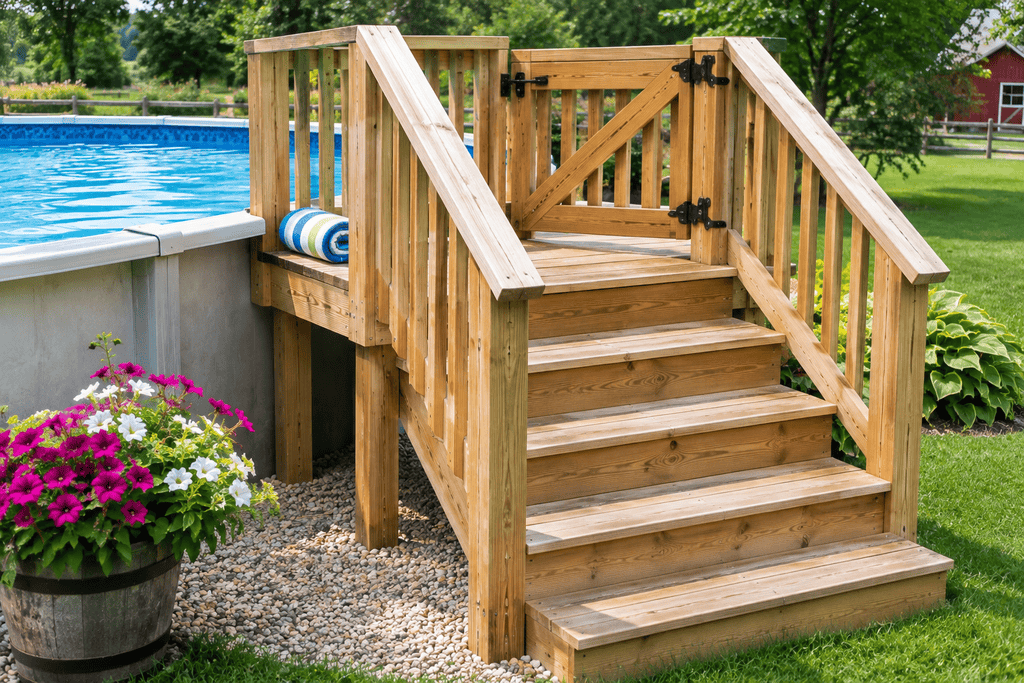
3. Freestanding Step Platform
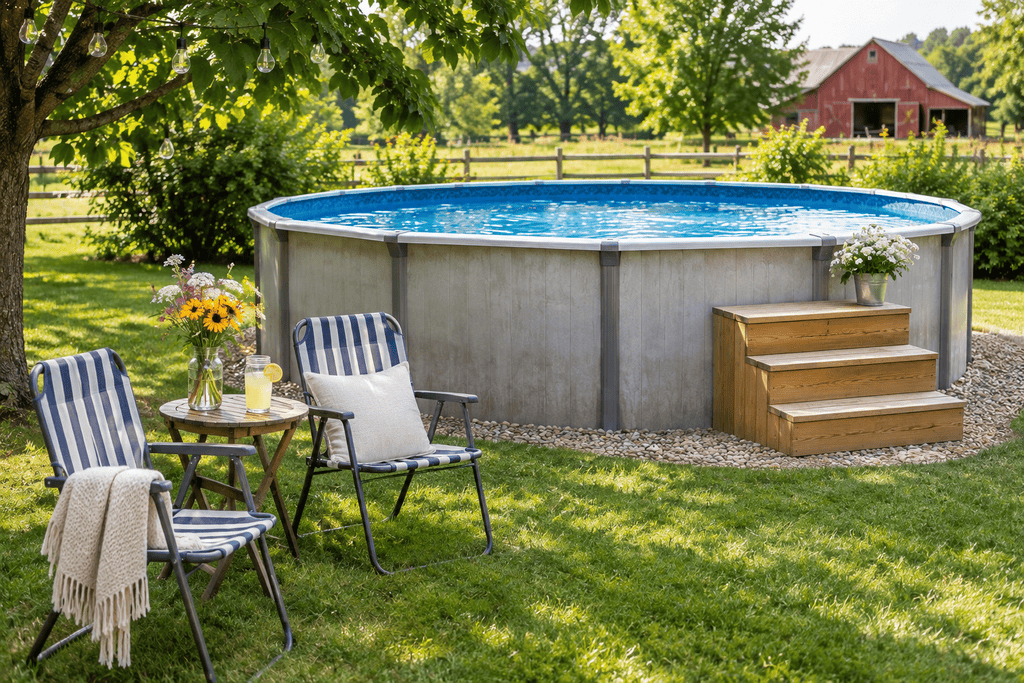
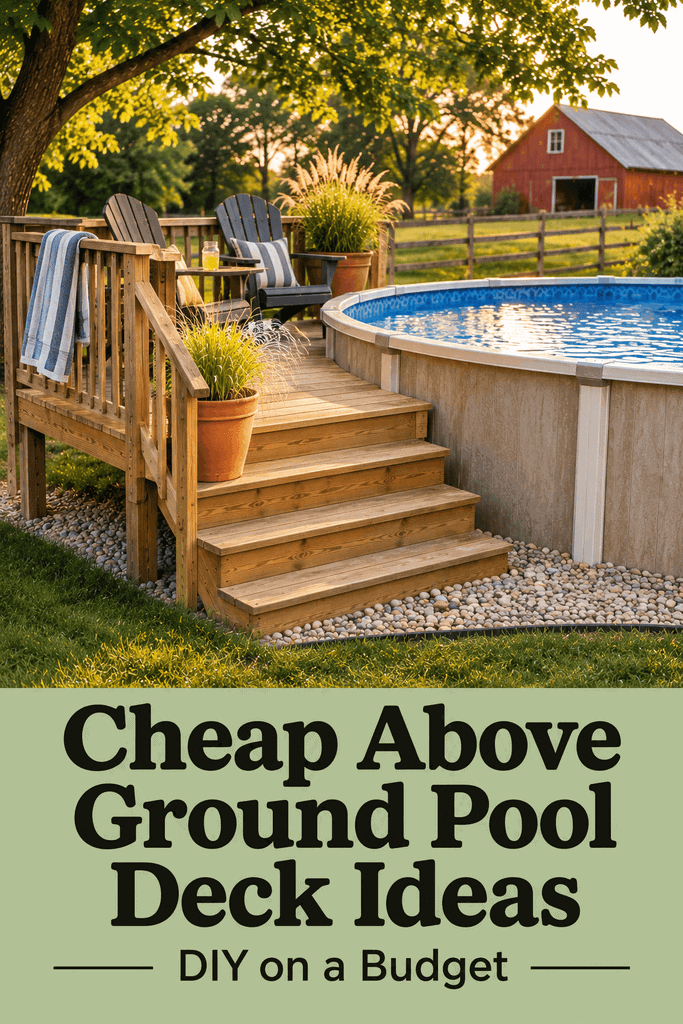
If you only build one thing, build this. A freestanding step platform is a small landing at pool height with a set of stairs, so you can walk up and step straight into the water.
It replaces the wobbly A-frame ladder that comes with most pools, and it feels like a mini deck without the mini-deck price.
What makes a good step platform:
- A landing big enough to stand on. Aim for room to turn around and set down a towel.
- Wide, shallow steps. Kids and older relatives will thank you.
- A handrail. Wet feet and wood steps are slippery.
- A gate or removable stairs. You need a way to block access when the pool isn’t being watched (more on that in the safety section).
You can build one from pressure-treated lumber, or buy a resin step-and-platform kit made for above ground pools. Kits cost more than DIY lumber, but there’s no cutting, and they won’t rot.
Good for: anyone who wants an easy, safe entry without building a full deck.
Pinterest search tip: people search “above ground pool steps ideas” and “DIY pool steps above ground” thousands of times a month, so this is a great project to share.
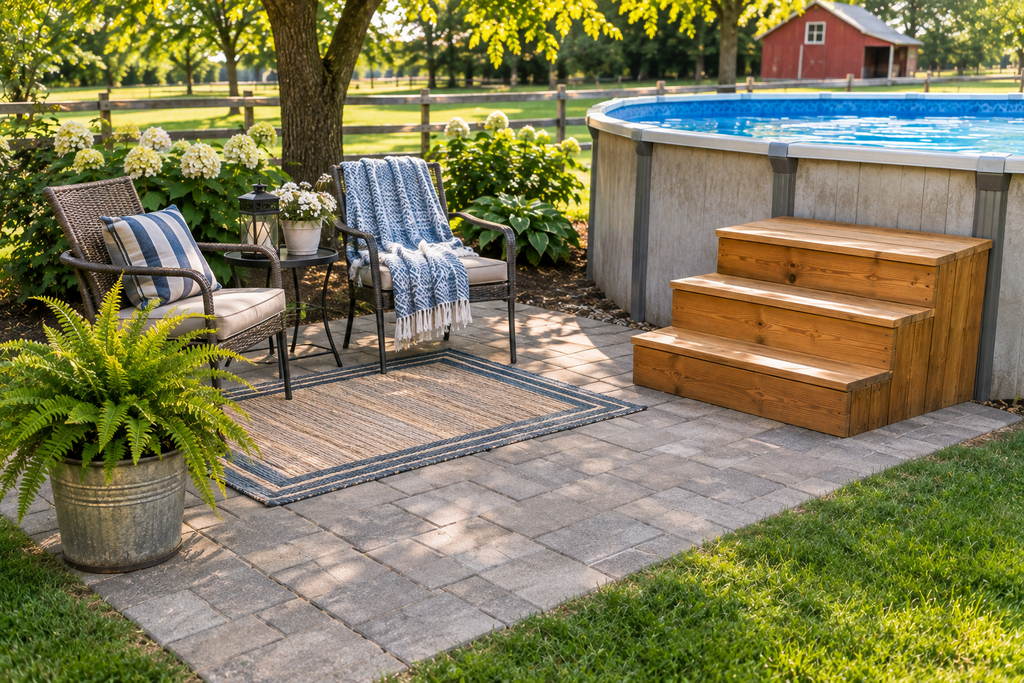
4. Paver Pad Instead of a Deck
A paver pad is a small patio laid at ground level next to your pool. Pair it with a step platform or ladder and you have a clean, finished-looking spot for chairs, with zero lumber to rot.
Pavers are a great DIY job because there’s no cutting of posts and no building codes for a raised structure in most places. You’re basically making a level, flat floor outside.
How to lay a simple paver pad:
- Mark the area with spray paint or a garden hose.
- Dig out a few inches of soil and level the bottom.
- Add a gravel base, then tamp it down firmly.
- Spread a layer of paver sand and level it with a straight board.
- Set the pavers tight together, then sweep sand into the joints.
Frugal tip: check Facebook Marketplace for leftover pavers from other people’s projects. Folks often sell extras cheap or give them away just to get them out of the yard.
Good for: a lounge spot that never needs staining or sealing.
Watch out for: keep the pavers off the pool’s own base area. The pool needs its own level, solid footing.
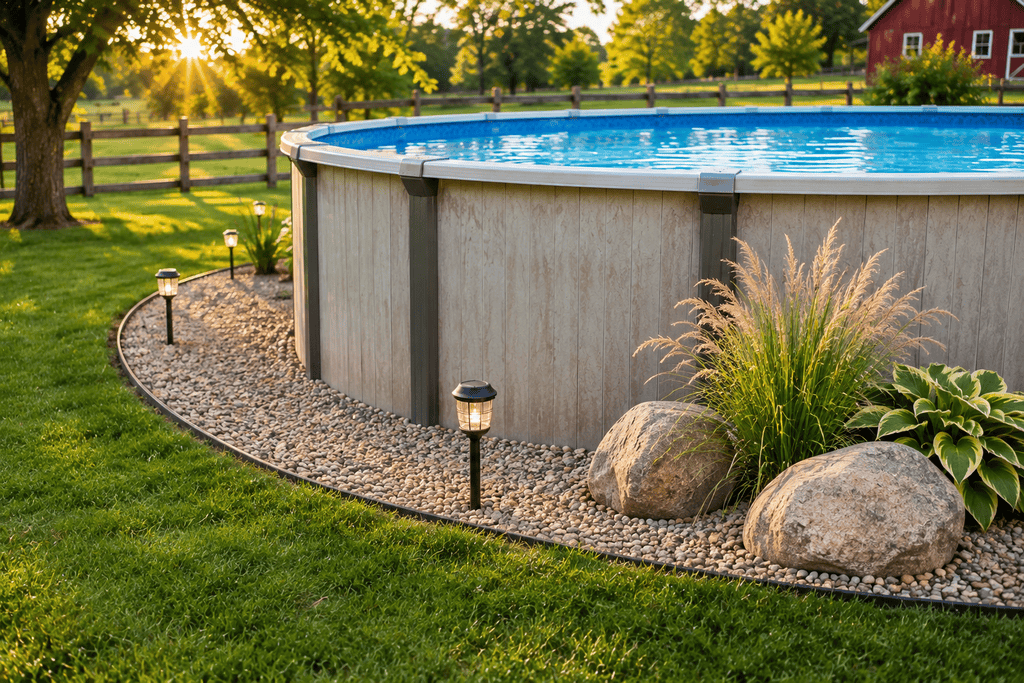
5. Gravel and Rock Surround
A gravel or rock ring around the base of your pool is the cheapest way to make it look finished. It also keeps grass from growing up against the pool wall, so you’re not trying to weed-whack around it all summer.
This is the easiest project on this list. You can do it in a weekend with a shovel, some landscape fabric, and a few bags or a truckload of stone.
How to make a rock border around your pool:
- Pick your width. One to two feet wide around the base is plenty for most pools.
- Edge it. Use plastic, metal, or paver edging so the stone doesn’t spread into the lawn.
- Lay landscape fabric. It keeps weeds down and keeps rock from sinking into the dirt.
- Choose your stone. Pea gravel is soft under bare feet. River rock looks nice but is lumpy to walk on. Crushed stone packs down firm.
Then pair it with a step platform or paver pad where people get in. You’ll get a polished look for very little money.
For more border and planting ideas, see my Above Ground Pool Landscaping on a Budget post.
Good for: finishing the look on any budget, alone or with a deck.
6. Deck Off the House
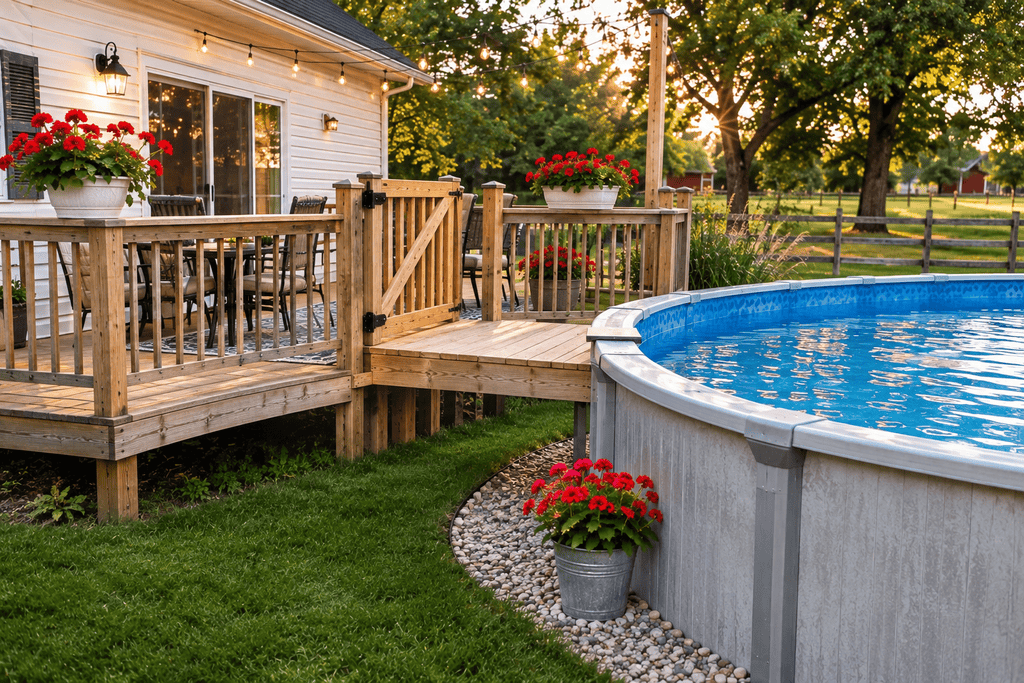
If you already have a back deck or a raised porch, you may be able to set the pool next to it and use what you’ve got. One short bridge or extension can connect your deck to the pool edge.
This is one of the most searched pool layouts on Pinterest, and it can be a budget win, because the expensive part (a raised deck) is already built.
Things to think about first:
- Height. Your existing deck needs to be close to the height of the pool top rail. A big gap means extra stairs or a step-down landing.
- Distance from the house. Many towns require a set distance between a pool and the house. Check before you place the pool.
- Access control. If your back door leads straight to the pool, you’ll likely need a gate on the deck. Some places also require door alarms.
- Drainage. Splashing water should drain away from your house’s foundation.
Good for: homes with an existing raised deck or porch at a similar height.
Watch out for: don’t attach new framing to your house without checking local code. A ledger board on a house is a job where mistakes get expensive.
7. The Partially Sunken Look
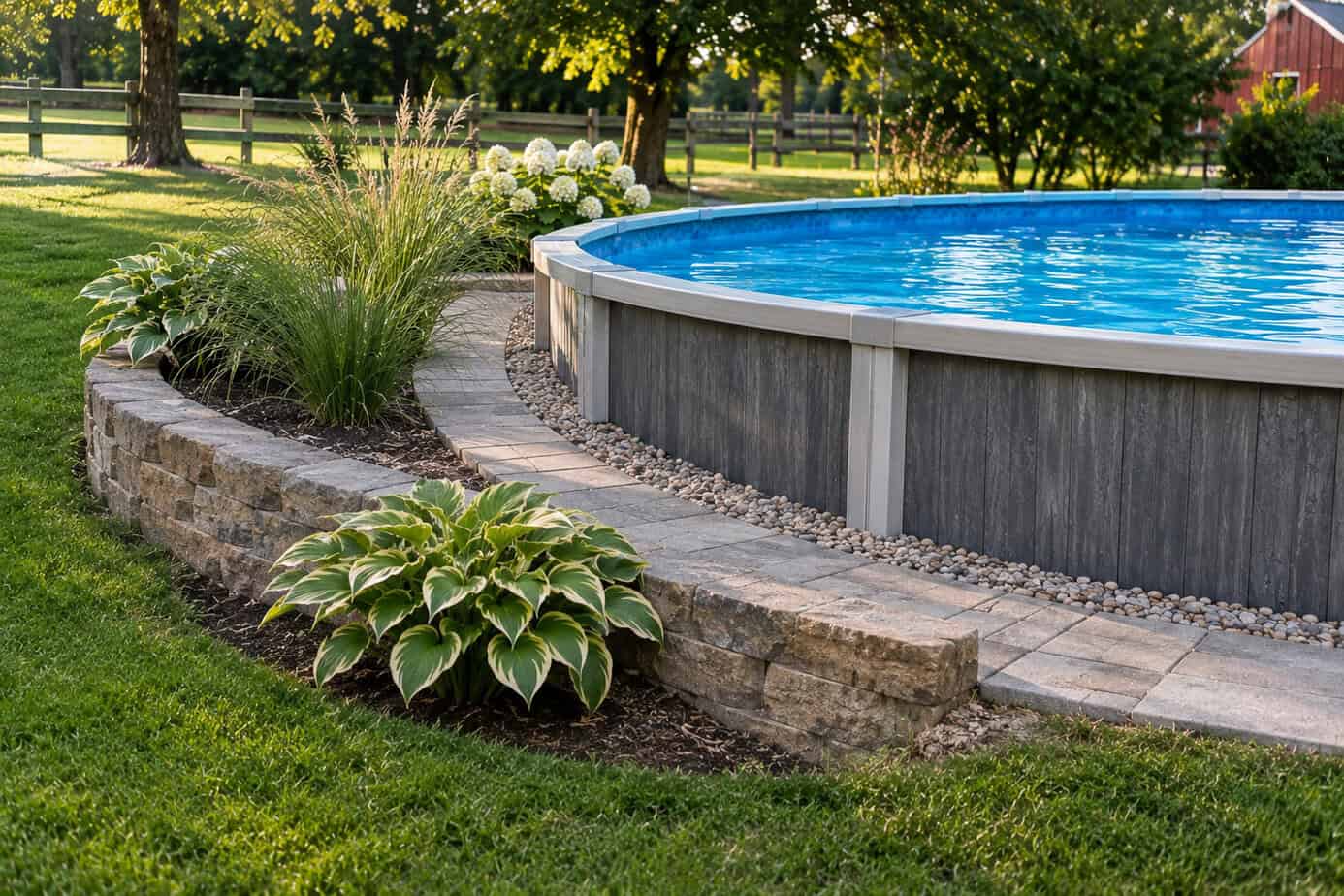
A partially sunken pool sits lower in the ground, so it looks more like an in-ground pool and needs a much shorter deck, or no deck at all. It’s a popular look, but it only works with the right pool.
Check your pool’s manual first. Many standard steel-wall above ground pools are not made to be buried, and the dirt pushing on the wall can make it buckle or fail. Some resin-wall and “semi in-ground” pools are made for it, but usually only up to a certain depth.
If your pool allows it, the budget version looks like this:
- Sink it on one side only. On a sloped yard, digging into the high side can level the pool and give you a ground-level edge on that side.
- Build a low retaining wall. Use landscape blocks to hold the dirt back from the pool wall where the manufacturer requires it.
- Finish with pavers or gravel right up to the edge for an in-ground feel.
Good for: sloped yards, and pools rated for partial burial.
Watch out for: this voids the warranty on many pools. If the manual doesn’t say it’s okay, skip this idea and go with a half deck or step platform instead.
Cost Comparison: Which Option Fits Your Budget?
Doing it yourself is the biggest money saver. Professional labor for a pool deck alone runs about $15 to $35 per square foot, and a full wraparound deck can add $3,000 to $12,000 to a pool project.
Here’s how the DIY options compare on materials. Prices vary a lot by region and season, so use these as a starting point and price out your local stores.
| Option | DIY material cost (approx.) | Upkeep | Skill level |
|---|---|---|---|
| Gravel or rock surround | $1–$3 per sq ft (pea gravel) | Rake and top off yearly | Beginner |
| Pallet deck | Free–low (pallets) + deck boards [VERIFY local price] | Check for rot every spring | Beginner–intermediate |
| Paver pad | $4–$6 per sq ft (concrete pavers) | Re-sand joints every few years | Beginner–intermediate |
| Step platform | Lumber or resin kit | Seal wood every 2–3 years | Intermediate |
| Half deck (wood) | $3–$25 per sq ft, depending on wood | Seal or stain every 2–3 years | Intermediate–advanced |
| Full wraparound deck | Adds $3,000–$12,000 to the project (often installed) | Seal or stain every 2–3 years | Advanced |
My frugal pick: start with a gravel surround plus a step platform. It’s the lowest cost for a finished, safe setup. Then add a half deck later if you find you want more space.
Sources: Angi pool deck cost guide, Lawn Love paver patio cost, HomeServe patio cost guide, iGarden above ground pool cost. Checked Nov 2026.
Safety, Permits, and Fencing Before You Build
A deck makes your pool easier to get into, which also means it’s easier for a small child to get into. Plan the safety side before you buy a single board.
Check with your town or county first. Rules vary a lot from place to place, but many areas have rules on:
- Barriers. Many places require a fence or barrier around a pool, often around four feet high. The pool wall may count, but a deck or steps can change that.
- Gates. A gate at the top of deck stairs often needs to be self-closing and self-latching.
- Permits. Raised decks usually need a permit. Ground-level paver pads and gravel often don’t.
- Setbacks. How close the pool and deck can be to your house, fence, and property line.
- Electrical. Keep any lights or outlets near the pool on GFCI protection, and keep cords away from water.
Simple safety habits that cost nothing:
- Remove or lock the steps when no adult is watching.
- Never let kids swim alone, even in a shallow pool.
- Keep chairs and toys away from the outside of the pool wall so they can’t be used as a ladder.
- Check your homeowner’s insurance. Some policies have rules about pools, decks, or diving.
Budget Finishing Touches
Once you have your deck or step platform in place, a few cheap extras make the whole area feel like a backyard getaway.
- Solar lights. Solar post caps or stake lights along the deck edge and steps look pretty at night and help you see where you’re stepping. No wiring needed.
- Big planters. A few large pots of annuals or grasses soften the pool wall. Thrifted or dollar-store pots work great with a coat of spray paint.
- A privacy screen. A lattice panel, a reed fence roll, or a row of tall potted grasses gives you shade and privacy for much less than a fence.
- A towel hook rail. A board with a few hooks keeps wet towels off the deck.
- Outdoor rug. A cheap outdoor rug on a paver pad or deck makes it feel like a room.
- Shade. An umbrella in a weighted base or a shade sail goes a long way on hot afternoons.
For plants that work around a pool (and won’t drop leaves in the water), see my Above Ground Pool Landscaping on a Budget post and my low-maintenance shrubs post.
Frequently Asked Questions
What’s the cheapest thing to put around an above ground pool? A gravel or pea gravel ring is the cheapest. It costs very little per square foot if you do it yourself, and it keeps grass and weeds off the pool wall.
Can I build a deck that touches my above ground pool? Most pool makers say the deck shouldn’t rest on or attach to the pool wall or top rails. Build it on its own posts, with just a small gap at the pool edge. Check your pool’s manual.
Do I need a permit for an above ground pool deck? Often, yes, for a raised deck. Ground-level pavers and gravel usually don’t need one. Rules change from town to town, so call your local building department first.
What’s the best wood for a pool deck on a budget? Pressure-treated lumber is the most budget-friendly. Composite costs more up front but doesn’t need staining and won’t splinter.
How do I keep kids out of the pool when no one is watching? Use a lockable gate at the top of the steps, or steps that lift or lock. Many places require a barrier around the pool, so check your local rules too.
 How to Write TikTok Shop Video Scripts That Actually Sell
Leave a Reply