


Table of Contents[Hide][Show]
- What Is a Chick Brooder (And What Does It Need)?
- My Go-To: The 50-Gallon Storage Tote Brooder
- 6 More DIY Chick Brooder Ideas You Can Build at Home
- 1. Cardboard Box Brooder — The Classic Freebie
- 2. Stock Tank Brooder — Durable and Versatile
- 3. Wooden Box Brooder — The DIY Carpenter’s Choice
- 4. Wire Dog Crate Brooder — Easy and Already in Your Garage
- 5. Kids’ Plastic Swimming Pool Brooder — Great for Large Flocks
- 6. Repurposed Dresser Drawer Brooder — For the Upcyclers
- Pretty Chick Brooder Ideas for the Pinterest-Loving Homesteader
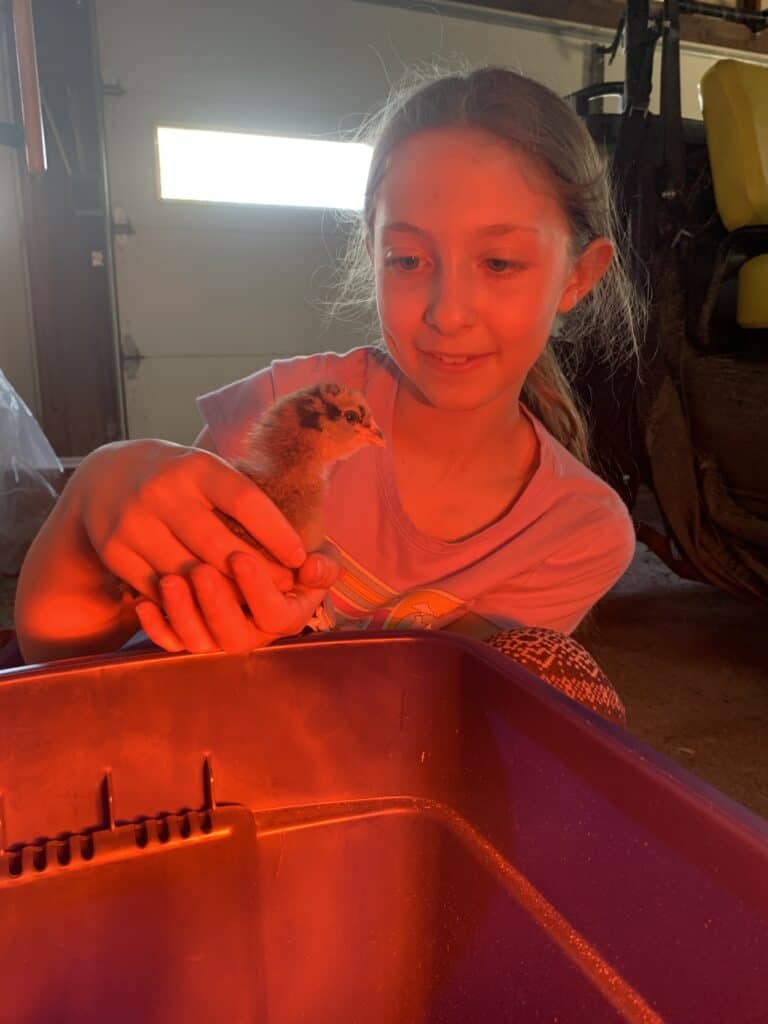
If you’ve ever ordered a batch of day-old chicks, you already know the drill: they arrive fluffy, peeping, and in desperate need of a warm, safe place to call home for the first few weeks of their lives.
Before your chicks ship, you need a brooder ready and waiting. And if you’re like most of us on the homestead, you’d rather throw something together with what you’ve got than spend a fortune at the feed store.
The good news? Chick brooder ideas are everywhere — and some of the best setups cost next to nothing. In this post, I’m sharing the brooder I use for large batches of meat birds, plus six more DIY options, ranging from quick-and-dirty functional to downright adorable, for all my fellow Pinterest lovers out there.
What Is a Chick Brooder (And What Does It Need)?
A brooder is simply a warm, enclosed space where baby chicks live during their first 4–6 weeks of life — until they’re feathered out enough to regulate their own body temperature. Every brooder, no matter how fancy or frugal, needs a few basic things:
- A heat source (heat lamp, brooder plate, or radiant heater)
- Adequate ventilation without drafts
- Enough space as chicks grow (plan for crowding fast!)
- Easy-to-clean bedding like pine shavings or shredded newspaper
- Access to chick starter feed and fresh water at all times

With those basics covered, almost anything can become a brooder. Here’s what works:
My Go-To: The 50-Gallon Storage Tote Brooder
For our big batches of meat birds — we’re talking 25–50 Cornish Cross chicks at a time — I reach for the 50-gallon plastic storage totes from the hardware store. They’re cheap, widely available, and incredibly easy to work with.
I started this two years ago when my girls were still doing meat birds in our local 4H club. It was a little bit of an investment, but so worth it. They are tall enough that you don’t have to cut anything out of the lid, but if you do go with storage totes and go smaller (that’s what we’ve always done when we’ve gotten layers 6 at a time).
I found the best deal on these totes at Home Depot.
Line the bottom with pine shavings, clip a heat lamp to the side, add feeders and waterers, and you’re done. Seriously — it takes about 10 minutes to set up.
Why I love it: Totes are lightweight, easy to clean (just hose them out), and stackable for storage when not in use. For a large batch, I’ll run two totes side by side for the first couple of weeks, then consolidate as the chicks feather out. At around $10–$15 each, they’re the most affordable container option I’ve found for high-volume brooding.

They also work great if you need to wash chickens for the fair!
For our meat birds, when they leave the brooder, we put them under our trampoline. You can check out how we do that here.

Tip: Get the clear or translucent totes so you can monitor chick behavior without lifting the lid and losing heat. (They may be pricer.
Now this method won’t last long once they start growing youll need to move them.
6 More DIY Chick Brooder Ideas You Can Build at Home
1. Cardboard Box Brooder — The Classic Freebie
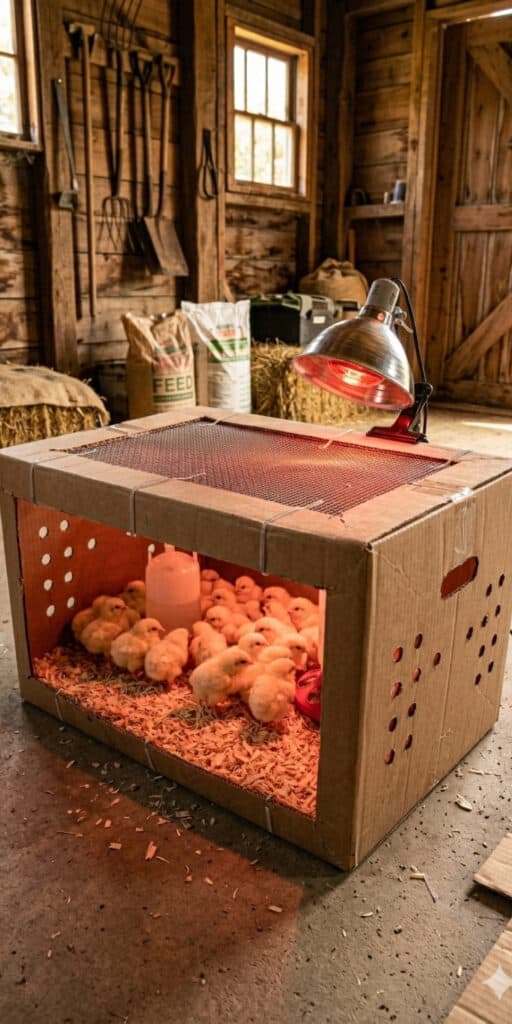
If you’re hatching a small flock for the first time or just need something right now, a large cardboard box is the ultimate no-cost brooder. Appliance stores, furniture shops, and big-box retailers often give these away for free.
Cut ventilation holes in the sides near the top, line the bottom with pine shavings, and set up your heat lamp clipped to the edge or suspended above. Cardboard won’t last more than a couple of weeks before it gets damp and starts to break down — but for a quick hatch of 6–10 chicks, it’ll get the job done. Just check daily for moisture and replace if needed.
Best for: First-timers, small flocks, or emergency situations.

2. Stock Tank Brooder — Durable and Versatile
A galvanized metal stock tank (the kind sold at farm supply stores for livestock watering) makes an excellent brooder. The round or oval shape means no corners where chicks can pile up and suffocate, the metal walls hold heat well, and the depth keeps drafts out.
Drape hardware cloth over the top to keep chicks in and predators out. Stock tanks last for decades and can pull double duty as garden planters, ice chests for parties, or actual stock tanks once brooding season is over.
Best for: Small-to-medium flocks of laying hens. The round design is especially helpful for preventing chick pileups.

3. Wooden Box Brooder — The DIY Carpenter’s Choice
Got some scrap lumber sitting around? Build a simple open-top wooden box to your desired dimensions. A basic 2×4 frame with plywood sides is sturdy, insulating, and easy to customize. Add hardware cloth to the top for ventilation and to safely mount your heat lamp.
We’ve also done an old washer drum, but it’s small enough that really only six chicks are good in there. We used it for ducks as well, and it worked pretty well.
For long-term durability, coat the inside with a non-toxic sealant or line it with vinyl flooring scraps to make cleanup easier. Wooden brooders are excellent insulators, which means you’ll use less electricity, keeping chicks warm in a cold garage or barn.
Best for: Homesteaders who hatch every year and want a long-lasting, reusable setup.

4. Wire Dog Crate Brooder — Easy and Already in Your Garage
A wire dog crate can be repurposed into a surprisingly functional brooder. Line the bottom and lower sides with cardboard or a plastic tray to retain heat and keep bedding inside. Drape a tarp, old towel, or mylar emergency blanket over the top and sides, leaving the front open slightly for ventilation.
Clip your heat lamp to the inside top of the crate. The wire structure makes it easy to hang waterers and feeders at the right height as chicks grow, and cleanup is as simple as pulling out the liner and hosing it down.
Best for: People who already have a crate on hand and want a no-cost solution.
5. Kids’ Plastic Swimming Pool Brooder — Great for Large Flocks
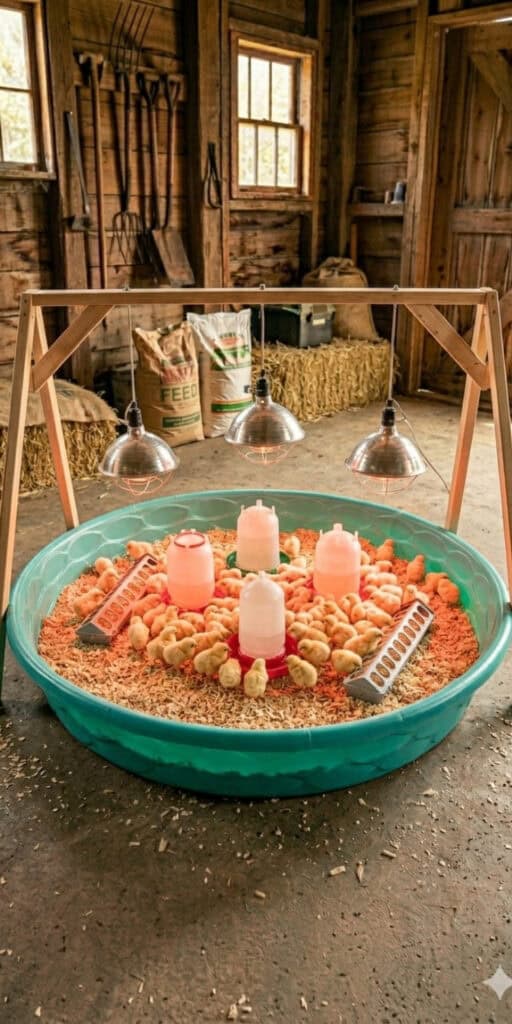
A small plastic kiddie pool — the hard-sided kind — is a genius brooder for larger flocks. It provides a massive amount of floor space, which is critical for meat birds, especially since Cornish Cross chicks grow at an astonishing rate and need room to spread out.
Suspend a heat lamp over the center from a tripod or wooden frame built over the pool. Because of the low walls, you’ll want to watch for drafts in your brooding space. A kiddie pool works best indoors or in a protected garage. At the end of the season, rinse, dry, and store it flat.
Best for: Large batches of meat birds or anyone brooding 30+ chicks at once.
6. Repurposed Dresser Drawer Brooder — For the Upcyclers
Got an old dresser drawer sitting in the barn, or picked one up at a garage sale? A large, deep drawer makes a surprisingly cozy brooder for a small flock of 10–15 chicks. The wood provides natural insulation, and the open top makes it easy to place heat lamps.
Line the bottom with pine shavings, set up your heat plate or lamp above, and you’re in business. Once the chicks outgrow it — usually within 2–3 weeks — repurpose it back into a storage bin or garden planter.
Best for: Small backyard flocks and anyone who loves a good repurpose project.

Pretty Chick Brooder Ideas for the Pinterest-Loving Homesteader
Not all of us want a plastic tote sitting in the living room for six weeks (no judgment if you do — same). If you want your brooder to actually look like it belongs in your farmhouse, these aesthetically pleasing options are popular for good reason:
The Stained Wooden Crate Brooder: Build or buy a large wooden wine crate or pallet box, sand it smooth, and stain it in a warm walnut or weathered gray tone. Add hairpin legs to bring it off the floor.
Cover the top with a simple hardware cloth frame with a hinged door. It looks like intentional farmhouse décor. Pair it with a sleek black brooder plate instead of a red heat lamp and it genuinely becomes a conversation piece.
The Shiplap and Chicken Wire Display Brooder: This one photographs beautifully. Build a box frame with shiplap-style wood paneling on three sides, chicken wire on the fourth for visibility, and a hinged lid with more chicken wire on top.
Paint it white or sage green. Add a little chalkboard label on the front. You’ve seen this one all over Pinterest — and for good reason. It’s adorable, functional, and easy to build with basic tools.
The Galvanized Metal Tub Brooder: A large galvanized washtub or feed bin on a wooden stand hits every farmhouse aesthetic note perfectly. Fill it with clean shavings, add a brooder plate, and tuck in a little handwritten “Chick Hotel” tag and some dried lavender on the outside ledge for the photo. Functional? Yes. Beautiful? Absolutely.
A Few Tips Before You Set Up Your Brooder
- Start with the right temperature: 95°F for week one, dropping 5°F each week until chicks are fully feathered around week 6.
- Watch your chicks, not the thermometer: If they’re huddled under the lamp, they’re cold. Scattered and panting? Too hot. Content and moving around evenly? Perfect.
- Plan for growth: Chicks double and triple in size fast. Whatever brooder you choose, have a plan for when they outgrow it.
- Consider a brooder plate over a heat lamp: Heat plates are safer (no fire risk), mimic a mother hen, and use less electricity. More expensive upfront but worth it.
Final Thoughts on Chick Brooder Ideas
The best brooder is the one you’ll actually build with what you have on hand. Whether that’s a $30 plastic tote, a free cardboard box from behind the grocery store, or a beautiful stained wood crate you built over a weekend — all of these chick brooder ideas work.
What matters most is that your chicks are warm, safe, have clean bedding, and have access to feed and water from day one.
Now go get those chicks ready — and don’t forget to snap a photo for Pinterest.
 Low Maintenance Front Yard Landscaping Design Ideas
Leave a Reply