

You followed the recipe. You watched it bubble away on the stove. You heard those satisfying pings as the lids sealed. And then you opened a jar a few days later and… soup. Runny, pourable, definitely-not-jelly soup.
First — take a breath. This happens to everyone, even experienced canners. And the good news is that runny jelly is almost always fixable.
Why Didn’t My Jelly Set?
Before you fix it, it helps to know what went wrong. The most common culprits are:
- Not enough pectin. If you used too little, or your fruit was overripe (overripe fruit has less natural pectin), the jelly won’t have enough structure to firm up.
- Not enough acid. Pectin needs acid to activate properly. Low-acid fruits like pears or figs sometimes need a splash of lemon juice to help things along.
- Too much or too little sugar. The ratio of sugar to fruit matters more than most people realize. Don’t reduce sugar in a standard pectin recipe — it can throw off the whole set.
- Undercooking. Jelly needs to reach the gel point — 220°F at sea level (subtract 1°F for every 500 feet of elevation). If you pulled it off the heat too soon, it won’t set.
- Skipping the jelly test. The freezer plate test is your best friend: before canning, drop a spoonful on a frozen plate and wait 30 seconds. Push it with your finger — if it wrinkles, it’s ready. If it slides around, it needs more time.
Wait Before You Do Anything
Here’s something most people don’t know: jelly can take up to two full weeks to fully set after canning. If your jars are still warm or only a day or two old, set them somewhere cool and leave them alone. You may be pleasantly surprised.
If it’s been two weeks and you’ve still got runny jelly — it’s time to reprocess.

🥫 Stay Organized This Canning Season
If you’ve ever forgotten what you canned, how many jars you have left, or what needs to be used up first… you’re not alone.
My Canning Planner helps you track your jars, recipes, pantry inventory, and canning schedule so nothing goes to waste (and you actually use what you worked so hard to preserve).
It’s simple, printable, and made for real-life busy kitchens.
Grab the Canning PlannerHow to Fix Runny Jelly: Step by Step
Fixing jelly that didn’t set is called reprocessing, and it works surprisingly well. You’ll need fresh pectin, new lids, and a little patience.
Work in small batches — no more than 4 to 6 cups at a time. Larger batches are harder to bring to a proper boil and less likely to set correctly.
- Open your jars and pour the runny jelly into a large pot.
- For every 4 cups of jelly, whisk together ¼ cup sugar, ¼ cup water, 2 tablespoons lemon juice, and 4 teaspoons powdered pectin in a separate bowl.
- Add the pectin mixture to the jelly in the pot and stir to combine.
- Bring everything to a full rolling boil — one that can’t be stirred down — and hold it there for 1 to 2 minutes, stirring constantly.
- Do the freezer plate test to confirm your gel point before ladling into jars.
- Pour into fresh sterilized jars with new lids, leaving ¼ inch of headspace.
- Process in a water bath canner according to your original recipe’s instructions.
What If You Don’t Want to Reprocess?
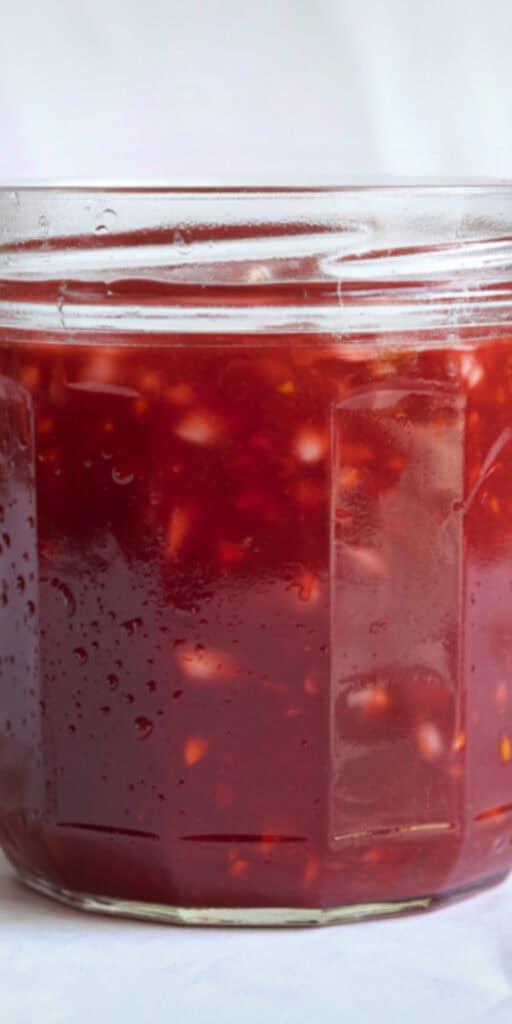
No shame in that — reprocessing is a project, and sometimes you just want to move on. The good news is that runny jelly is still completely usable.
Here are some delicious ways to put it to work:
- Use it as a syrup. Drizzle it over pancakes, waffles, yogurt, or ice cream. It’s honestly incredible.
- Stir it into oatmeal or overnight oats. A spoonful of runny blackberry jelly in oatmeal is not a failure — it’s breakfast goals.
- Mix it into salad dressings or marinades. A berry or grape jelly syrup whisked into a vinaigrette is a total game-changer.
- Use it as a glaze for chicken, pork, or roasted carrots. Sweet fruit glazes are easy, impressive, and frugal.
A batch of jelly that didn’t set is not a failed batch — it’s just a batch that became something else. In a frugal kitchen, nothing goes to waste.
Tips to Prevent Runny Jelly Next Time
- Always use a candy thermometer and confirm you’ve hit 220°F (adjusted for your elevation).
- Use the freezer plate test as a backup — thermometers can be off.
- Use fresh, unopened pectin. Old pectin loses its potency and is one of the most common reasons jelly doesn’t set.
- Measure your sugar exactly. Don’t eyeball it, and don’t reduce it.
- Use fruit that’s just ripe, not overripe. A mix of slightly underripe and fully ripe fruit actually gives you better pectin levels.
- Have you thought about freezing jam instead? Check out this post.
 Different Ways to Make Jellies and Jams (And Why You Should Start This Weekend)
Leave a Reply