
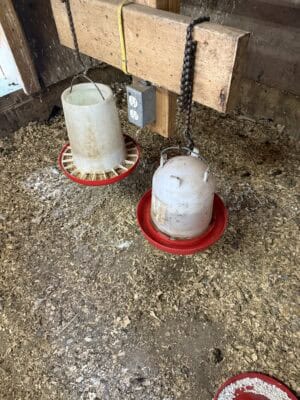

If you’ve got a small flock of backyard chickens, you already know how quickly feed can add up — and how messy it can get when your girls kick, scratch, and spill it all over the coop floor. The right chicken feeder isn’t just about keeping the feed tidy; it saves money, keeps pests away, and makes chores easier.
I’ve gone through my fair share of feeders over the years, and I can tell you — not all of them are worth the price tag. Whether you’re starting your first backyard flock or looking to upgrade, here’s a frugal breakdown of the best chicken feeders for small flocks, what to look for, and my top recommendations.
What to Look for in a Chicken Feeder/Waterer
Before you head out to the store or start scrolling for a feeder, here are a few things to keep in mind when you’re choosing a feeder for your small flock:
- Capacity – For 4–8 hens, you don’t need a giant 50-pound feeder, but something that holds 10–20 pounds can reduce daily refilling.
- Waste Control – Look for “no-waste” designs that stop chickens from scratching out feed.
- Durability – Weatherproof and sturdy is key. Plastic is lighter and cheaper; metal lasts longer.
- Pest Prevention – Rodents love free-flowing feed. Some feeders are designed to make it harder for mice, squirrels, or wild birds to steal.
- Budget – You don’t need the fanciest feeder to keep your flock happy. I’ll share some affordable picks that get the job done.
When you start with chicks, you can do the mason jar and little feeder, but that only lasts a couple of weeks, which is why this post is more focused on a flock that is past the first three weeks. If you are new to raising chicks, check out this post with everything you need to get started.

Top Chicken Feeders for Small Flocks
1. No-Waste PVC Pipe Feeder/Waterer (DIY or Buy Ready-Made)
These vertical feeders use gravity to drop feed into small openings where chickens peck, but they can’t scratch it out. You can DIY one with a section of PVC pipe and an elbow joint — or buy pre-made versions.
My husband made us one when we started with our first flock of six chickens and were still living in the city. I didn’t let my chickens out at that time, so we wanted a system that would last a couple of days.

Now, out on the farm, we pasture-raised our chickens, and they drink from the goat and pigs’ water bowls all the time!
If you love budget-friendly coop hacks, you’ll enjoy my post on How to Turn a Trampoline into a Chicken Coop

Pros:
- Very little feed waste
- Inexpensive if you DIY
- Takes up little space
Cons:
- Can be tricky to clean
- Doesn’t always keep rodents out
You can choose ones that you buy and attach to a wall or ones that use a five-gallon bucket and add the feeder ports.

2. Hanging Galvanized Chicken Waterer
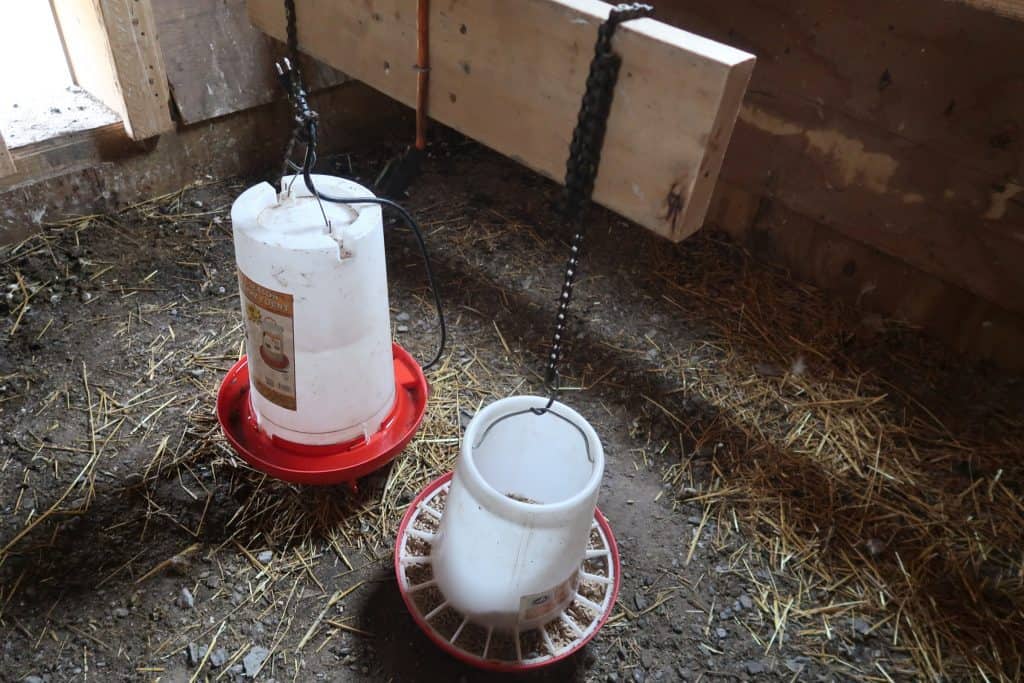
This is the classic metal hanging feeder. Hang it just above ground level, and it keeps feed off the floor and a little cleaner. I still have one like this, and I go back and forth with it. It will rust eventually, though- but we’ve had ours for over six years.
Pros:
- Sturdy and long-lasting
- Holds enough feed for several days
- Simple design, easy to refill
Cons:
- Chickens can still waste feed if it’s too low
- Can get rusty if left out in the rain
👉Check out this one on Amazon.
How to Grow a Garden for Your Chickens is a great way to save money on feed costs.
3. Treadle Feeder (Best for Pest Control)
A treadle feeder works like a tiny door: your chickens step on the plate, and it opens the lid to access feed. When they step off, the lid closes — keeping mice, rats, and wild birds out.
This is a good one for those of us who have our chickens in a barn with other livestock. Mice, rats, and who knows what else will find any of those little pieces of grain you drop. One year, we had a problem with rats, and the feed was going SO fast!
Pros:
- Excellent pest control
- Saves feed costs in the long run
- Great for free-range flocks where wild birds might steal food
Cons:
- More expensive upfront
- Chickens may need a few days to figure it out
👉Check out this one on Amazon.

4. Hanging Plastic Feeder with Cover (Budget Pick)
A plastic hanging feeder works fine if you just want something simple and cheap to get started. Get one with a rain cover if you keep it outside.
Pros:
- Very affordable
- Lightweight, easy to move
- Perfect for beginners or very small flocks
Cons:
- Not as durable
- Can waste some feed without modifications
Tractor Supply or a farm store are probably your cheapest bets on finding one of these, but they do have them on Amazon, too.
If you need ideas on how to keep your flock busy through winter, check out these DIY toys!

Which Feeder is Best for a Small Flock?
For most frugal families, I recommend starting with a PVC no-waste feeder if you like DIY projects or a galvanized hanging feeder if you want something ready.
If pests are a big issue where you live, a treadle feeder is absolutely worth the investment because it will save you money in the long run.
And remember — keeping your feeder at the right height (just below your chickens’ necks) and not overfilling it are simple tricks to cut down on waste no matter which feeder you choose.
FAQ Section
How many feeders do I need for a small flock?
A good rule of thumb is one feeder per 6–8 chickens. If you notice bullying or one hen guarding the feeder, add a second to spread them out.
Should I put the feeder inside or outside the coop?
Most chicken keepers keep feeders inside to protect from rain and wild animals. If outside, make sure it’s covered and secure.
How high should a chicken feeder be?
Hang or place the feeder so the lip is at chicken chest height. This keeps them from scratching bedding into the feed and reduces waste.
What’s the cheapest way to make a chicken feeder?
PVC pipe feeders are the most frugal DIY option. For under $20, a few pieces of pipe and an elbow joint can make a no-waste feeder.
How do I keep pests out of chicken feeders?
A treadle feeder is best for rodent control, but you can also store feed in sealed containers and clean up spills daily.

 The Simple Kitchen Shortcut Every Busy Mom Wishes She Knew
Leave a Reply