

You spent a weekend planting. You watered, you mulched, you stood back and felt proud. Then you woke up Monday morning to stubs.
If deer have ever decimated your landscaping, you already know the frustration. And if you’re reading this before planting — smart move. Let’s talk about deer resistant landscaping shrubs: what they are, why they work, and exactly how to use them so you can finally have a yard that looks good AND survives the wildlife.
Why Deer Avoid Certain Shrubs
Here’s something most gardening articles skip over: deer don’t randomly eat your plants. They’re selective. They’re looking for soft, tender, high-moisture vegetation — especially in spring when they’re hungry after winter. What they actively avoid falls into a few categories:
- Strongly aromatic plants — Their sense of smell is powerful, and certain scents overwhelm them.
- Fuzzy or hairy foliage — Deer don’t like the texture in their mouth.
- Toxic or bitter plants — They’ve learned through instinct (and probably some bad experiences) to avoid plants with certain compounds.
- Thorny or spiny shrubs — Physical deterrents work.
Once you understand why deer skip certain shrubs, you can choose plants with confidence — not just hope. Keep this in mind as we go through the list below.
📌 Related read: Tap here— for a full breakdown of deer resistant plants beyond shrubs, including perennials and annuals.
The Best Deer-Resistant Landscaping Shrubs
These aren’t just “deer might leave them alone” plants. These are proven, widely recommended shrubs that deer consistently avoid across most regions of the U.S.
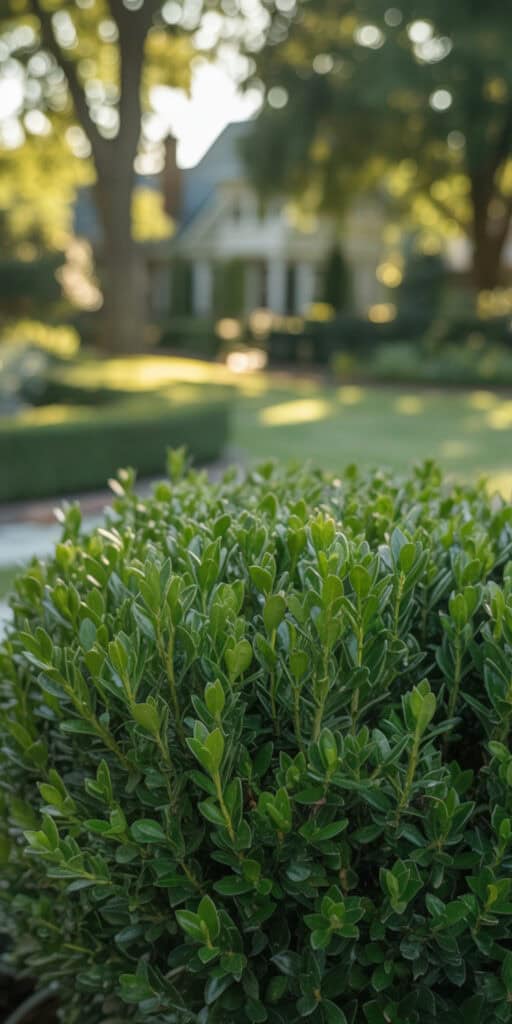
1. Boxwood (Buxus spp.)
Boxwood is one of the most popular landscaping shrubs for a reason — it’s dense, evergreen, easy to shape, and deer largely leave it alone because of its bitter taste and strong scent. It works in formal hedges, foundation planting, or as a border edge.
Best for: Formal structure, year-round greenery, low maintenance
Sun: Full sun to part shade
Zone: 5–9 (depending on variety)
Frugal tip: Buy small — boxwood is slow-growing but inexpensive when young. It fills in over 2–3 seasons.
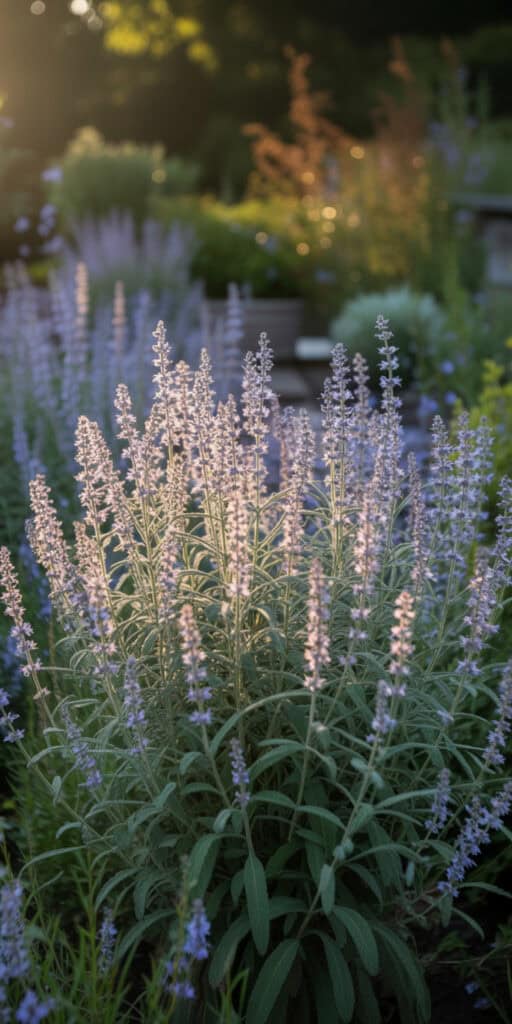
2. Russian Sage (Perovskia atriplicifolia)
Technically a subshrub, Russian sage belongs in every deer resistant landscape. The silvery stems and lavender-blue flowers are stunning, and deer absolutely hate the smell. It blooms mid-summer through fall and attracts pollinators like crazy.
Best for: Adding color and texture, cottage or wildflower-style yards
Sun: Full sun
Zone: 4–9
Frugal tip: Division is easy once established — split one plant into several for free.
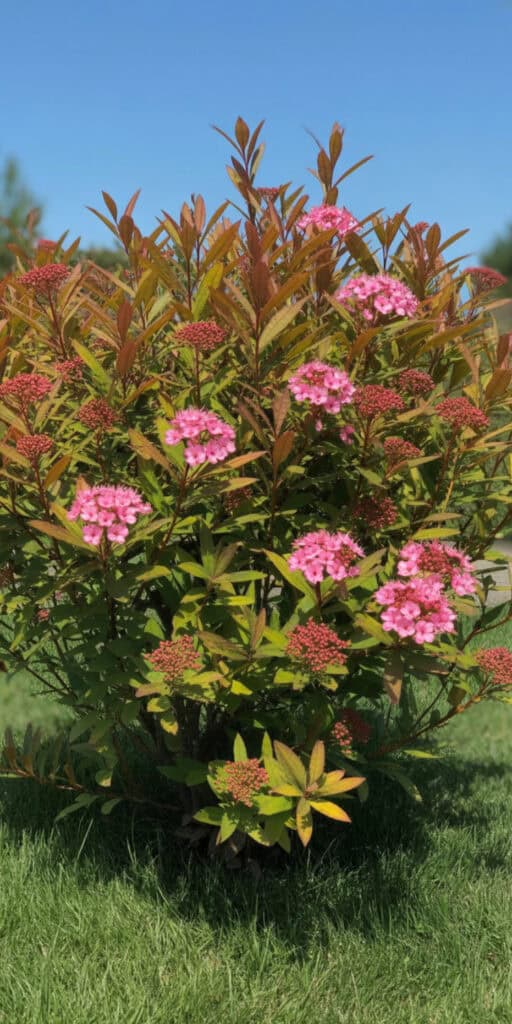
3. Spirea (Spiraea spp.)
Spirea is a workhorse shrub — tough, adaptable, fast-growing, and affordable. Deer avoid it, and it rewards you with gorgeous spring or summer blooms depending on the variety. ‘Goldflame’ and ‘Little Princess’ are popular picks.
Best for: Mass planting, adding color, budget-friendly coverage
Sun: Full sun
Zone: 4–9
Frugal tip: Spirea is one of the cheapest shrubs you can buy at a nursery — often $10–$15 for a 1-gallon pot.
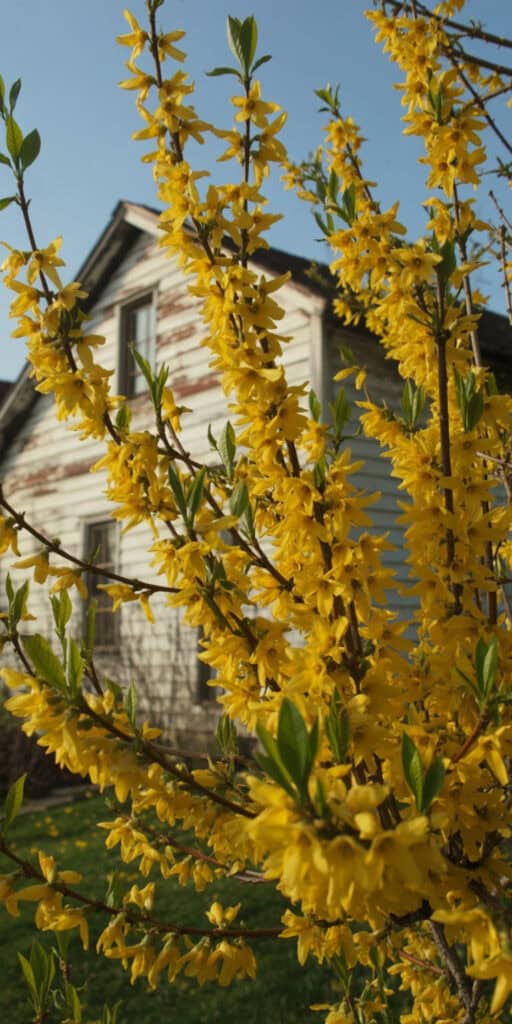
4. Forsythia (Forsythia spp.)
If you want to announce spring with a burst of yellow, forsythia is your shrub. It blooms early, grows fast, and deer don’t bother it. It’s an old-fashioned farmhouse staple for a reason.
Best for: Privacy screens, naturalizing, early spring color
Sun: Full sun to light shade
Zone: 5–9
Frugal tip: Forsythia roots easily from cuttings. Ask a neighbor who has one!
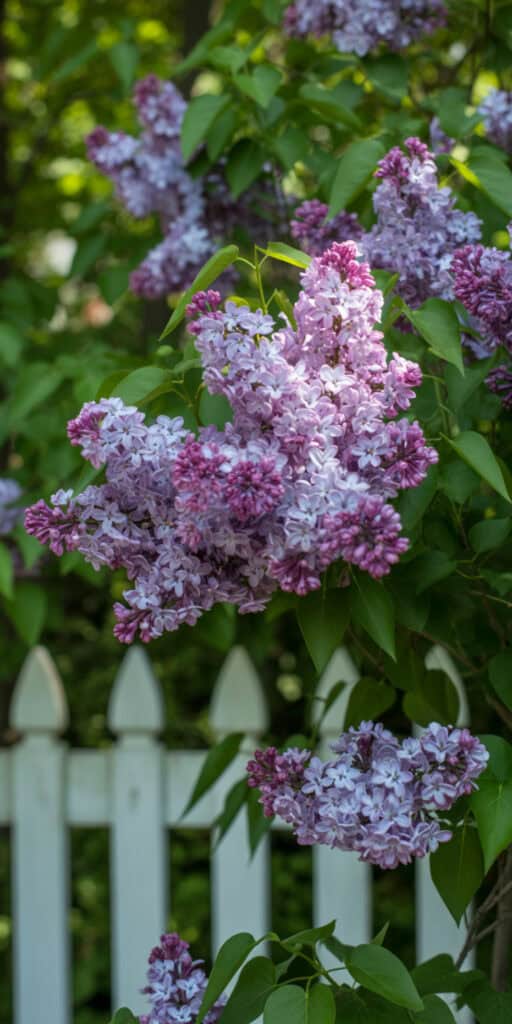
5. Lilac (Syringa vulgaris)
Lilacs are beloved for their fragrance — and deer hate that same fragrance. These are long-lived shrubs that can grow quite large and become a real statement in a landscape. They’re also cold-hardy and low-maintenance once established.
Best for: Specimen planting, fragrance, privacy
Sun: Full sun
Zone: 3–7
Frugal tip: Lilacs live for decades. One investment plant that will outlast most things in your yard.
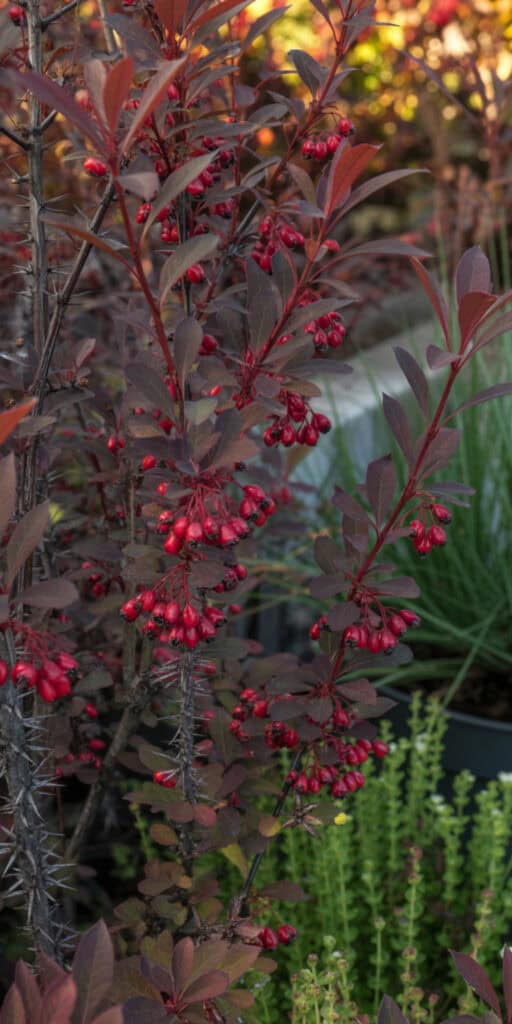
6. Barberry (Berberis thunbergii)
If you want a deer-proof shrub, barberry is close to it. The thorns are serious, the berries are bitter, and deer avoid it hard. It comes in green or deep burgundy foliage varieties and is one of the best structural shrubs for problem areas.
Best for: Deer-prone areas, slopes, mixed borders
Sun: Full sun to part shade
Zone: 4–8
⚠️ Note: Japanese barberry is considered invasive in some states. Check your local extension office before planting, and opt for sterile varieties if available.
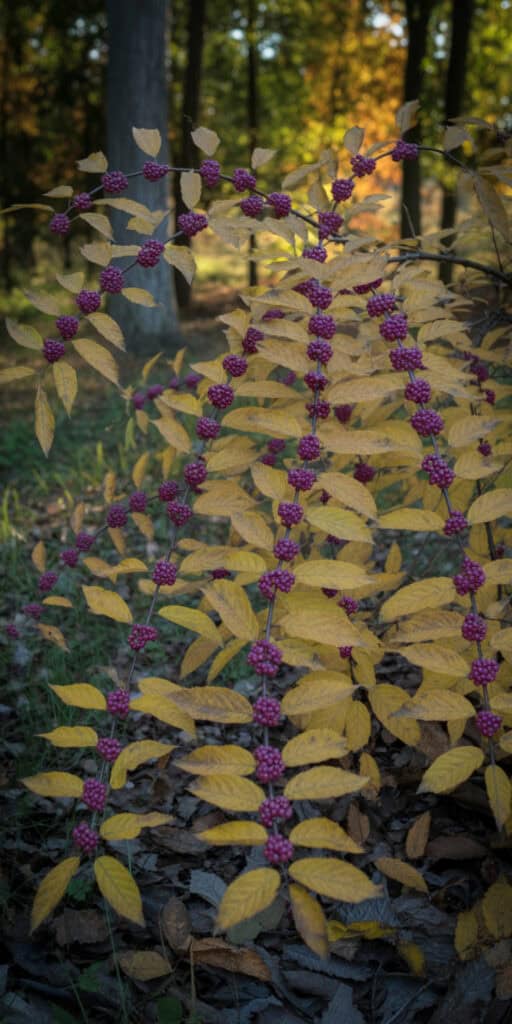
7. Beautyberry (Callicarpa americana)
An underused gem. Beautyberry is native, deer resistant, and in fall it produces clusters of vivid purple berries that are absolutely stunning. The berries also feed birds. Win-win.
Best for: Native gardens, fall interest, wildlife-friendly yards
Sun: Full sun to part shade
Zone: 5–10
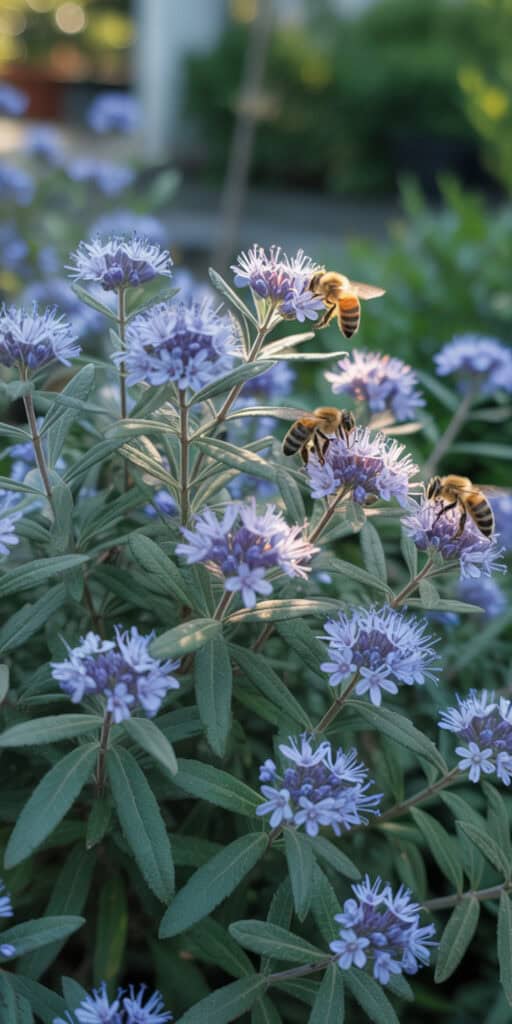
8. Bluebeard / Blue Mist Shrub (Caryopteris spp.)
Low-growing, aromatic, and covered in blue-purple flowers in late summer — bluebeard hits at a time when not much else is blooming. Deer avoid it due to its strong scent, and pollinators flock to it.
Best for: Late season color, pollinator gardens, front borders
Sun: Full sun
Zone: 5–9
📌 Want the full plant list? [Link to your deer resistant plants article] — covers perennials, groundcovers, and more that pair beautifully with these shrubs.
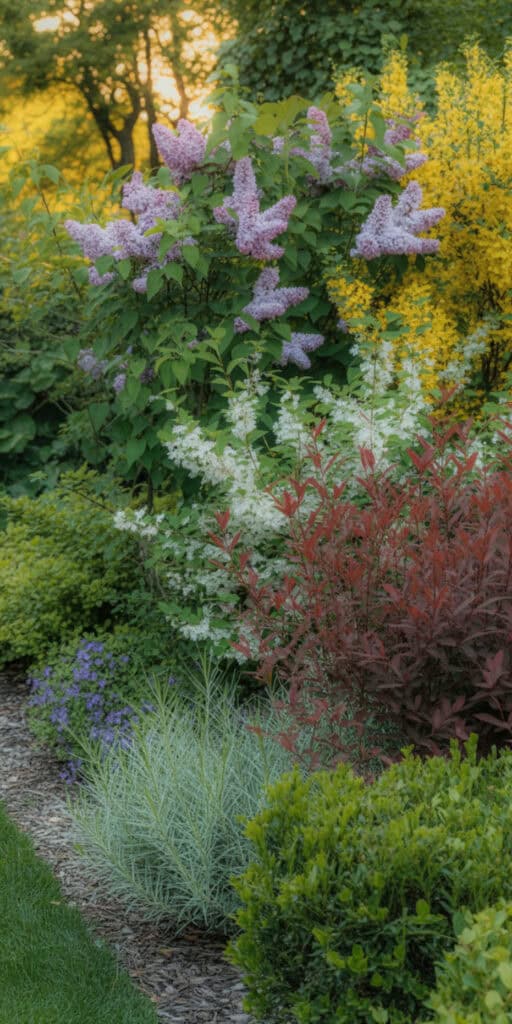
Layout Idea: Starting From Scratch With Deer Resistant Shrubs
If you’re landscaping a new bed or starting over, here’s a simple layered layout that uses shrubs from this list. This works well along a fence line, the front of a house, or around a patio.
The Layered Border: 20-Foot Bed Example
Think of this in three layers: back, middle, front.
BACK (tall, 5–8 ft): Lilac | Forsythia | Beautyberry
MIDDLE (3–5 ft): Spirea | Barberry | Bluebeard
FRONT (1–3 ft): Russian Sage | Boxwood (clipped low)
Planting it out:
- Back row: Plant lilac as a centerpiece anchor, with forsythia flanking on one or both sides. If you want fall color, swap one forsythia for a beautyberry.
- Middle row: Alternate spirea and barberry for contrasting textures (soft/round vs. spiky). Add a bluebeard or two for late-season color.
- Front row: Russian sage along the front edge keeps it airy and silvery, with clipped boxwood at the corners for a tidy, structured look.
Spacing tips:
- Lilac: 6–8 feet apart
- Forsythia: 4–6 feet apart
- Spirea: 3–4 feet apart
- Russian Sage: 2–3 feet apart
- Boxwood: 2 feet apart for a hedge look
Total plant count for a 20-foot bed: Approximately 12–16 shrubs, depending on size at purchase. At nursery prices, you’re looking at $80–$200 depending on what you start with. Buying small saves money — all of these grow.
Just Adding a Few Shrubs? Here’s How to Work Them In
Maybe you don’t need a full redesign. Maybe you just want to fill in some gaps, add some texture, or replace the shrubs the deer ate. Here’s how to think about adding a few deer-resistant shrubs to an existing yard:
For Texture and Year-Round Interest
Add boxwood to anchor existing perennial beds. Clip them into balls or let them grow naturally — either way, they give structure that stays green when everything else dies back in winter.
For a Pop of Color
Drop in 2–3 spirea plants in a sunny spot. ‘Goldflame’ spirea has foliage that starts orange in spring, turns green in summer, and goes red in fall. That’s three seasons of interest from one inexpensive shrub.
For a Difficult Spot (Slope, Dry Area, Part Shade)
Barberry is your answer. It tolerates a wide range of conditions, holds a slope, and deer absolutely leave it alone.
For a Focal Point
A single lilac or beautyberry becomes a statement plant. Put it where you can see it from a window or from your porch. You’ll get seasonal interest and a plant that actually earns its space.
For Pollinators and Late Season Interest
Add Russian sage or bluebeard between existing perennials. Both bloom when not much else does and fill the midsummer-to-fall gap beautifully.
📌 Pairing shrubs with perennials? Tap here— great companion plants that deer skip over, from salvia to catmint to ornamental grasses.
A Few Honest Notes on “Deer Resistant”
Let’s be real for a second: no plant is 100% deer proof.
In a bad winter when food is scarce, deer will eat things they’d normally ignore. Young, newly planted shrubs are more vulnerable than established ones. And deer populations and habits vary by region — what works in Ohio might not be as effective in rural Virginia.
That said, the shrubs on this list are consistently avoided in most situations, and several (barberry, Russian sage, boxwood) are about as close to guaranteed as you’ll get.
A few extra tips:
- New transplants need protection. Use chicken wire or deer cages for the first season until plants establish.
- Strong-smelling plants help the whole bed. Tuck Russian sage or another aromatic shrub near more vulnerable plants.
- Deer pressure changes seasonally. Spring and late fall are the hardest seasons. Plan accordingly.
Your Deer-Resistant Landscape Is Doable
Here’s the takeaway: you don’t have to choose between a beautiful yard and one that survives wildlife. The shrubs on this list are attractive, affordable, and proven. Whether you’re starting from scratch with a full layered border or just adding a few plants to fill in gaps, you now have a list you can actually walk into a nursery with and feel confident about.
Look for these shrubs by name. Most garden centers carry the majority of them. And when in doubt, remember: aromatic, thorny, bitter, or fuzzy wins against deer almost every time.
📌 Before you go: Tap here — the full companion guide to plants that pair with these shrubs for a complete, deer-resistant landscape from ground to sky.
Happy planting — and may the deer stay on the other side of the fence.
F
 Why I Use First Saturday Lime All Over My Farm (And You Should Too)
Leave a Reply