

Table of Contents[Hide][Show]
Cooking for one used to feel like a punishment. You’d make a big pot of something, eat it four days in a row, and still end up throwing half of it out. Or you’d just… not cook. Cereal for dinner. Again.
I’ve been there. And as someone who spends a lot of time thinking about how to stretch a grocery budget — both on the farm and off — I finally cracked a system that actually works for solo cooking without making you want to cry into a can of soup.
Here’s the truth nobody tells you: meals on a budget for one are actually easier to pull off than feeding a family. You have less waste, smaller portions to manage, and way more flexibility. You just need a few strategies and a loose rotation of meals you actually like eating.
Let’s get into it.
Why Solo Cooking on a Budget Is a Different Game
When you’re cooking for a family, budget meals are about bulk. When you’re cooking for one, it’s about smart small-batch cooking — buying the right things, using them in multiple ways across the week, and not letting anything go to waste.
The biggest money-wasters for solo cooks are fresh produce that goes bad before you use it, buying full-size portions of things you only need a little of, and defaulting to takeout when you’re tired and don’t have a plan.
The fix? A loose weekly rotation, a BJ’s run for pantry staples, and a few anchor meals you can riff on.
Start With a Stocked Pantry (This Is Where BJ’s Earns Its Keep)
If you have a BJ’s Wholesale Club membership, this is where it actually pays off for solo cooking — and I know that sounds counterintuitive. Why would a single person shop at a warehouse store?
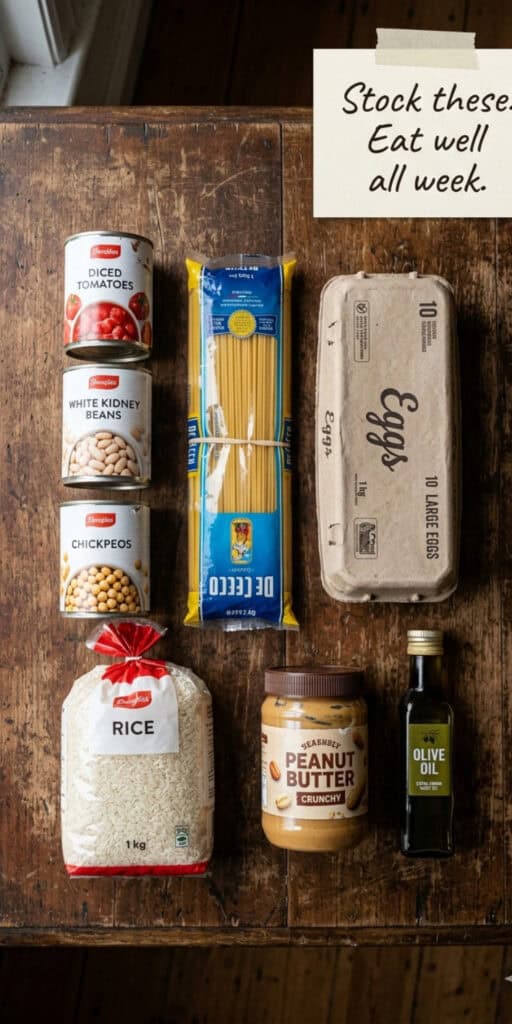
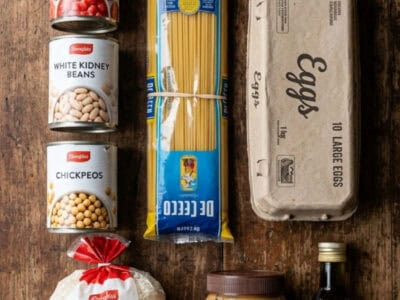
Because pantry staples don’t expire fast, and buying them in bulk at BJ’s prices ( or Costco or Sam’s) means your per-meal cost drops dramatically. Here’s what I always keep stocked:
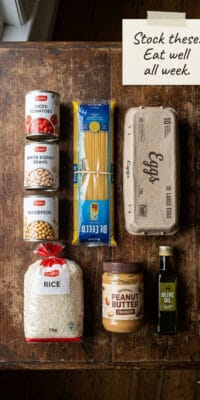
- Canned beans (black, chickpeas, white beans) — endlessly versatile
- Canned diced tomatoes and tomato paste
- Pasta and rice
- Olive oil and chicken or vegetable broth
- Frozen chicken breasts and ground beef
- Oats, peanut butter, and eggs
With just those items on hand, you can build a week’s worth of meals without a single grocery run. The fresh stuff — a bag of spinach, a few potatoes, a head of garlic — you grab as needed. But your foundation is always there.
A Week of Meals On A Budget For One (Real Ones)
These aren’t aspirational Pinterest meals that require 47 ingredients. These are actual, make-them-on-a-Tuesday meals that cost next to nothing.
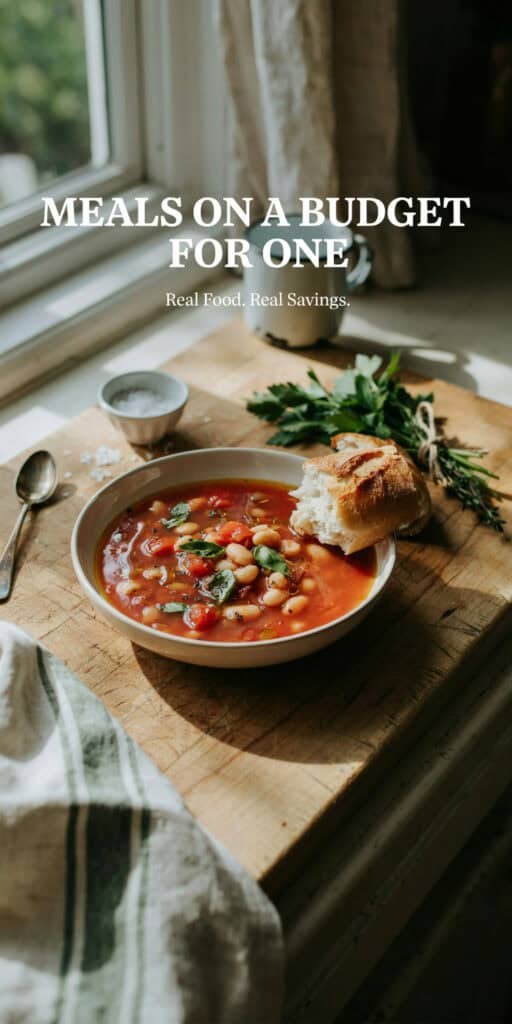
Monday: White Bean and Tomato Soup One can of white beans, one can of diced tomatoes, some broth, garlic, olive oil, and whatever herbs you have around. Done in 20 minutes. Serve with crusty bread if you have it. Cost: under $2.
Tuesday: Egg Fried Rice Leftover rice (or make a fresh batch), two eggs, frozen peas or whatever vegetable you have, soy sauce, a splash of sesame oil. This is a legitimate meal that feels like takeout and costs about $1.50.
Wednesday: Ground Beef Taco Bowl A quarter pound of ground beef — or half a pound if you want leftovers — seasoned with cumin, garlic powder, and chili powder. Serve over rice with salsa, a little shredded cheese, and whatever else you’ve got. This is my go-to when I want something that actually feels satisfying.
Thursday: Pasta Aglio e Olio Pasta, olive oil, garlic, red pepper flakes, parmesan. That’s it. This is a classic Italian peasant dish that costs less than $1.50 and tastes like you actually know what you’re doing in the kitchen.
Friday: Sheet Pan Chicken and Vegetables One chicken breast, whatever vegetables need to be used up (potatoes, zucchini, onion, peppers), olive oil, salt, pepper, and whatever seasoning you’re in the mood for. Roast at 400°F for about 25-30 minutes. Minimal effort, zero waste.
Weekend: Frittata or Egg Bake Eggs, whatever vegetables or leftover meat you have, a little cheese. Cook it in a small cast iron or oven-safe skillet. This is my favorite way to clear out the fridge at the end of the week and feel like I did something intentional with it.
Tips That Actually Move the Needle
Buy proteins in bulk and freeze in single portions. At BJ’s, I’ll grab a big pack of chicken breasts or ground beef, portion them out into individual servings as soon as I get home, and freeze them flat in zip-lock bags. Pull one out the night before and you always have a protein ready to go.
Lean on canned and frozen produce. I grow a lot of my own vegetables here on the farm during the season, but in the off-season, frozen spinach, frozen peas, and canned tomatoes are just as nutritious as fresh and they don’t go bad on you. Stop feeling guilty about the freezer aisle.
Cook once, eat twice — not four times. The trick to avoiding food fatigue is making enough for two meals, not a full week’s worth. Make a big bowl of taco meat and eat it as a taco bowl Monday and stuffed into a quesadilla Tuesday. That’s sustainable. Eating the same soup every day for a week is not.
Keep one “emergency” meal in the pantry at all times. Mine is pasta with olive oil and garlic. Takes 15 minutes, costs almost nothing, and it means I never have a reason to order delivery just because I’m tired and don’t feel like cooking.
Use the whole vegetable. Broccoli stems, carrot tops, the sad corner of a cabbage — these are fair game. On the farm, food waste feels personal, and I think everyone who cooks solo should adopt a little of that mentality. Chop up those stems and throw them in a stir fry. Nobody will know.
What a Week of Budget Solo Meals Actually Costs
If you’re stocked with pantry basics and you pick up a few fresh items weekly, a realistic week of meals on a budget for one lands between $30–$50 depending on your area and where you shop. That’s breakfast, lunch, and dinner, seven days a week.
Buying your staples at BJ’s brings that number down further because your per-unit cost on things like canned goods, pasta, rice, and frozen proteins is significantly lower than a regular grocery store. The membership pays for itself fast when you’re using it for pantry stocking.
The Mindset Shift That Changes Everything
Budget solo cooking stops feeling depressing when you stop thinking of it as deprivation and start thinking of it as intentional eating. You’re choosing what goes into your food. You’re not wasting anything. You’re eating well on your own terms.
That’s not sad. That’s actually pretty great.
If you’re looking for more ideas on frugal, from-scratch cooking — especially if you’re leaning into a more homestead-style pantry — stick around. This is kind of my whole thing.
Pin this post so you can come back to it when you need a budget meal idea on a random Tuesday night.
 Turn Your Front Yard Into a Veggie Garden (Yes, Really)
Leave a Reply