
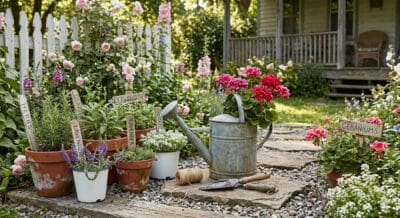

There’s a reason grandma’s garden always looked like something out of a storybook — and it had nothing to do with spending a lot of money.
Do you remember it? The yard that was just… overflowing. Hollyhocks taller than you were. Peonies so heavy they bent toward the ground. Roses climbing up something that probably wasn’t even meant to be a trellis. No plan, no Pinterest board, no landscape designer — just plants that came back every year, divided and shared and stuffed into every available inch of dirt.
That’s the grandma garden. And honestly? It’s one of the most budget-friendly garden styles you can grow.
Here’s how to recreate that lush, cottage-style magic without spending a fortune — because the secret was never money. It was plants that work.
What Even IS a Grandma Garden?
Before we dig in (pun fully intended), let’s define what we’re talking about.
A grandma garden — sometimes called a cottage garden or a vintage flower garden — isn’t about perfection. It’s about abundance. It’s packed beds, overflowing borders, and plants that have been around long enough that your grandmother’s grandmother probably grew them too. Think:
- Peonies that bloom every May without fail
- Hollyhocks that reseed themselves along every fence
- Black-eyed Susans that spread without any help from you
- Lilacs that smell so good you stop walking every time you pass them
- Daylilies that just… keep multiplying
The beauty of this style is that it’s designed to grow itself. Most of these plants are perennials, meaning you plant them once and they come back year after year. Many of them self-seed or spread by division — which means your garden gets bigger every year without costing you more money.
If you’ve been eyeing full sun perennial garden designs or trying to figure out how to start a rustic garden, this approach is the natural next step.
Start With the Bones: Choose Plants That Come Back Every Year
The biggest mistake people make in a cottage garden? Spending money on annuals every single spring.
Grandma didn’t do that. She planted perennials — plants that go dormant in winter and come back on their own every spring. Once they’re established, they’re basically free. And many of them actually spread over time, giving you more plants without spending another dime.
Here are the classic grandma garden perennials to start with:
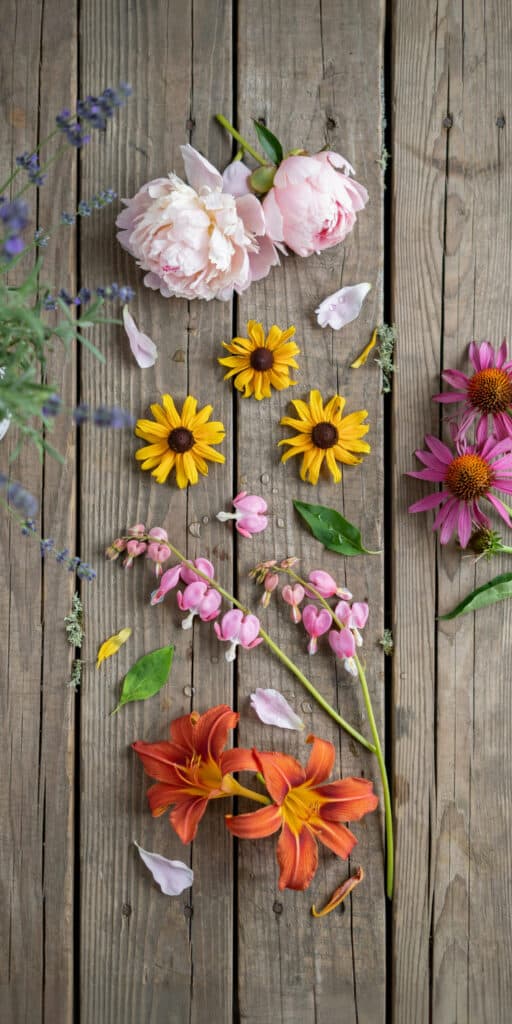
Peonies — Plant once and enjoy them for 50+ years. They’re practically indestructible once established and they come in the most gorgeous shades of blush, white, and deep magenta. The only catch: they take 2-3 years to really bloom. Patience pays off.
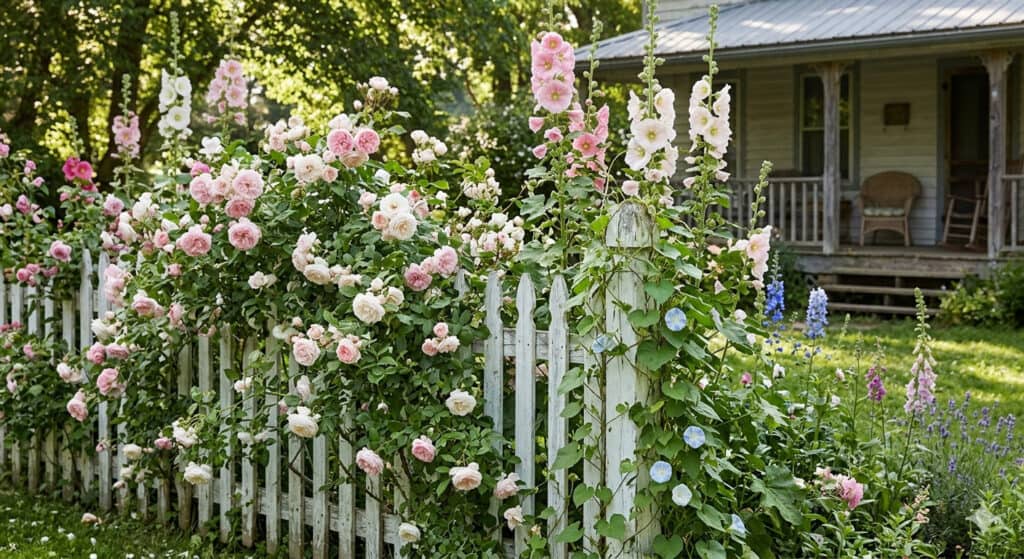
Hollyhocks — These tall, stately beauties practically grow themselves along fences and walls. They self-seed freely, so once you have them, you’ll have them forever. Great for vertical interest in a cottage garden.
Black-eyed Susans — Tough as nails, cheerful yellow blooms, and they spread naturally over time. Also beloved by pollinators, which is a bonus for your vegetable garden too.
Daylilies — This is the quintessential grandma plant. You’ve seen them in every ditch and along every country road — that’s not an accident. They multiply like crazy, tolerate almost any soil, and come in hundreds of colors.
Coneflower (Echinacea) — Native wildflower meets cottage garden darling. Plant once, divide every few years, and enjoy the birds that come to eat the seedheads in fall.
Bleeding Heart — Shade-tolerant and early blooming, bleeding heart brings that romantic, old-fashioned feel to any shady corner of your yard.
If you want a deeper dive into flowering plants that thrive with minimal fuss, don’t miss the guide to flowering shrubs for full sun — several of those pair beautifully with a cottage garden design.
The Grandma Garden Design Philosophy: Controlled Chaos
Here’s something the gardening world doesn’t tell you enough: cottage gardens are supposed to look a little wild.
This is genuinely good news for your budget, because it means you don’t need:
- Perfectly spaced rows
- Expensive edging
- A landscape designer
- Matching pots or planters
What you DO need is a basic understanding of layering — which is just the fancy word for what grandma did instinctively.
The three layers of a cottage garden:
- Back layer (tall plants): Hollyhocks, tall phlox, foxglove, delphiniums. These go along fences, walls, or at the back of beds.
- Middle layer (medium plants): Peonies, coneflowers, black-eyed Susans, roses. These are your stars.
- Front layer (low spillers): Creeping phlox, catmint, sweet alyssum, thyme. These soften the edges and make the whole thing look intentional.
You don’t need a ton of each. Start with one or two plants in each layer and let them fill in over time. That’s exactly how grandma did it — slowly, over years, with plants that were gifted, divided, or started from seed.
This same layered logic works beautifully if you’re designing around a rustic garden aesthetic — the two styles overlap almost completely.
The Free Plant Strategy: How Grandma’s Garden Always Kept Growing
Here’s the open secret of every grandma garden you’ve ever admired: almost nothing in it was purchased at full price — and a lot of it was free.
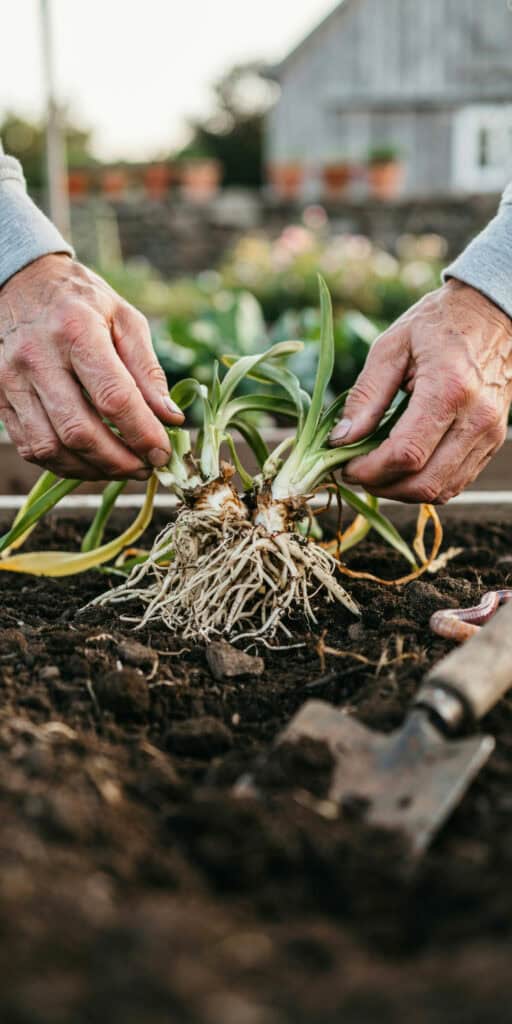
Division. Most perennials need to be divided every 3-5 years, or they start to decline. When you divide them, you get two or three plants from one.
Ask any neighbor or family member with an established garden, and they will gladly hand you divisions — they need to thin them out anyway. Check your local Buy Nothing Facebook group. I see people doing this all the time.
Daylilies, coneflowers, hostas, black-eyed Susans, and phlox all divide easily.
Self-seeding. Plants like hollyhocks, foxglove, larkspur, and cosmos drop seeds at the end of the season and come back on their own the following spring. Once you have them, you always have them.
Seed saving. Before the growing season ends, collect seeds from your annuals and heirlooms. Store them in a paper envelope over winter and start them indoors next spring. This pairs perfectly with getting your indoor seed starter setup dialed in — a little upfront investment saves you a lot of money at the garden center every year.
Plant swaps. Check Facebook Marketplace, local garden groups, and community boards. People give away divisions constantly, especially in spring and fall.
What to Plant Along Fences and Walls
One of the most iconic features of any grandma garden is the fence or wall that’s completely overtaken by plants. It looks romantic and effortless — and it actually is effortless once you get the right plants going.
Best plants for fences:
- Climbing roses — A classic. Look for old-fashioned varieties like New Dawn or Fourth of July. They’re more disease-resistant than modern hybrids.
- Hollyhocks — They grow tall and lean naturally. Plant them 6 inches from the fence and they’ll do the rest.
- Clematis — Vigorous climbers with stunning blooms. They pair beautifully with climbing roses.
- Morning glories — Annual but prolific self-seeders. Free after year one.
Best plants for stone walls or borders:
- Creeping phlox — Cascades over edges beautifully in spring
- Sedum — Drought-tolerant, spreads easily, blooms in fall
- Sweet alyssum — Tiny white flowers, honey-sweet scent, self-seeds every year
If deer are a concern where you live, the guide to deer-resistant landscaping has a whole section on flowers that look cottage-garden beautiful but taste terrible to deer.
Add the Charm Details (Without Spending Much)
Part of what makes Grandma’s garden feel like Grandma’s garden isn’t just the plants — it’s the little details that make it look lived-in and loved.
The good news: most of these cost almost nothing.
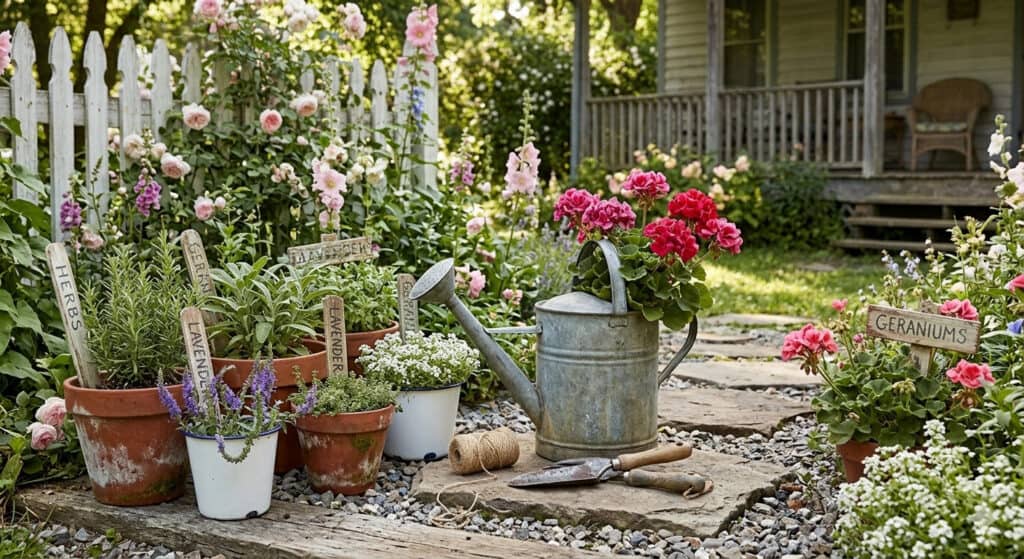
Repurposed containers. Old watering cans, chipped enamelware pitchers, cracked terra cotta pots — all of these look gorgeous planted up with herbs or trailing flowers. Check thrift stores, yard sales, and your own barn or garage. If you love this idea, the post on teacup flower arrangements takes the vintage container idea to a charming next level.
Salvaged wood and stone. A few flat stones for a stepping path. An old wooden crate as a planter. A piece of driftwood as a garden marker. None of this needs to be purchased — it needs to be noticed.
Mismatched but intentional. Cottage gardens look like they’ve been added to over decades — because they have. Don’t try to make everything match. A mix of container styles, plant heights, and colors is exactly the point.
Functional beauty. Grandma always mixed in something useful — herbs between the flowers, a tomato plant tucked into the border, strawberries as a ground cover. If you’re thinking about edging your beds with food as well as flowers, the front yard veggie garden post is a great companion read.
Your First-Year Grandma Garden Plan (Budget Version)
If you’re starting from scratch and want to do this as affordably as possible, here’s a simple first-year plan:
Spring — Start with seeds: Zinnias, cosmos, larkspur, and bachelor’s buttons are all under $3/packet and will give you a full, cottage-garden look your first summer while your perennials get established. Pull out the seed starter setup guide and start them indoors 6-8 weeks before your last frost.
Spring — Buy 3-5 perennials: Focus on your “anchor” plants. One peony, one clump of daylilies, and a coneflower or two is enough to start. Buy bare root when possible — it’s cheaper than potted plants and they establish just as well.
Ask before you buy: Before you spend anything, ask neighbors, family, and local garden groups if anyone has divisions to share. You’ll be surprised how quickly you can fill a bed for free.
Fall — Plant for next year: Fall is the best time to plant perennials — the soil is warm, the air is cool, and plants have all winter to establish roots. Watch for end-of-season sales at garden centers (50-75% off is common in August and September).
Year two and beyond: Divide what you have, collect seeds, and let the self-seeders do their thing. Your garden will grow on its own from here.
Cute Grandma Garden Decor
What’s a Grandma garden without a few decor pieces to really create that magic? I share videos of some of my favorites on my TikTok page here, but I’ll link some of my favorite finds for you too.
The Bottom Line
The grandma garden isn’t a design trend — it’s a philosophy. It’s the idea that a garden should be abundant, practical, and alive with things that grow back on their own. It’s plants shared between neighbors. Its seeds are saved in an envelope over winter. It’s a peony that your grandmother planted that outlives everyone.
You don’t need a big budget. You need patience, a little planning, and an appreciation for the plants that have been doing this long before anyone called it “cottage style.”
Start with one bed. Pick three plants. Let it grow.
Looking for more garden inspiration? Browse all the Grow Your Own posts for more frugal gardening ideas year-round.
 Meals On A Budget For One (Real Food, Not Sad Desk Lunches)
Leave a Reply