


Table of Contents[Hide][Show]
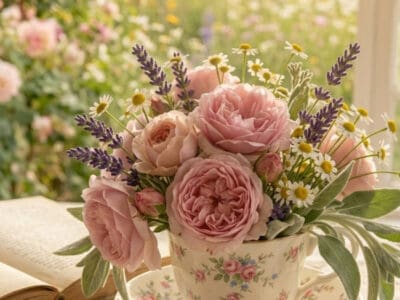
There is something utterly magical about walking into a room and seeing a delicate teacup brimming with fresh blooms from your own garden. It feels like stepping into a storybook — all soft petals, mismatched china, and the sweet scent of something you grew yourself.
And the best part? This is one of the most budget-friendly, soul-satisfying crafts a farm girl can take on. All it takes is a little thrift store patience and a patch of garden dirt.
Whether you are new to floral arranging or you have been growing cutting flowers for years, teacup arrangements are your new obsession. Let me show you how to find the most charming cups on a dime, which Pinterest-worthy styles are trending right now, and exactly which flowers to grow to make it all happen.
The Thrill of the Thrift: Hunting for Teacups
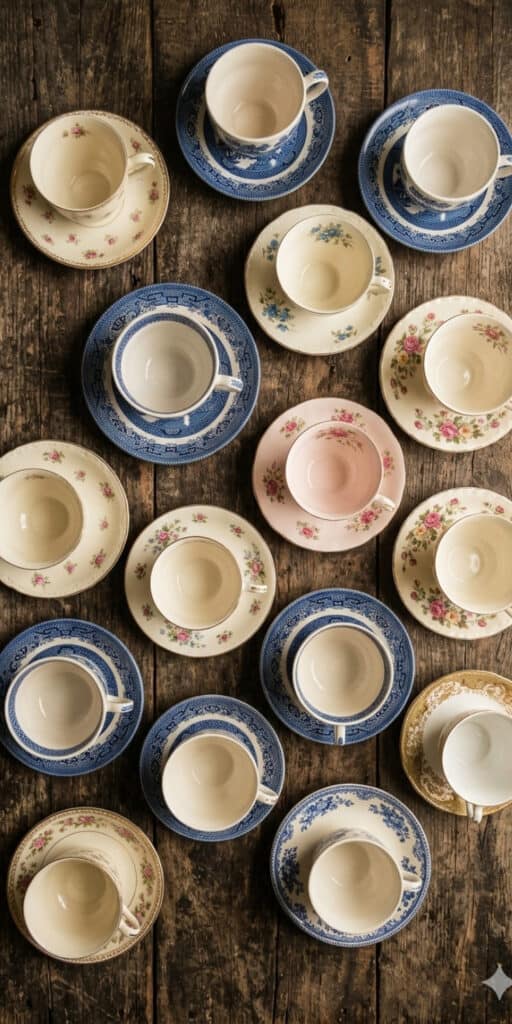
Let me be honest with you — thrift store hunting is one of my greatest joys in life. There is nothing quite like the thrill of rounding the corner of a dusty Goodwill shelf and spotting a delicate porcelain teacup with tiny roses painted along the rim, priced at a whopping 99 cents. It feels like a tiny treasure hunt every single time.
Teacups are genuinely among the best thrift-store finds for a frugal crafter. People donate them constantly — grandma’s old china sets get broken up, estate sales happen, and those ornate floral cups that nobody uses for actual tea anymore end up on the shelf just waiting for you. Here is what to look for when you are hunting:
Look for mismatched sets. A cup and saucer that do not match are even more charming than a matching pair when you are going for that whimsical, eclectic aesthetic. Grab cups in different sizes — the tiny espresso-sized ones are absolutely adorable for a single stem of lavender or a sprig of sweet alyssum.
Check for chips and cracks, but do not always walk away. A small chip on the rim of a cup that is going to hold garden flowers? Nobody will ever notice. Hairline cracks on the outside of a cup can actually add to that rustic, aged charm you are going for.

Hunt for variety in color and pattern. Blue-and-white transferware gives you that classic English garden feel. Pale pink roses on ivory china screams cottagecore. Bold botanical prints read as maximalist and eclectic. Grab a range, because different aesthetics call for different cups, and your collection will grow into something truly beautiful.
Estate sales, church rummage sales, and Facebook Marketplace are also goldmines. I have scored entire sets of mismatched floral china for just a few dollars. Keep a tote bag in your car and never miss an opportunity.
The Most-Searched Teacup Arrangement Styles on Pinterest
Pinterest is absolutely overflowing with teacup flower inspiration, and certain aesthetics consistently dominate the search results. Here are the top styles to try — and the flowers from your own garden that make each one sing.

1. Whimsical
The whimsical style is all about color, joy, and a touch of the unexpected. Think mismatched pastel teacups overflowing with a riot of different blooms in cheerful pinks, lavenders, and creamy whites.
Nothing is perfectly arranged — stems lean in every direction, a little sprig of something feathery pokes out at an angle, and it all feels like a happy accident. Grow zinnias, sweet peas, bachelor’s buttons, and cosmos for this style. They are easy from seed and absolutely prolific in the cutting garden.

2. Fairy & Fairycore
The fairycore aesthetic has exploded on Pinterest, driven by its dreamy, ethereal, magical quality. For teacup arrangements in this style, you want tiny, delicate blooms that look like they belong in an enchanted forest. Think moss tucked around the base of the cup, a single sprig of lily of the valley, or miniature violas and pansies peeking over the rim.
Add a tiny mushroom pick or a bit of trailing baby’s breath, and the effect is absolutely enchanting. Lily of the valley, violas, forget-me-nots, and sweet alyssum are perfect for this style, and all grow beautifully in cooler weather.
3. Cottagecore
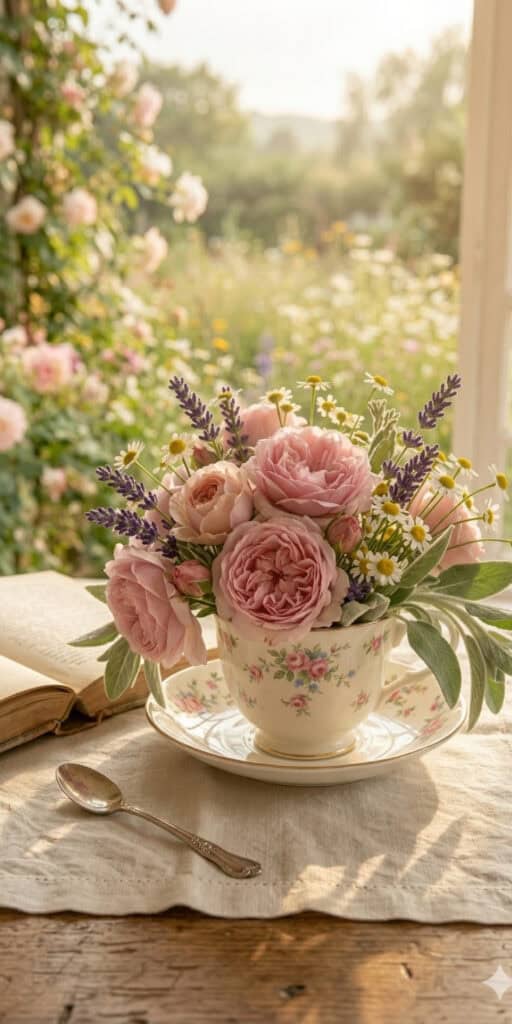
Cottagecore is one of Pinterest’s most enduring and beloved aesthetics, and it pairs with teacups like they were made for each other. The look is romantic, nostalgic, and gently imperfect — like something out of a Jane Austen novel set in a wildflower meadow.
Use soft-colored teacups with floral china patterns and fill them with garden roses, lavender, chamomile, and trailing greenery. The goal is to look like nature arranged it herself. This style is especially stunning with dusty pink roses, cream-colored ranunculus, and a few sprigs of eucalyptus or lamb’s ear from the garden.

4. Vintage & Victorian
Ornate, gilded teacups with rich jewel-toned flowers are having a major moment. The vintage Victorian aesthetic leans into the drama of deep burgundy dahlias, velvety purple lisianthus, and dusty rose garden roses arranged in cups with gold trim and hand-painted florals.
This look is especially popular for fall arrangements. Dahlias are the star of the show here — plant a few tubers in the spring and you will have armloads of blooms by late summer that look absolutely stunning spilling out of a richly patterned teacup.

5. Wildflower & Garden Party
This is the style for those of us who love the idea of snipping stems straight from the garden and plopping them into whatever pretty vessel is nearby. A loose, airy collection of wildflowers and garden blooms in a simple white or blue-rimmed teacup is one of the most-searched arrangements on Pinterest for a reason — it is effortlessly beautiful.
‘Black-eyed Susans, coneflowers, yarrow, and daisies are all perfect for this relaxed, garden-party vibe, and they are some of the easiest flowers to grow from seed.

Growing Your Own: The Best Flowers for Teacup Arrangements
The most rewarding part of this whole project is that you can grow everything you need. Teacup arrangements are small, which means you do not need an abundance of stems — even a modest cutting garden will keep your windowsills and kitchen table adorned with fresh flowers all season long.
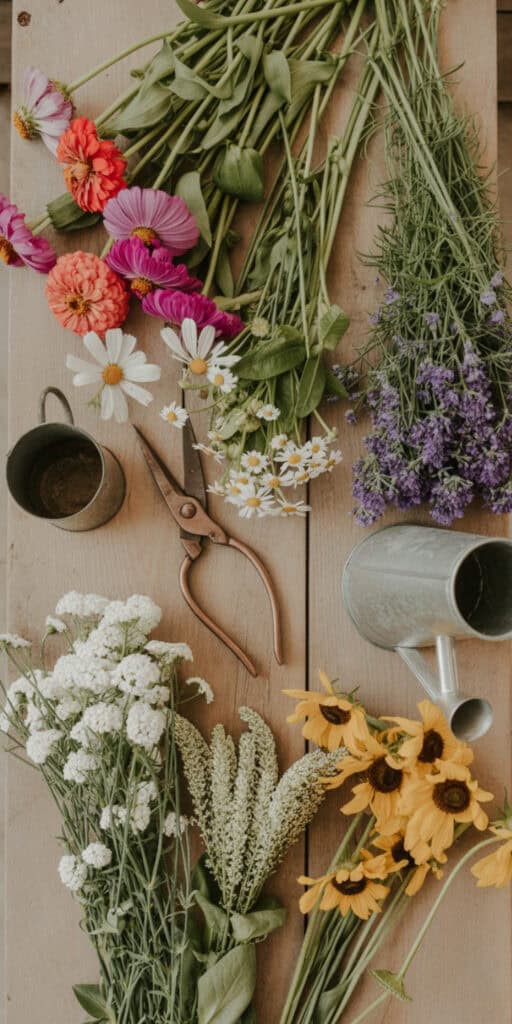
Start with easy, reliable bloomers: zinnias, cosmos, sweet alyssum, bachelor’s buttons, and sunflowers (look for dwarf varieties like ‘Teddy Bear’ for teacup-friendly scale). Add in a few herbs that double as gorgeous filler — lavender, thyme in bloom, and chamomile are all stunning and wonderfully fragrant.
For perennials that come back every year, plant echinacea (coneflower), black-eyed Susan, and catmint. These are low-maintenance powerhouses that fill your cutting garden with little effort year after year.
Do not overlook foliage. Lamb’s ear, dusty miller, and any trailing herb or vine add texture and that cottagecore softness that makes a teacup arrangement feel truly special. A single stem of something delicate alongside a few leaves from the garden is sometimes all you need.
Putting It All Together
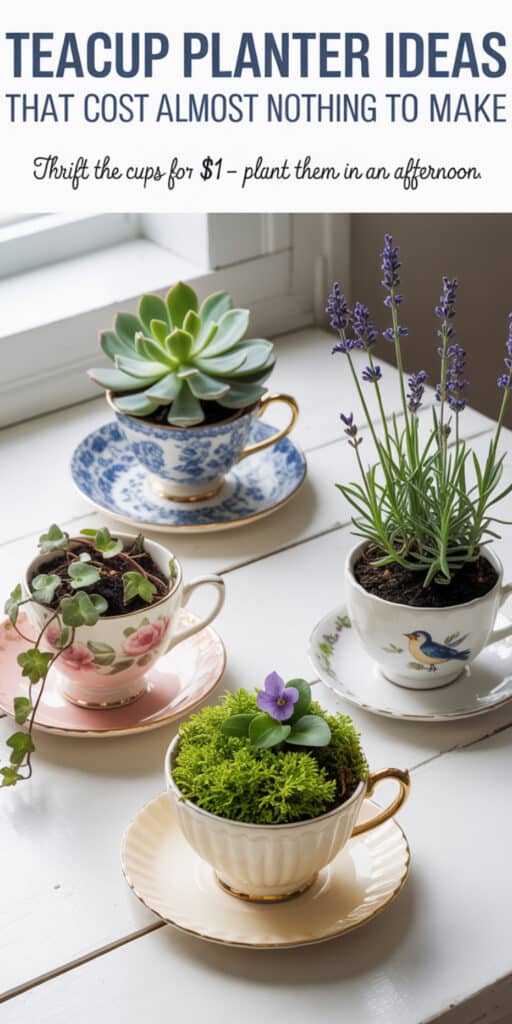
Teacup flower arrangements are one of those rare crafts that are completely free of intimidation. You do not need to be a florist. You do not need expensive supplies. You need a thrifted cup, a handful of stems from your garden, a little water, and the willingness to see beauty in small things.
Set a cup on your kitchen windowsill. Put one on the bathroom vanity. Line three mismatched cups along your dining table for a centerpiece that costs almost nothing and brings you joy every single time you walk past it.
This is frugal living at its most beautiful — and it starts with a 99-cent cup and a garden full of possibility.
Happy growing, happy thrifting. 🌿
 How to Set Up a Stunning DIY Flower Bar on a Budget
Leave a Reply