

Table of Contents[Hide][Show]
I have used all three. Not for a weekend, not for a “let me test this for a blog post” week — I mean seasons of Western New York mud, humidity, and deep-freeze winters with a full flock tracking it all around the coop.
And if you have been standing in the feed aisle or scrolling a chicken group at 11 p.m. wondering whether you should go with sand, straw, or pine shavings, let me save you the trial and error I paid for.
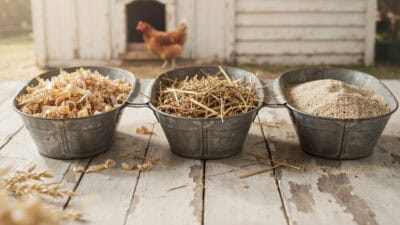
Here is the honest truth up front: there is no perfect bedding. There is only the right bedding for your coop, your climate, and your tolerance for scooping. So let’s break down all three like friends standing at the coop door, coffee in hand, actually looking at what works.
The Quick Verdict (For the Skimmers)
If you just want the answer before the kids need something:
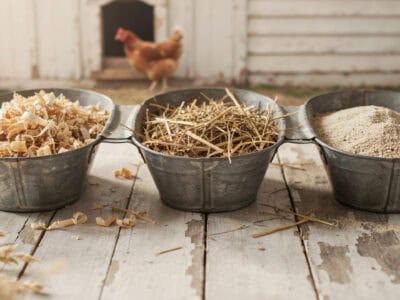
- Pine shavings — best all-around for most backyard flocks. Absorbent, cheap-ish, easy to find, smells nice. My default.
- Straw — best for winter warmth and the deep litter method, worst for wet climates and mites. Cheapest if you have a farm nearby.
- Sand — best for hot climates, drainage, and low daily smell. Heavy, cold in winter, and a bigger upfront cost.
Now the real talk, contender by contender.
Contender #1: Pine Shavings (The Popular Default)
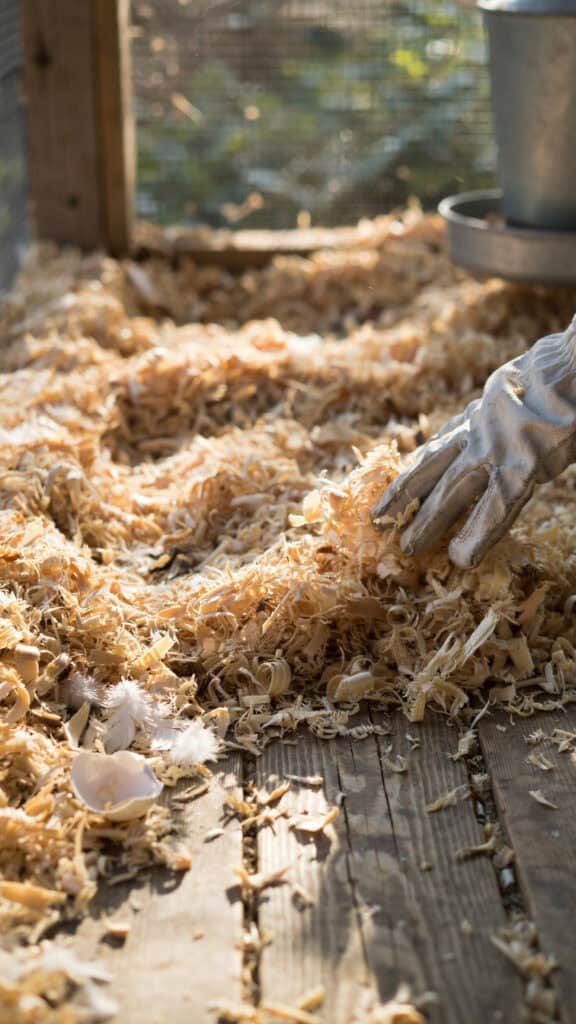
Walk into any Tractor Supply and you’ll see the compressed bales of large-flake pine shavings stacked to the ceiling. There is a reason. A single compressed bale runs somewhere around $6 to $8 and fluffs up to fill a surprising amount of coop floor. For a small-to-medium coop, one bale can last you weeks.
Why I keep coming back to pine:
- It is thirsty. Pine shavings soak up moisture and droppings better than almost anything at this price. Moisture is the real enemy in a coop — it’s what causes ammonia smell, frostbite in winter, and respiratory issues.
- The smell is genuinely pleasant. That soft pine scent does a lot of quiet work covering the barnyard funk.
- Spot-cleaning is easy. Droppings clump on top, you scoop, you toss a fresh handful down.
- It composts down beautifully for the garden.
Where pine lets you down:
- You must buy large-flake, kiln-dried pine — never cedar (the oils can harm chickens’ lungs) and never fine sawdust-style shavings (too dusty).
- In a poorly ventilated coop, even pine will build up ammonia if you let it go too long.
- Prices have crept up over the last couple of years, so it’s not the dirt-cheap option it once was.
Best for: Just about everybody. If you are brand new to chickens and paralyzed by choices, start here. Pair it with a good scoop of a natural odor absorber and you’ll rarely fight the smell — I break down exactly what I use in my post on the best chicken coop deodorizer.
Contender #2: Straw (The Cheap Classic)
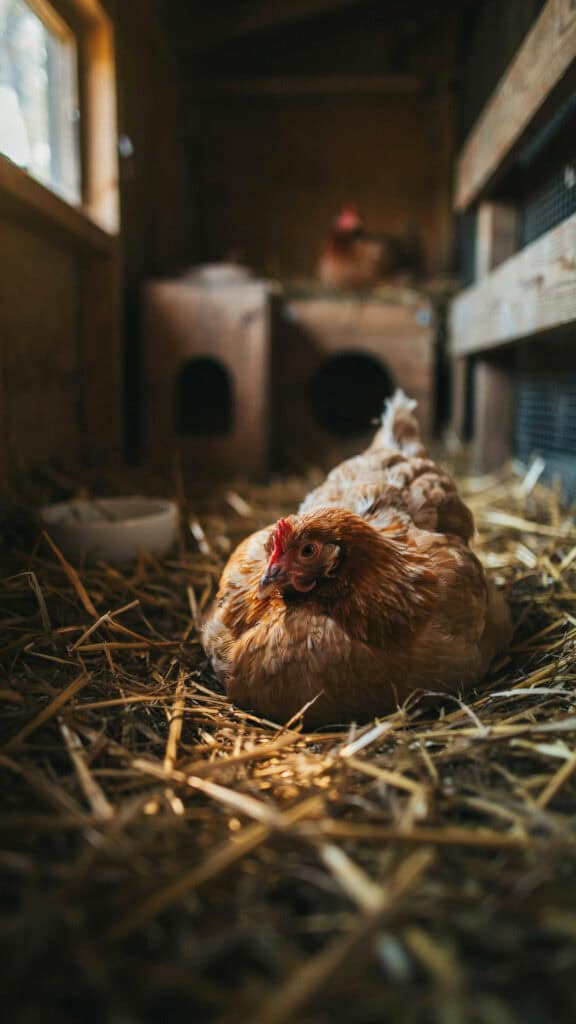
Straw is the bedding your grandma probably used, and there is a warm, golden, cottage-y charm to a coop tucked full of it. If you have a farm down the road, you can often grab a bale for $5 to $8, sometimes cheaper end of season, sometimes free if a neighbor has weathered bales they can’t sell for animal feed.
Why straw has a real place:
- Warmth. This is straw’s superpower. Hollow stalks trap air, and a deep layer of it is genuinely insulating. In our long winters, straw earns its keep — I lean on it hard when I’m winterizing the chicken coop.
- It is the backbone of the deep litter method, where you keep layering fresh bedding over the old and let it slowly compost in place all winter, generating a little warmth as it breaks down.
- Chickens love to burrow and scratch through it.
- Cheap and often locally available.
Where straw fights back:
- It does not absorb well. Moisture collects in low spots, and straw can go from cozy to matted and moldy quickly in a wet climate.
- It’s a hiding spot for mites and the dreaded poultry lice if you let it sit too long.
- Cleanup is heavier and clumpier than shavings — you’re forking it out, not scooping.
One important note people mix up: straw is not hay. Hay is green, full of seeds and nutrients, and it molds and rots quickly — please don’t bed your coop in hay. Straw is the dried, hollow, golden leftover stalk after grain is harvested, and that’s the one you want.
If you’re the type who likes to use what you already have on your homestead, dried leaves are a fantastic free cousin to straw. I walk through that whole free-bedding approach in my post on how to fix a muddy pen with dried leaves.
Best for: Cold climates, deep litter folks, and homesteaders who have cheap or free straw nearby and don’t mind a little extra fork work.
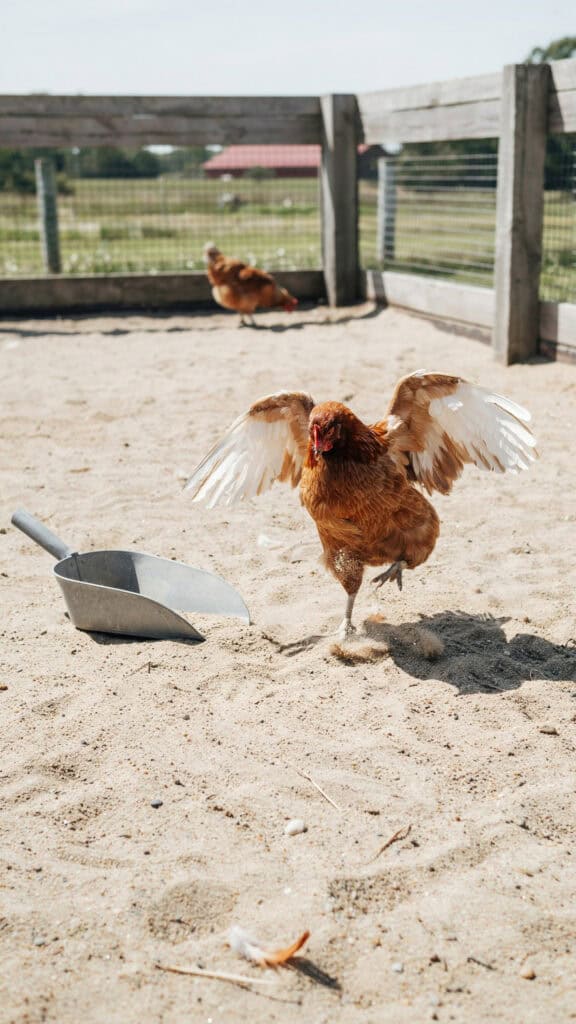
Contender #3: Sand (The Internet Darling)
Sand has a devoted online following, and I get why. Once it’s in, the daily maintenance is almost weirdly satisfying.
But first — and this matters more than anything else in this whole post — not all sand is the same. You want coarse construction sand or washed river sand. Do NOT use fine play sand from the toy aisle. Play sand holds moisture, packs down like concrete, and kicks up a fine silica dust that is genuinely bad for chicken lungs. The good coarse stuff has varied grain sizes that drain and dry.
You’re usually buying this by the load from a landscape or gravel supplier, so the upfront cost is higher — think $30 to $50-plus depending on how much your coop needs — but it lasts years, which changes the math.
Why sand fans are obsessed:
- Daily cleaning is a breeze. You literally scoop out droppings like a giant cat litter box with a metal kitty litter scoop. Two minutes, done, no smell.
- Superb drainage — water runs through instead of sitting.
- It doesn’t rot, mold, or harbor mites the way organic bedding can.
- It doubles as grit, and chickens will happily dust bathe right in it.
- In summer heat, sand stays cool and helps your flock beat the temperatures — it pairs perfectly with my other tricks for keeping chickens cool in summer.
Where sand falls apart:
- It’s freezing in winter. Sand holds cold and can pull heat right out of a bird’s feet. In our climate, sand alone in January is a hard no for me.
- It is heavy. Hauling it in, and eventually hauling it out, is real labor.
- It does nothing to compost — you can’t just toss it on the garden bed like shavings.
- If you get the wrong sand, you’ve created a wet, dusty, packed mess.
Best for: Hot, dry climates, well-drained coops, and anyone who hates weekly deep cleans and would rather do a quick daily scoop.
What About the Deep Litter Method?
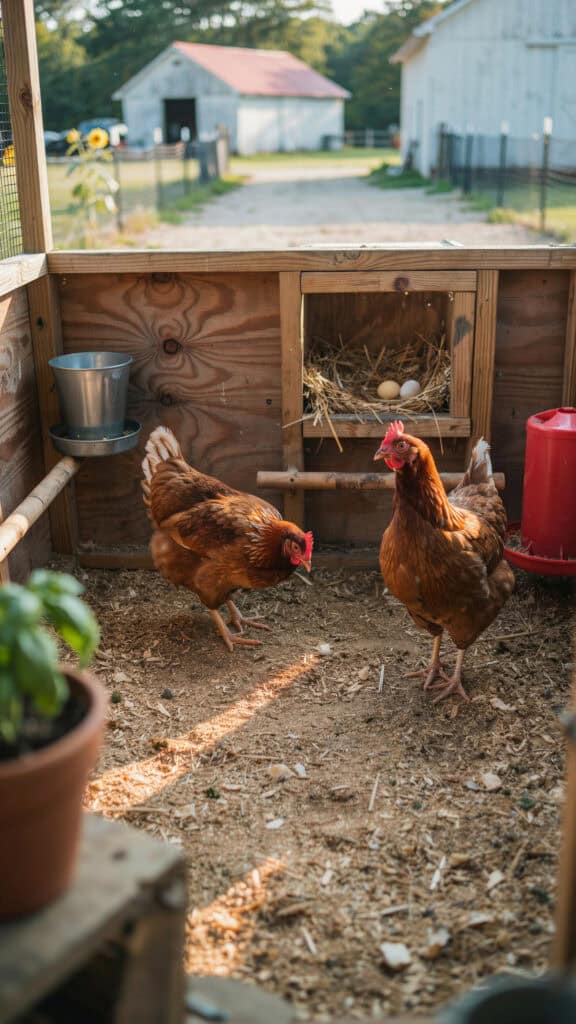
You’ll hear this thrown around constantly, so quick clarity: deep litter isn’t a fourth bedding — it’s a strategy. You start with an organic base (pine shavings, straw, dried leaves, or a mix), and instead of stripping it out, you keep adding fresh layers on top all season. The bottom composts, beneficial microbes take over, and it generates a bit of gentle warmth for winter.
Sand can’t be used for deep litter — it doesn’t break down. Pine and straw both can, and honestly, a blend of the two is where a lot of experienced keepers land. That composting base also becomes garden gold by spring, which is exactly the frugal, closed-loop homestead cycle I love.

Keep Your Flock (and Your Sanity) Organized
My Backyard Chicken Planner is 30 printable pages of feed charts, daily & monthly checklists, egg records, and flock logs — everything I wish I’d had starting out. Instant download, print it at home, use it again and again.
$10 Reg. $35
So What Do I Actually Use?
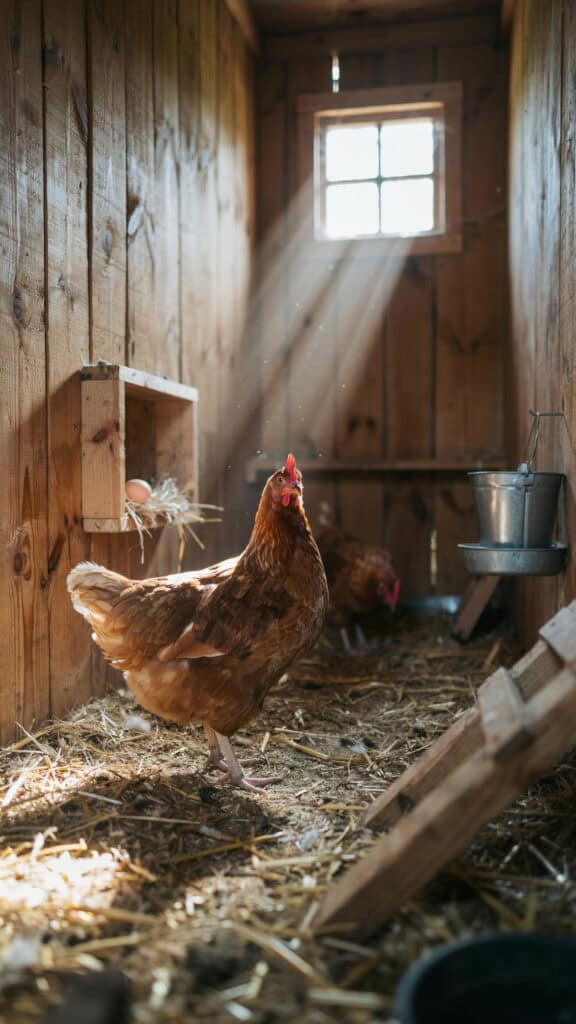
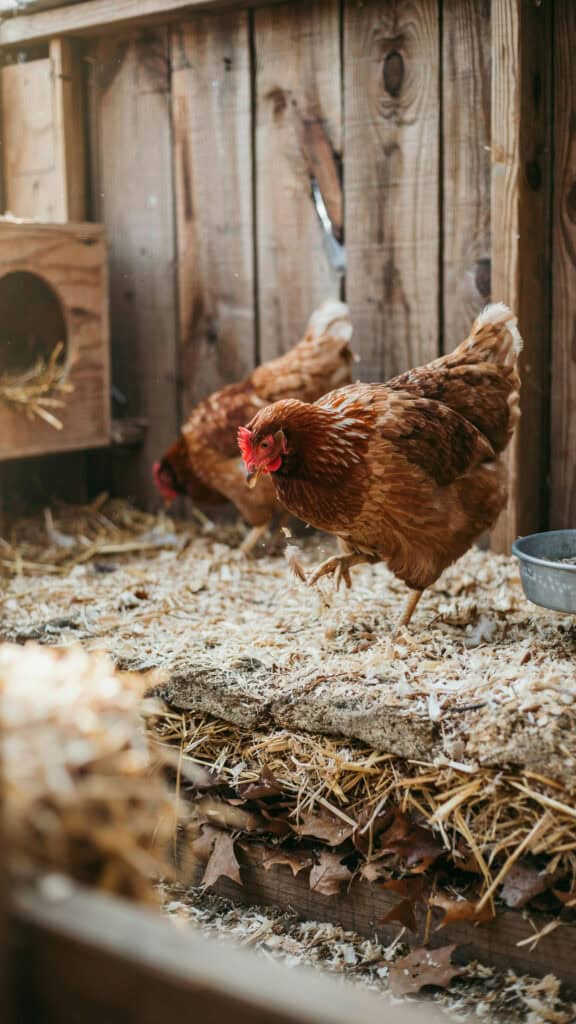
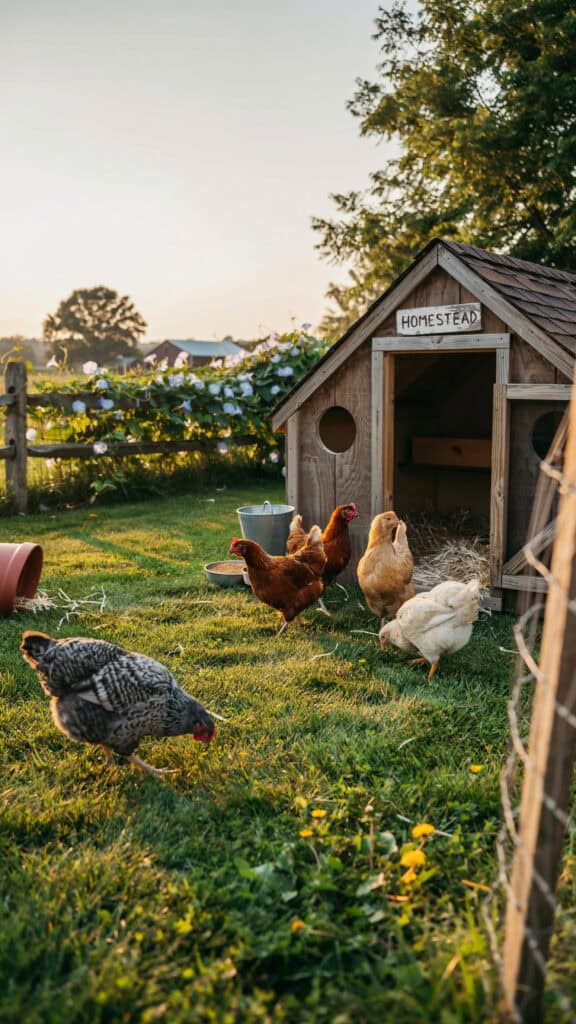
Here’s my real answer, not the diplomatic one: I run pine shavings most of the year, switch to a deeper straw-and-shavings deep-litter blend for winter warmth, and keep sand in the run and dust-bath areas where drainage matters most.
That combo gives me pine’s absorbency and smell control in the mild seasons, straw’s insulation when it drops below freezing, and sand’s drainage and cool footing exactly where the birds want to bathe and lounge.
No single bag on the feed-store shelf does all of that — but you don’t have to pick just one, either.
Quick Things to Avoid, No Matter Which You Choose
- Cedar shavings — the aromatic oils are hard on chicken respiratory systems. Pine only.
- Hay — molds fast, holds moisture, not the same as straw.
- Play sand — silica dust and packing issues, as covered above.
- Newspaper or slick surfaces — too slippery, especially for young birds, and can cause leg problems.
- Skimping on ventilation — the best bedding in the world can’t fix a stuffy coop. Airflow up high (never a direct draft on the roost) is what actually keeps ammonia and moisture down.
And speaking of the roost — where your birds sleep matters as much as what’s on the floor, since most of their overnight droppings land right underneath it. If your flock is piling in corners or sleeping in the nest boxes, get that sorted first with my guide to DIY roosting bars for chicken coops.
The Bottom Line
- Hot climate, hate deep-cleaning, well-drained coop? Go sand.
- Cold winters, deep litter, cheap local supply? Go straw.
- Want the easiest, most forgiving all-arounder? Go pine shavings.
- Want what actually works long-term? Steal my blend and adjust for your weather.
Bedding is one of those chicken-keeping decisions that feels huge when you’re starting out and then becomes second nature once you find your groove. Start with what fits your climate and budget, watch how your flock and your nose respond, and adjust from there. That’s the whole game.
If you’re still setting things up, don’t miss my walkthrough on building a chicken coop on a budget — get the bones right and good bedding does the rest. And if you’re bedding a brooder for new babies rather than a full coop, that’s a slightly different setup, which I cover in my chick brooder ideas for every budget.
Happy scooping, friend. Your girls are lucky to have you fussing over their floor.
- I recently started testing the Tractor Supply Pelletized Bedding for Horses and Small Animals, 40 lb. bag, after a friend recommended it! Look for an updated post about this option coming soon!
 Cheap Front Yard Landscaping Ideas That Look Expensive
Pine straw vs large pine shavings