
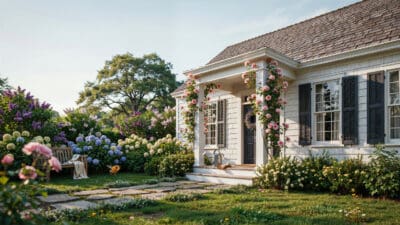

If you’ve ever driven past a house with a perfectly landscaped front yard and thought, how do they keep it looking that good? — I’m here to let you in on the secret. It’s not hours of weekend weeding. It’s not a landscaping crew. It’s the right shrubs.
The best bushes for the front of your house are the ones that do their job season after season without asking much from you in return. They give you structure in winter, blooms in spring and summer, and gorgeous color in fall. And once they’re established? You can basically just enjoy them.
I’ve been piecing together our farmhouse landscaping for years now, mostly on a budget and mostly on my own. These are the shrubs I’d actually recommend to a friend standing in the garden center aisle, wondering where to start.
Why Shrubs Are the Backbone of a Great Front Yard
Before we get into the list — a quick word on why shrubs beat annuals for front yard garden landscaping with flowering bushes.
Annuals give you one season of color, and then they’re gone. You buy them, plant them, enjoy them, and start over. Shrubs are a one-time investment that keeps paying off. The right ones provide:
- Four-season structure — so your yard looks intentional even in February
- Pollinator habitat — many of the best plants for bee-friendly yards are flowering shrubs
- Privacy and foundation coverage — softening the hard lines of your house
- Real curb appeal — without the constant upkeep
For more on building out a full front yard bed around your shrubs, check out my post on front yard flower beds against the house — it covers layout, layering, and keeping costs low.
What Makes a Shrub “Low Maintenance”?
Not all easy shrubs for the front of the house are created equal. When I say low maintenance, I mean:
- Drought tolerant once established — not needing constant watering
- Minimal pruning — maybe once or twice a year, not a constant battle
- Disease and pest resistant — no babying required
- Adaptable to average soil — not demanding perfectly amended beds
- Deer-resistant is a bonus (especially if you live where I do!)
Speaking of which — if deer are a real problem in your yard, my post on deer resistant landscaping shrubs goes deep on which ones will survive and which ones won’t.
15 Low Maintenance Shrubs That Look Amazing All Year
1. Double Knock Out Rose
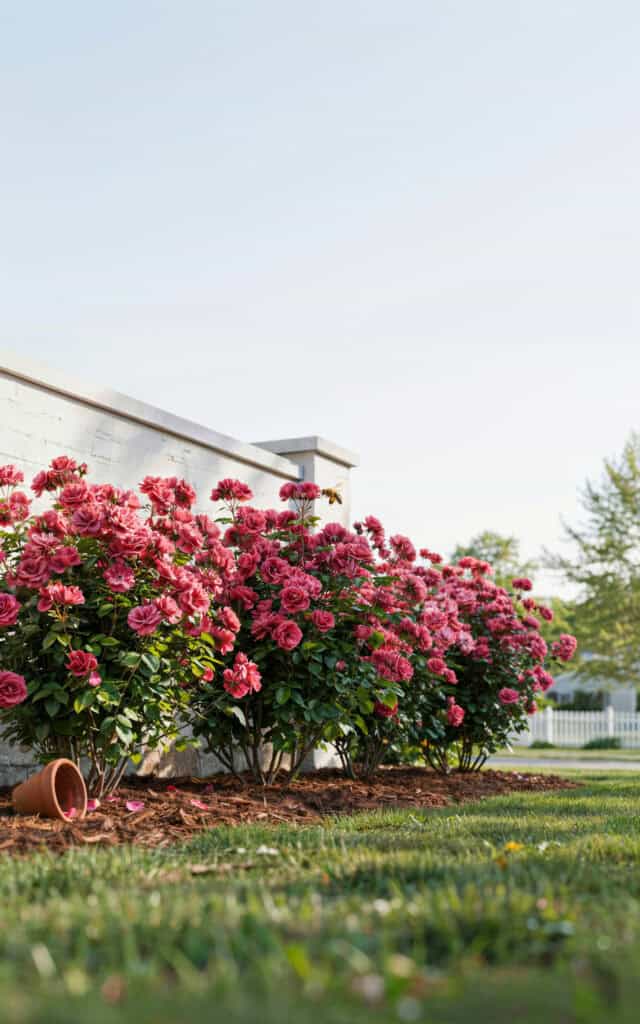
Let me just say it: if you only plant one thing from this entire list, make it a Double Knock Out Rose. These are genuinely one of the most foolproof, beautiful flower shrubs you can put in front of your house.
They bloom from late spring straight through to the first hard frost — we’re talking months of color — in shades of red, pink, coral, and white. They’re disease-resistant, so no black spot drama. Widely available at big-box stores and they spread beautifully over time.
Best for: Foundation planting, low borders, along fences Sun: Full sun Zones: 5–9
2. Spirea
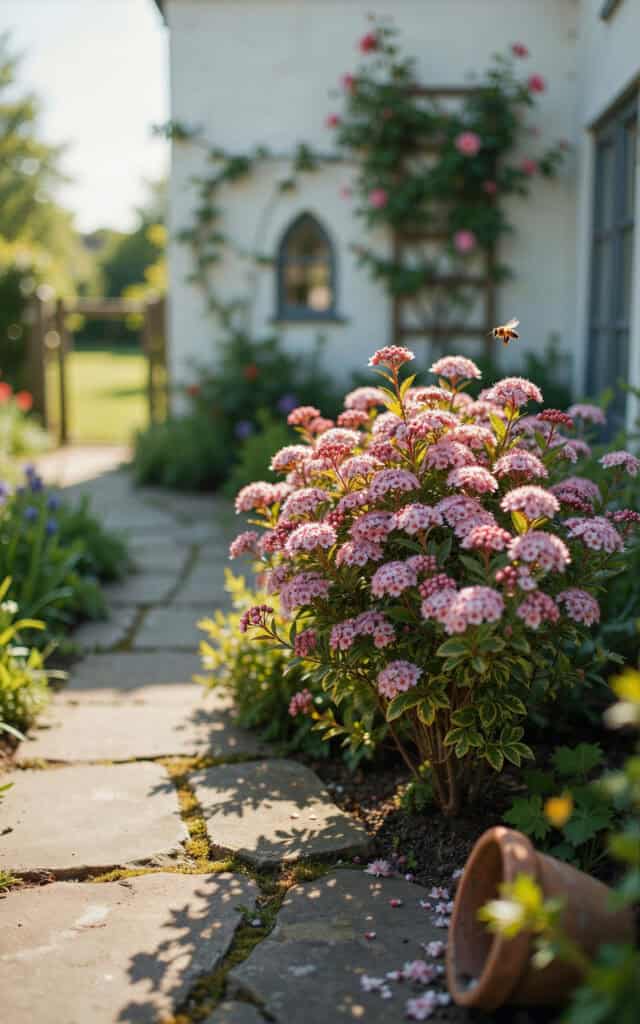
Spirea is one of those everyone should have at least one shrubs. It’s tough, affordable (often $10–$15 for a 1-gallon pot), fast-growing, and deer resistant. It blooms in spring with clusters of tiny white or pink flowers, and many varieties give you a second flush in late summer.
In fall the foliage turns brilliant orange and red. ‘Goldflame’ and ‘Little Princess’ are both compact varieties that stay under 3 feet — perfect for easy bushes along a walkway or in a mixed bed. One more bonus: as it matures, you can divide it for free plants elsewhere in the yard.
Best for: Mixed borders, walkways, mass planting Sun: Full sun Zones: 4–9
3. Lilac
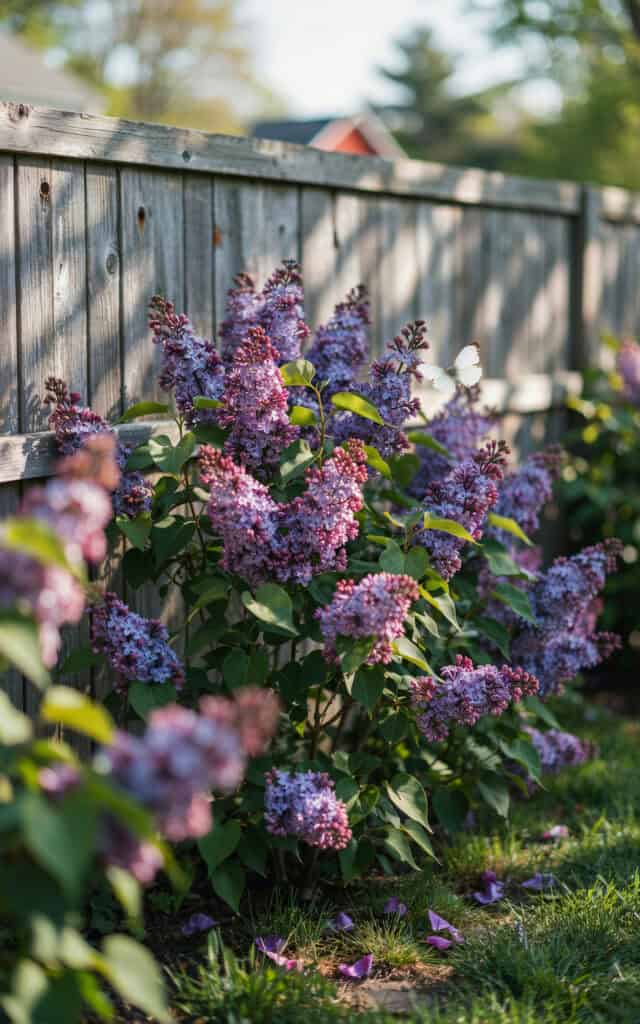
Lilacs are old-fashioned in the very best way. They’re cold-hardy, long-lived, and once established they need almost zero attention. The fragrance alone makes them worth every inch of yard space. Deer can’t stand that same scent, which makes them a double win in wildlife-heavy areas.
They can grow quite large over time, which makes them great as a statement plant or privacy screen on the side of the house. Think of a lilac as a forever investment — they outlast almost everything else in your yard.
Best for: Specimen planting, fragrance near porches, privacy Sun: Full sun Zones: 3–7
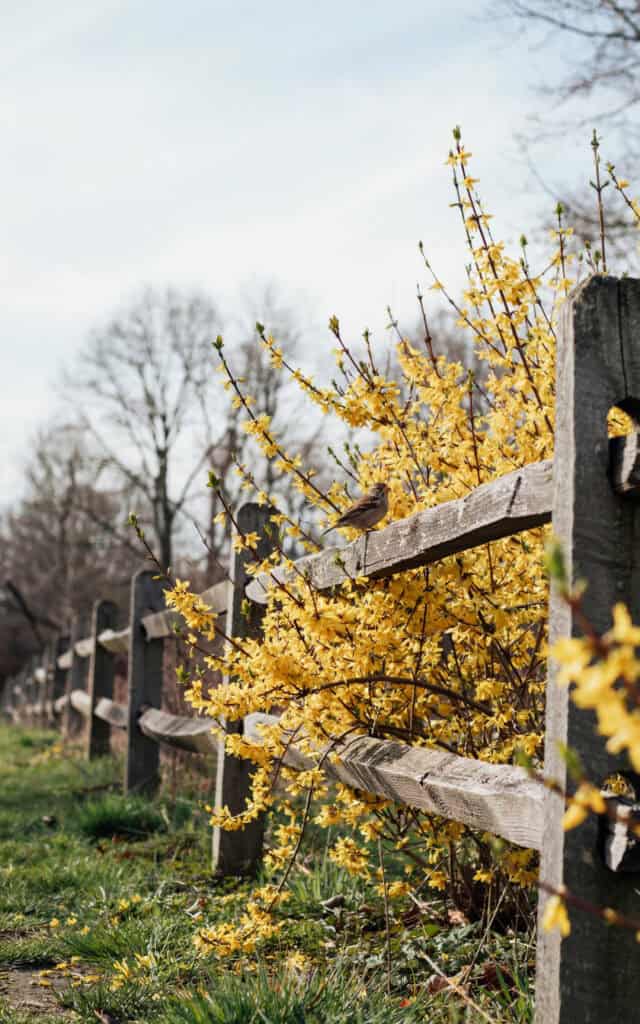
4. Forsythia
Forsythia is the first sign of spring around here, and honestly, it is life-changing after a long winter. Those bright yellow blooms pop before almost anything else wakes up, and the effect is completely joyful. It’s one of the fastest-growing shrubs you can plant, easy to care for, and simple to prune.
You can even shape it into a hedgerow by planting multiple plants a few feet apart. We actually found forsythia free in a local paper — so keep an eye on Facebook Marketplace and Buy Nothing groups before spending a dime.
I have a whole post on how to plant a forsythia and possibly get it for free if you want the full rundown.
Best for: Hedgerows, early spring color, large spaces Sun: Full sun to part shade Zones: 4–9
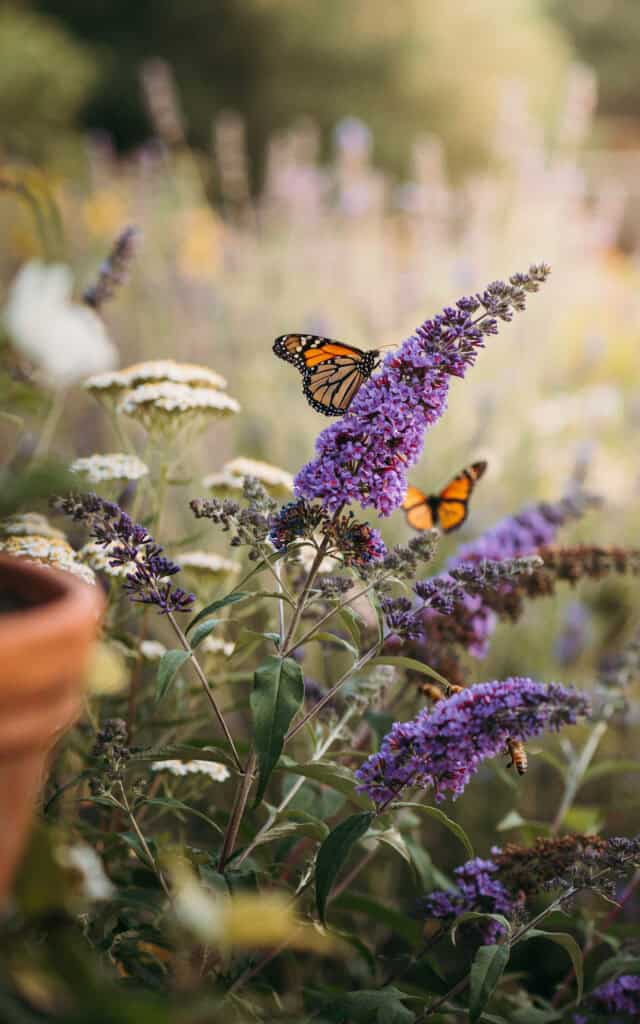
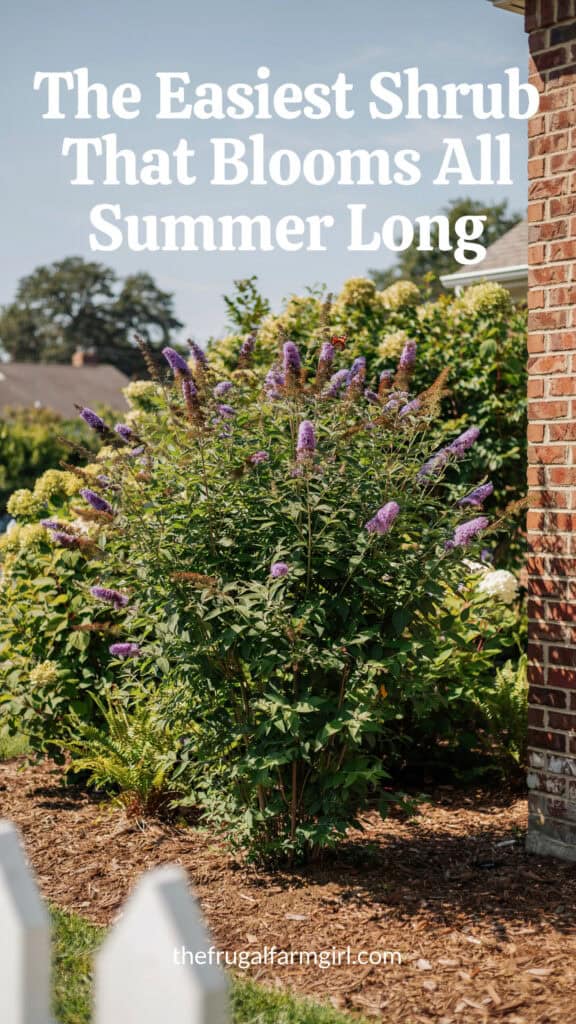
5. Butterfly Bush (Buddleia)
If you want one of the best plants for bee-friendly yards, butterfly bush is at the top of the list. The long, cone-shaped blooms in purple, pink, and white attract butterflies, bees, and hummingbirds from midsummer through fall.
It grows fast, handles average soil and drought well once established, and cuttings root easily — free plants to share with friends. Just note that some varieties can be invasive in certain states, so check your region before planting.
Best for: Pollinator gardens, late summer color Sun: Full sun Zones: 5–9
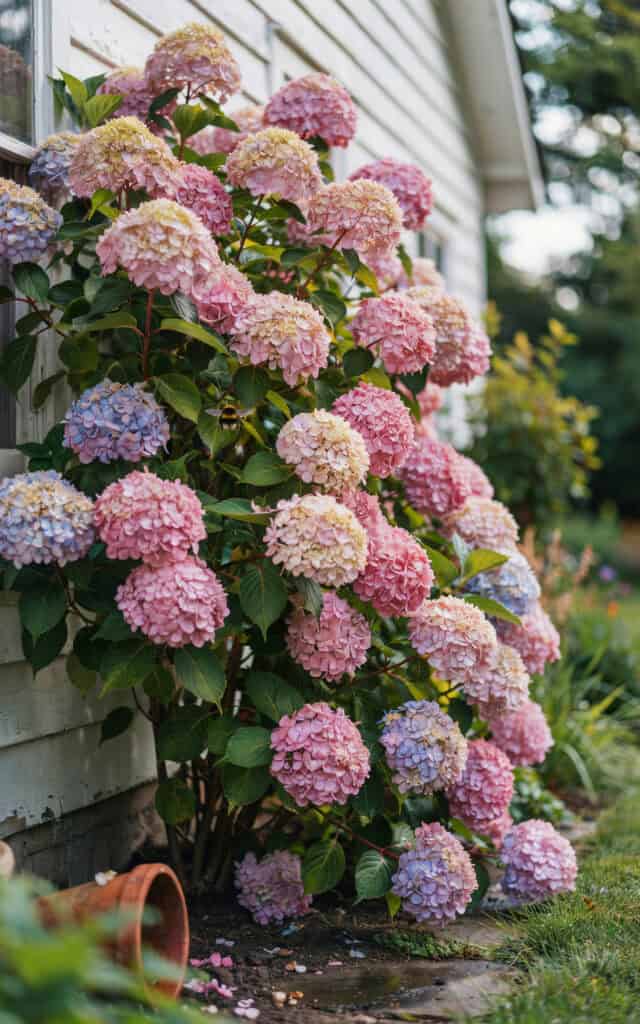
6. Hydrangea
Hydrangeas are one of the most popular flower shrubs for the front of the house — and for good reason. The big, showy blooms come in white, pink, blue, and purple, and they dry beautifully on the stem so you get visual interest well into fall and winter.
‘Limelight’ and ‘Incrediball’ are two particularly easy varieties that bloom on new wood (meaning you don’t have to stress about when to prune). Give them decent moisture and a little compost when planting and they’ll reward you for decades.
Best for: Foundation planting, back of border, large focal points Sun: Full sun to part shade Zones: 4–9
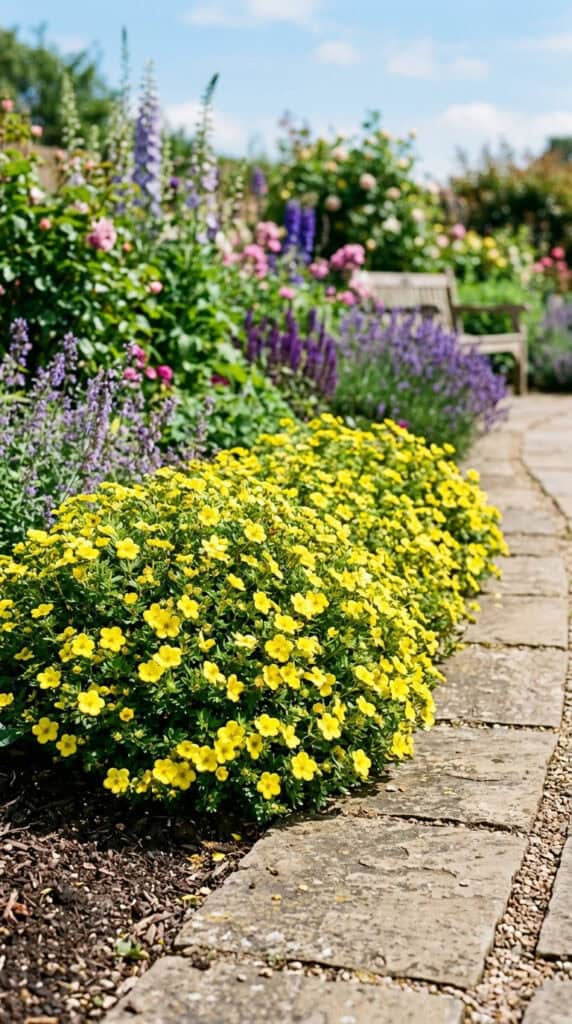
7. Potentilla (Shrubby Cinquefoil)
This one doesn’t get enough attention. Potentilla is a compact little shrub — usually under 3 feet — covered in cheerful yellow, white, or pink flowers from late spring practically through frost. It’s cold-hardy, drought-tolerant, deer-resistant, and one of the most genuinely low-maintenance small bushes you can plant in front of your house.
It keeps its tidy shape without aggressive pruning and keeps blooming when other shrubs have long tapped out.
Best for: Edging, small front yard beds, beginners Sun: Full sun Zones: 2–7
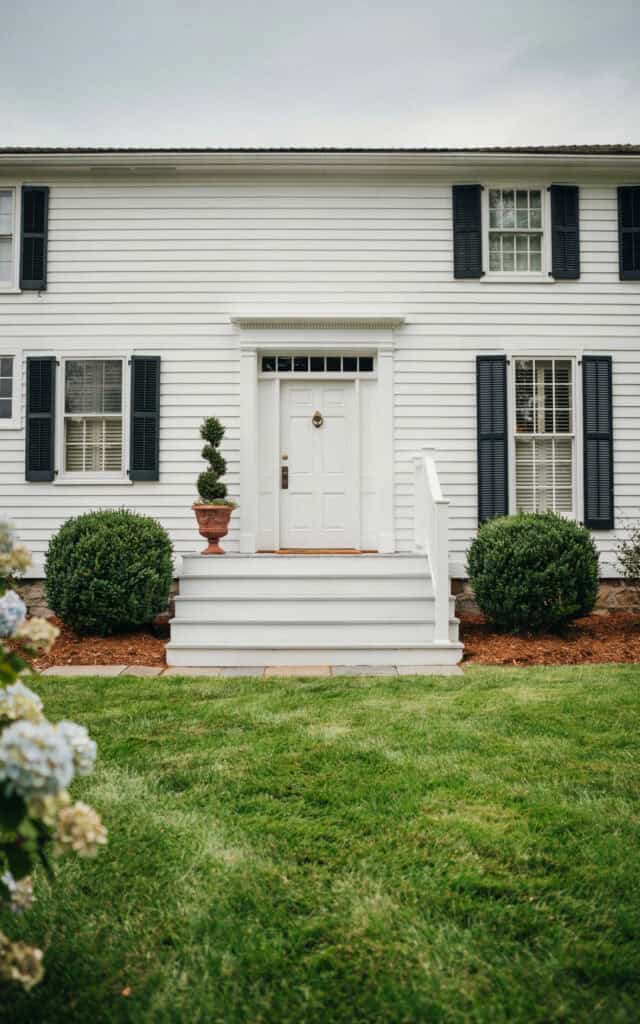
8. Boxwood
If you want ideas for bushes in front of your house that give you a structured, polished look all year, boxwood is the classic answer. It’s evergreen, which means it looks good even in the dead of winter when everything else has gone dormant.
Slow-growing but incredibly long-lived. ‘Green Mountain’ and ‘Winter Gem’ are two reliable varieties. Clip them into simple shapes for a formal look, or let them grow into loose mounds for something softer and more cottage-y.
Best for: Formal foundations, edging, year-round structure Sun: Full sun to part shade Zones: 5–9
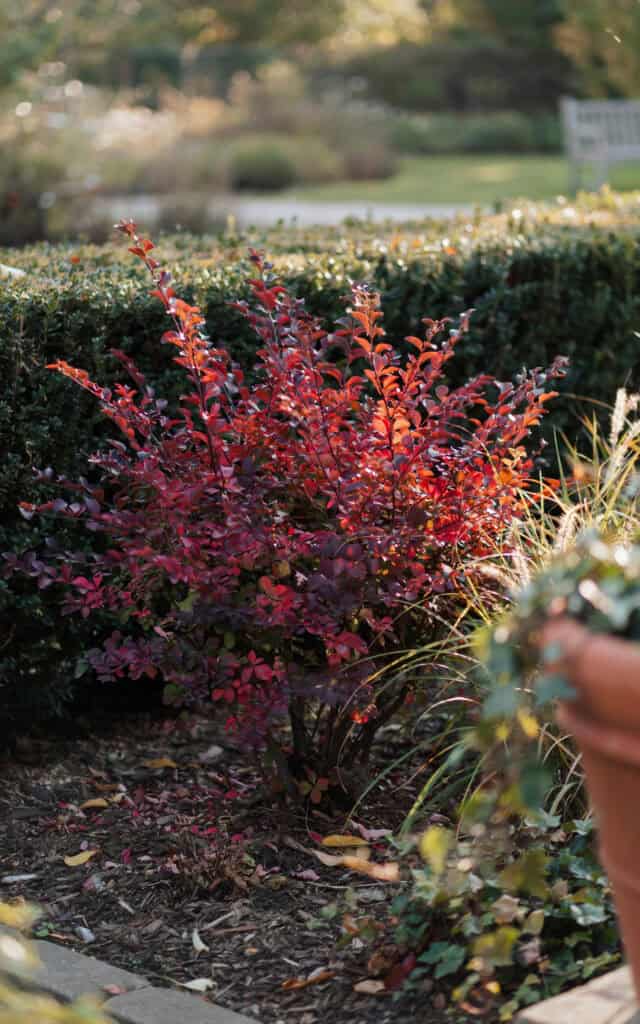
9. Barberry (Japanese Barberry)
Barberry is about as close to a deer-proof shrub as you’re going to find — the thorns are serious and deer avoid it hard. It comes in green or deep burgundy foliage, which makes it a gorgeous contrast plant in a mixed border.
It handles poor soil, drought, sun, and shade better than most. The one caveat: Japanese barberry is considered invasive in some states, so check your local restrictions before planting.
Best for: Deer-prone areas, slopes, mixed borders, color contrast Sun: Full sun to part shade Zones: 4–8
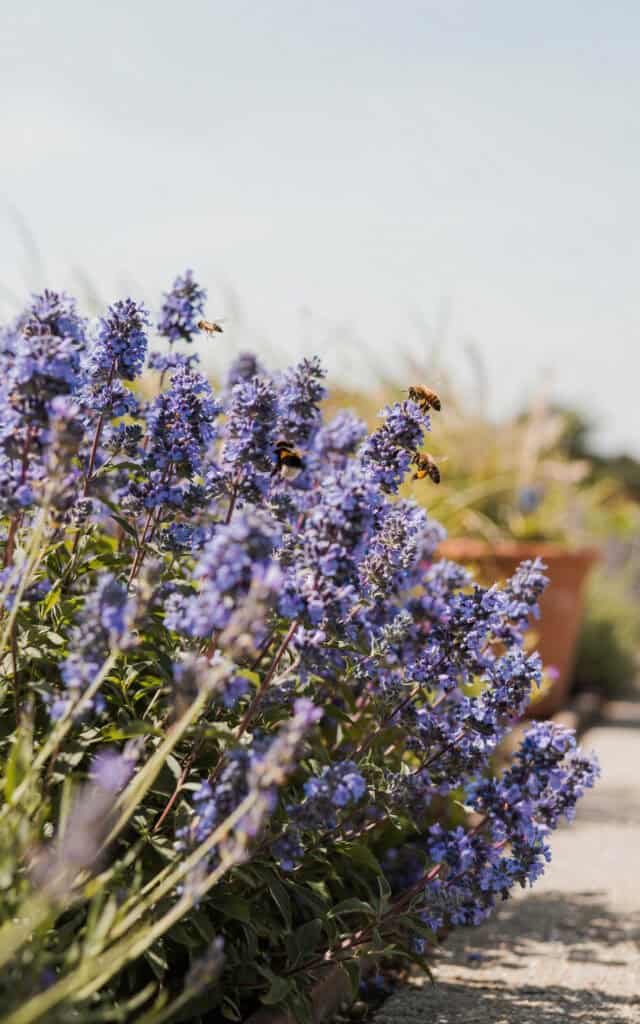
10. Bluebeard (Caryopteris)
Bluebeard is one of those shrubs that comes through right when you need it most — late summer and early fall, when most other shrubs have finished their show. The blue-purple flowers are intensely attractive to pollinators, and the strong aromatic scent is exactly what keeps deer away.
It’s low-growing, makes a beautiful front-border plant, and blooms at a time when almost nothing else is offering that color.
Best for: Late-season color, pollinator gardens, front borders Sun: Full sun Zones: 5–9
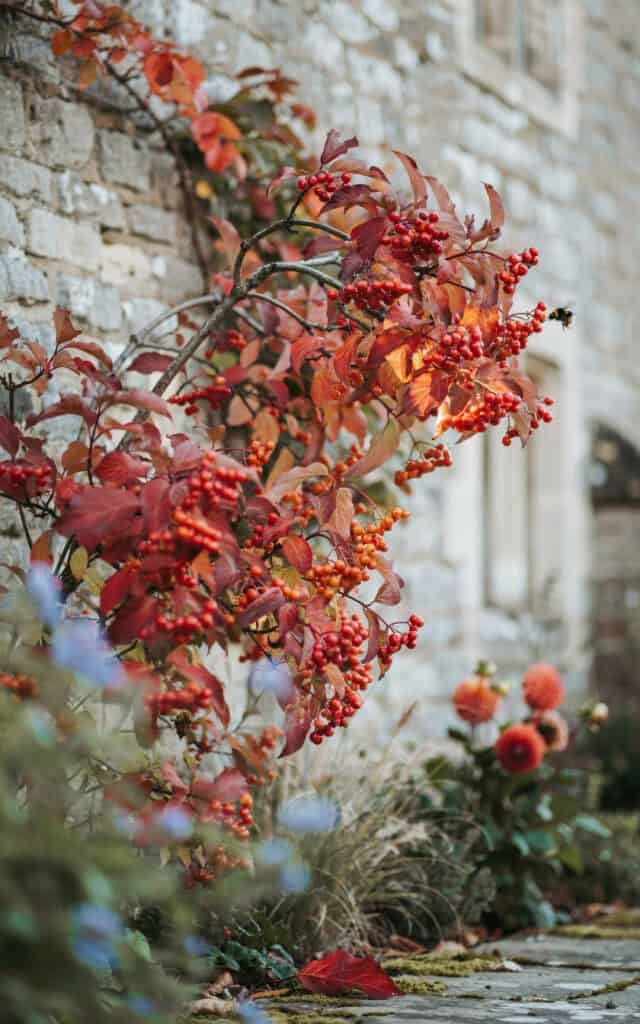
11. Viburnum
Viburnum is one of those all-star shrubs that earns its place through every single season. Spring blooms (some are fragrant), summer berries that birds love, incredible fall foliage color, and interesting winter structure.
There are dozens of varieties ranging from compact to large, so you can find one that fits your space. It’s tough, disease resistant, and handles average soil with ease.
Best for: Four-season interest, wildlife-friendly yards, large anchor planting Sun: Full sun to part shade Zones: 2–9 (varies by variety)
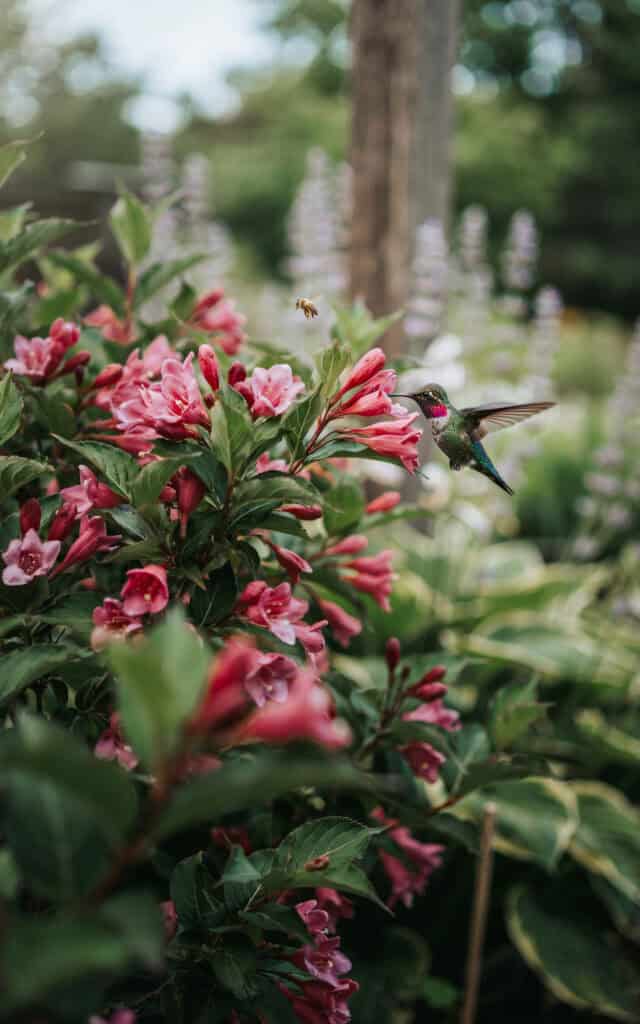
12. Weigela
Weigela doesn’t get the recognition it deserves. The trumpet-shaped blooms in pink, red, or white show up in late spring and often rebloom in late summer. Hummingbirds are obsessed with it. It’s fast-growing, adaptable, and incredibly easy — plant it, give it some sun, and mostly leave it alone.
Many modern varieties also have stunning burgundy or variegated foliage that looks beautiful even when it’s not in bloom.
Best for: Hummingbird and pollinator gardens, cottage-style landscaping Sun: Full sun to part shade Zones: 4–9
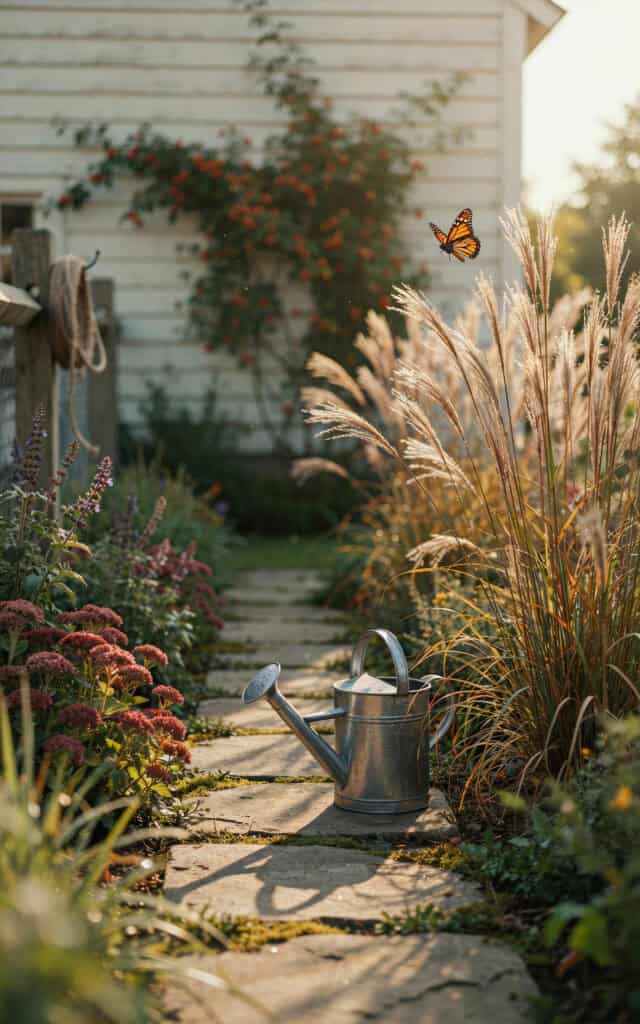
13. Ornamental Grasses
Okay, technically not a shrub — but hear me out. Ornamental grasses fill the same role in a front yard planting: structure, texture, movement, and zero fuss. They look gorgeous blowing in a summer breeze and the feathery plumes carry you through fall and winter.
Karl Foerster grass, Blue Oat Grass, and Zebra Grass are all fantastic options for front yard landscaping. They’re also some of the cheapest plants you can buy, which makes them a great filler when you’re planting and working within a budget.
Best for: Texture, movement, winter interest, budget-friendly coverage Sun: Full sun Zones: 4–9
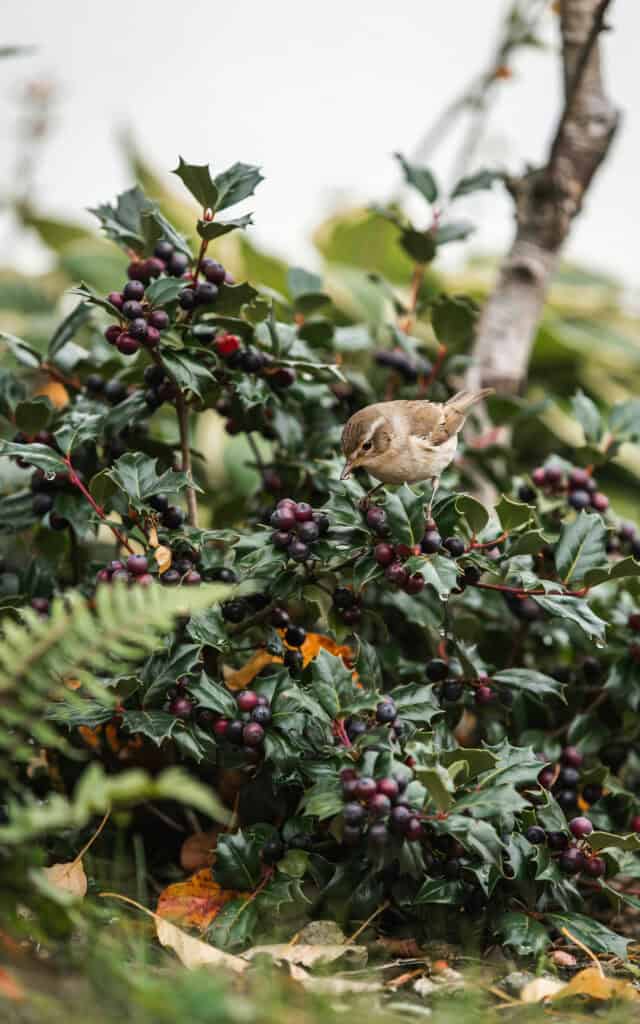
14. Inkberry Holly (Ilex glabra)
If you have a spot that tends to stay a little wet, most shrubs will struggle. Inkberry holly won’t. It’s native, evergreen, tolerates poor drainage, and produces small dark berries in fall that birds absolutely love.
It’s one of the best plants and bushes for the front of the house in tricky low-lying spots. It grows slowly but has excellent structure and doesn’t need much pruning.
Best for: Native gardens, wet spots, wildlife-friendly yards Sun: Full sun to part shade Zones: 4–9
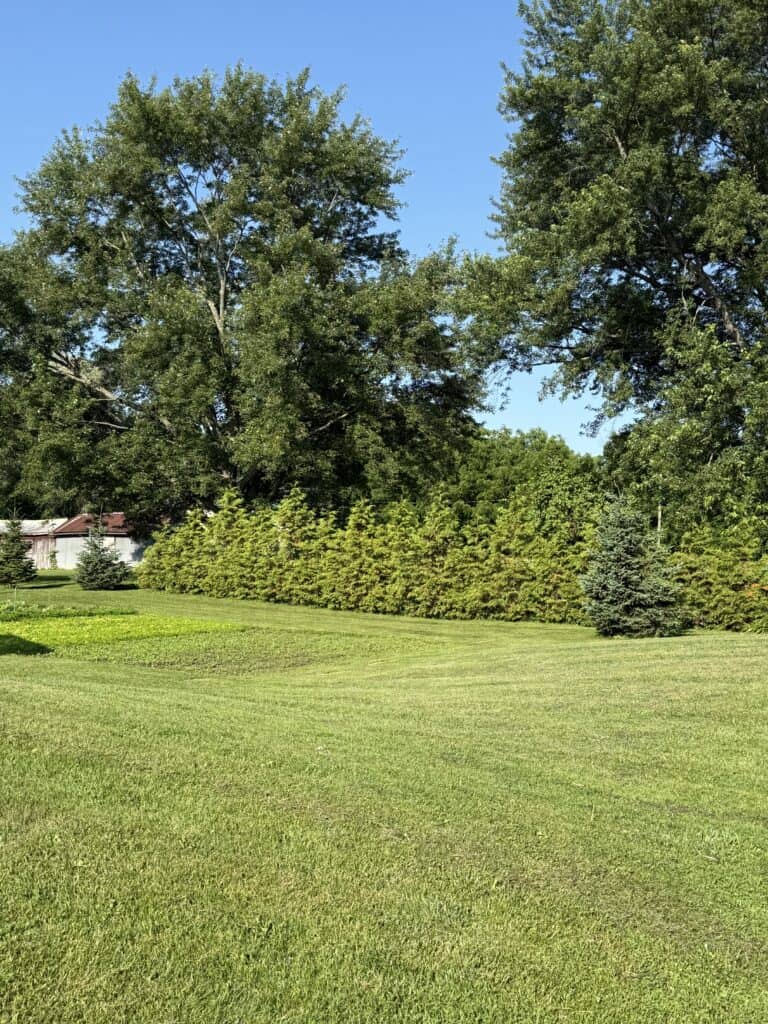
15. Arborvitae
For a low-maintenance evergreen that gives you year-round privacy and structure, arborvitae is the go-to. ‘Emerald Green’ is the most popular variety — it stays naturally columnar and tidy without heavy pruning, making it perfect for planting in a row along a foundation or fence line. It’s also one of the most budget-friendly options at the nursery, and it’s nearly zero maintenance once it’s established.
We used arborvitae as a living privacy fence on our property — if you’re thinking about doing the same, my post on cheap fence ideas has more on how to make it work on a budget.
Best for: Privacy screens, foundation rows, year-round structure Sun: Full sun Zones: 3–8
Tips for Planting Bushes in Front of Your House
Before you run to the garden center, a few things I’ve learned the hard way:
Layer your heights. Put taller shrubs nearest the house, medium ones in the middle, and low growers or perennials in front. This creates a lush, intentional look even when nothing is blooming.
Give them space. Check the mature spread of every shrub you buy. Most beginners plant too close together, and then five years later you’re fighting an overgrown mess. Give them room to breathe from day one.
Mulch generously. A 2–3-inch layer of mulch at planting time reduces watering needs, suppresses weeds, and helps your shrubs establish faster. Do this every spring, and your plants will thank you.
Feed them for free. Grass clippings, banana peel powder, and compost are all excellent free fertilizers for shrubs. My post on 7 free fertilizers you already have has all the details.
Shop smart. End-of-season plant sales at big-box stores mean serious discounts. Facebook Marketplace and Buy Nothing groups are gold for free divisions from neighbors. Check there before spending full price on anything.
A Simple Front Yard Layout Using Shrubs From This List
Here’s a starter combo that works for most front yards:
Back row (closest to house): Hydrangea or arborvitae for height and anchor Middle row: Spirea, weigela, or knock-out roses for color Front row: Potentilla, low barberry, or ornamental grass for edging
Repeat the pattern along the bed for a clean, cohesive look. Add a pop of lavender or catmint in between for bee-friendly texture and fragrance.
For more ideas on how to actually build out the bed, including how to edge it and where to put your first shovel, check out my post on front yard flower beds against the house and the best cheap garden landscaping plants for budget-friendly fillers to go between your shrubs.
The Bottom Line
You don’t need a landscaping crew or a huge budget to have a front yard that looks genuinely beautiful all year long. You just need the right plants — ones that earn their spot every season without demanding constant attention.
Pick two or three shrubs from this list, get them in the ground this season, and give them time. In a few years, you’ll have the yard that makes your neighbors slow down as they drive by.
That’s the whole plan. Happy planting! 🌿
Looking for more frugal gardening ideas? You might also enjoy:
- Flowering Shrubs for Full Sun That Look Good All Year
- Deer Resistant Landscaping Shrubs: What Actually Works
- The Best Low Maintenance Shade Loving Perennials
- Rustic Garden Ideas That’ll Make Your Yard Look Like a Pinterest Dream
 The Ultimate Back to School Survival Kit for Teens (A Complete School Bag Checklist)
Leave a Reply