


If you’ve been scrolling Pinterest, dreaming of buckets full of fresh-cut flowers, but think you don’t have the space or yard for it, you do! You don’t need a huge garden or a raised bed the size of a swimming pool to grow a gorgeous cut flower garden. All you need are a few containers, the right flowers, and a little bit of sunshine.
Container gardening is one of the most beginner-friendly and budget-friendly ways to start growing cut flowers — whether you’re working with a tiny apartment balcony, a small patio, or just a sunny strip of pavement. Think of this as your beginner garden layout guide, but make it pretty and in pots.
Let’s dig in (literally).
Why Container Gardening Works for Cut Flowers
Container gardening gets a bad reputation for being “less serious” than in-ground or raised bed gardening, but honestly? It’s one of the smartest small raised bed garden ideas you can adapt to your situation. Here’s why it works so well for cut flowers:
- You control the soil — no fighting with clay or rocky ground.
- You can move containers to follow the sun (huge win for renters!).
- Easier to manage pests and weeds.
- You can start incredibly small and scale up as your confidence grows.
- Perfect for patios, balconies, driveways, and even front porches.
Whether you’re a total beginner or just working with limited space, containers make it possible to grow fresh bouquets all season long.
Love container gardening? Check out my post on bucket gardening for fruits and veggies here.

The Best Containers for a Cut Flower Garden Layout
Before we talk flowers, let’s talk pots. The container you choose matters more than you’d think. For cut-flower gardening, you want containers that give roots enough room to grow and hold moisture well—yet still drain properly.
Container sizes that work best:
- Large pots (12–16 inches wide): Great for single statement plants like dahlias or sunflowers.
- Long window boxes or troughs (at least 8 inches deep): Perfect for rows of zinnias, snapdragons, or cosmos — and they mimic that cut flower garden layout raised beds look on a smaller scale.
- 5-gallon buckets: The unsung hero of container flower gardening. Cheap, deep, and perfect for larger flowers.
- Half wine barrels or wooden planters: Beautiful, rustic, and holds enough soil for multiple flower varieties.
Budget Tip: Don’t spend a fortune on fancy pots. I’ve grown gorgeous zinnias in old metal buckets, plastic storage bins with drainage holes drilled in the bottom, and even a cracked ceramic pot I found at a garage sale. The flowers don’t care about aesthetics — only you do!

Cut Flower Garden Layout Ideas for Containers
Now here’s where it gets fun. Just because you’re gardening in containers doesn’t mean you can’t have a thoughtful, beautiful layout. Here are some beginner garden layout ideas that work beautifully with pots and planters:

1. The Tall-Medium-Short Tiered Layout
This is the classic cottage garden approach adapted for pots. Arrange three container sizes or types in a tiered grouping: tall flowers in the back (or center if the arrangement is viewed from all sides), medium-height flowers in the middle, and low-growing flowers or filler plants in front.
- Back: Sunflowers or tall dahlias in a large 5-gallon pot or half barrel.
- Middle: Zinnias or cosmos in a 12-inch container.
- Front: Sweet alyssum, marigolds, or snapdragons in a window box.
This arrangement looks like a mini version of cut flower garden layout raised beds — and it photographs absolutely beautifully for Pinterest, just saying!

2. The “Cutting Patch” Container Row
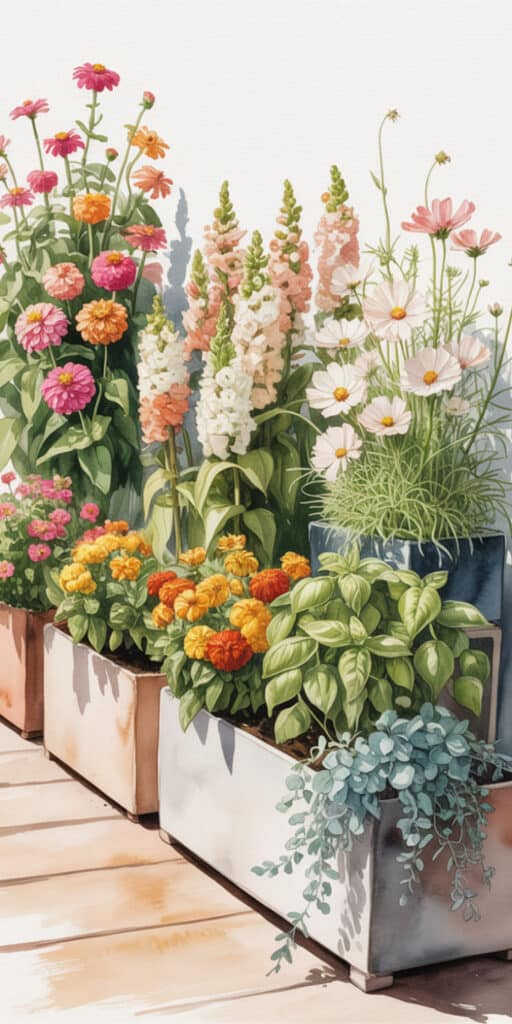
This layout is pure function over form — and it’s one of the best small raised bed garden ideas you can steal for containers. Line up three to five long rectangular planters or window boxes in a row, each one dedicated to a single type of flower.
- Box 1: Zinnias (the easiest cut flower for beginners, period).
- Box 2: Snapdragons for height and texture.
- Box 3: Cosmos for that wispy, whimsical filler.
- Box 4: Marigolds for color and pest control.
- Box 5: Basil or eucalyptus as a fragrant greenery filler for bouquets.
This row layout makes harvesting so easy — you know exactly where everything is. It mimics a cut flower farm row layout but on a tiny, very manageable scale. Perfect for a patio, deck railing, or along the edge of a driveway.

3. The Patio “Garden Room” Layout
If you have a patio or small outdoor area, you can create a lush, immersive feel by grouping containers of varying heights around the perimeter. This beginner garden layout trick makes even the smallest outdoor space feel like a proper flower garden.
The key is mixing container heights and flower types so there’s always something blooming throughout the season. Include a trellis in one larger container with a climbing flower like sweet peas or black-eyed Susan vine to add vertical interest — it makes photos look absolutely stunning and your space feel bigger.
4. The Balcony Cut Flower Garden
Yes, you can absolutely grow cut flowers on a balcony! This is one of the most space-efficient small raised bed garden ideas translated to a balcony setting. Use railing planters for shorter flowers like sweet alyssum or pansies, keep one or two deeper containers for zinnias or dahlias, and hang a vertical pocket planter on the wall for herbs and filler greens.
Pro Tip: On a balcony, weight matters. Use lightweight plastic pots with high-quality potting mix rather than heavy ceramic or clay containers. And always check your balcony’s weight limit if you’re loading up with multiple large pots!

The Best Flowers for Container Cut Gardens (Beginner-Friendly!)
Not all flowers are created equal when it comes to containers. You want flowers that bloom abundantly, have long enough stems for cutting, and don’t mind the slightly drier conditions of pot life. Here are my top picks:
Zinnias
The absolute MVP of container cut flower gardening. They love heat, grow fast from seed, bloom abundantly, and the more you cut them, the more they grow. Start with a mix of varieties for a rainbow of colors.
Cosmos
Tall and airy, cosmos add that whimsical, cottage-garden look to any arrangement. They’re drought-tolerant and thrive in containers — just make sure your pot is deep enough (at least 12 inches).
Snapdragons
Perfect for adding vertical height to bouquets. They love cooler weather, so plant them early in spring for an amazing late spring and early summer harvest.
Marigolds
Budget-friendly, pest-repelling, and incredibly cheerful. They work beautifully as edge plants in your container layout and add gorgeous pops of orange and yellow to bouquets.
Dahlias
A bit more of an investment, but container dahlias are absolutely show-stopping. Use large 5-gallon pots and give them lots of sun and water.
Sweet Peas
For a climbing, fragrant cut flower option, sweet peas in a container with a small trellis are magical. They’re a beginner garden layout staple for good reason.
Sunflowers (dwarf varieties)
Dwarf sunflower varieties like ‘Sunspot’ or ‘Teddy Bear’ are perfect for containers and produce smaller but incredibly charming blooms for cutting.
How to Set Up Your Container Cut Flower Garden (Step by Step)
Ready to get started? Here’s a simple beginner garden layout plan to get your container cut flower garden going:
1. Choose your spot first. Most cut flowers need at least 6 hours of direct sunlight per day. South or west-facing patios and balconies are usually ideal.
2. Pick your containers. Start with just 3–5 containers so you’re not overwhelmed. Mix a couple of deep pots (for tall flowers) with a long window box or two.
3. Use good potting mix. This isn’t the place to skimp — good quality, well-draining potting mix makes a huge difference. Add a slow-release fertilizer at planting time.
4. Choose your flowers. For a true beginner garden layout, start with zinnias, cosmos, and marigolds. They’re forgiving, fast-growing, and gorgeous.
5. Plant seeds or starts based on your frost dates. Most annuals should be started after your last frost date — check your local extension service for exact dates.
6. Water consistently. Containers dry out faster than in-ground gardens. During hot summer months, you may need to water every single day.
7. Fertilize regularly. Every 2–3 weeks, with a liquid bloom fertilizer, will keep your flowers producing all season long.
8. Cut often! This is the most important rule of cut flower gardening: the more you cut, the more the plant blooms. Don’t be afraid to harvest.

Frequently Asked Questions
Can I really grow enough flowers in containers to make bouquets?
Absolutely! With the right flowers (especially zinnias and cosmos), even 3–4 large containers can produce enough blooms to put fresh bouquets in your home every week throughout the growing season.
What’s the best beginner garden layout for container flowers?
The simplest layout is the “cutting row” — line up 3–5 window boxes or rectangular planters side by side, each dedicated to one type of flower. It’s easy to maintain, harvest from, and looks amazing in photos.
Do cut flower gardens in containers need special soil?
Use a high-quality all-purpose potting mix with good drainage. Avoid using garden soil in containers — it gets compacted and doesn’t drain well. Adding perlite can improve drainage even more.
How is this different from small raised bed garden ideas?
Container gardening is essentially small raised bed gardening taken to the extreme — you get all the same benefits (controlled soil, better drainage, defined space) but with total portability and flexibility. If you’re not ready to commit to building raised beds, containers are the perfect first step.
Can I use cut flower garden layout raised beds ideas in containers?
Yes! Many cut flower garden layout raised beds principles translate perfectly to containers — like the tall-medium-short layering, dedicating sections to specific flower types, and using companion planting. Just scale everything down to pot size.
You Don’t Need a Big Yard — Just a Few Pots and Some Seeds
The beauty of container cut flower gardening is that it meets you exactly where you are. Maybe you’re renting and can’t dig up a yard. Maybe you have a postage-stamp patio. Maybe you’re just not sure if you have a green thumb yet and you don’t want to commit to a full cut flower garden layout raised beds project. Containers let you start small, learn as you go, and still end up with armfuls of gorgeous homegrown flowers.
Start with a few pots, grab some zinnia seeds, find a sunny spot, and get planting. I promise — the first time you clip a flower you grew yourself and put it in a vase on your kitchen table, you’ll be absolutely hooked.
Happy growing! 🌸
Loved this post? Save it to Pinterest so you can come back to it when planting season rolls around! 📌
 Space-Saving Bucket Gardens for Small Backyards
Leave a Reply